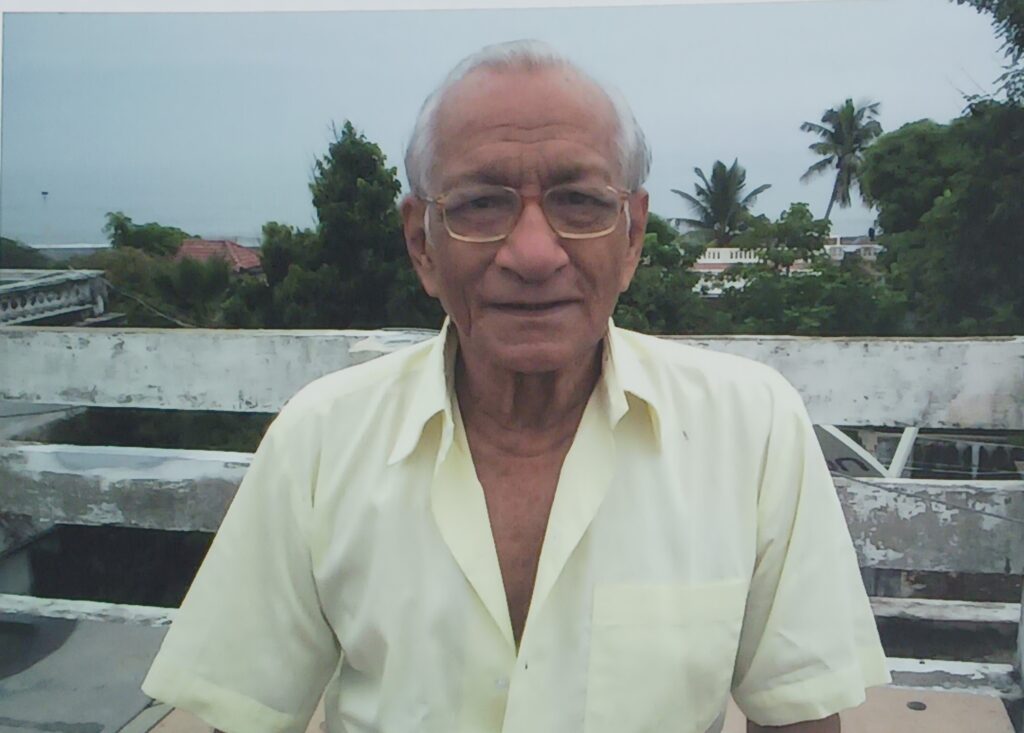
Sri Aurobindo writes in his Record of Yoga (p. 170): “This is Aniruddha’s method, the method of the patient intellectual seeker & the patient and laborious contriver who occupies knowledge & action inch by inch & step by step, covering minutely & progressively all the grounds, justifying himself by details and through the details arriving at the sum.” (31 December 1912) Interestingly, Aniruddha Sircar—lovingly known in Sri Aurobindo Ashram, Pondicherry, as ‘Babu’ or ‘Babu-da’—was quite fond of this passage. Although he candidly admitted that he did not possess any of the qualities mentioned in this passage, he always strived to get the details right and execute whatever he did to the best of his ability. Not only was he a voracious reader who had an enviable command over English and Bengali literature and a prolific writer but was, at the same time, a most loving and affectionate teacher who had become a legendary figure in his lifetime.
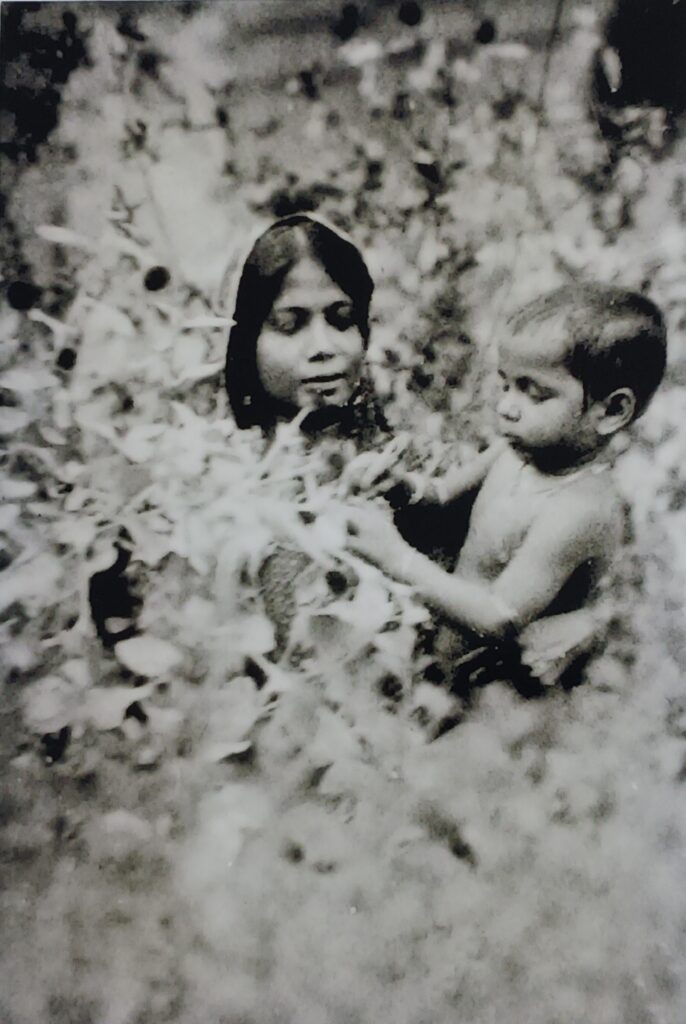
Born as Aurobindo to Rabindranath and Binapani Sircar on 13 March 1933, he received his name from the illustrious Bengali playwright Sachindranath Sengupta who was a former associate of Barindra Kumar Ghose, noted revolutionary and Sri Aurobindo’s youngest brother. When the child was six months of age, Sachindranath suggested the name of Aurobindo for him because to him and most of the people of his generation, Sri Aurobindo was the greatest of all so his namesake would, at least, try to become great.
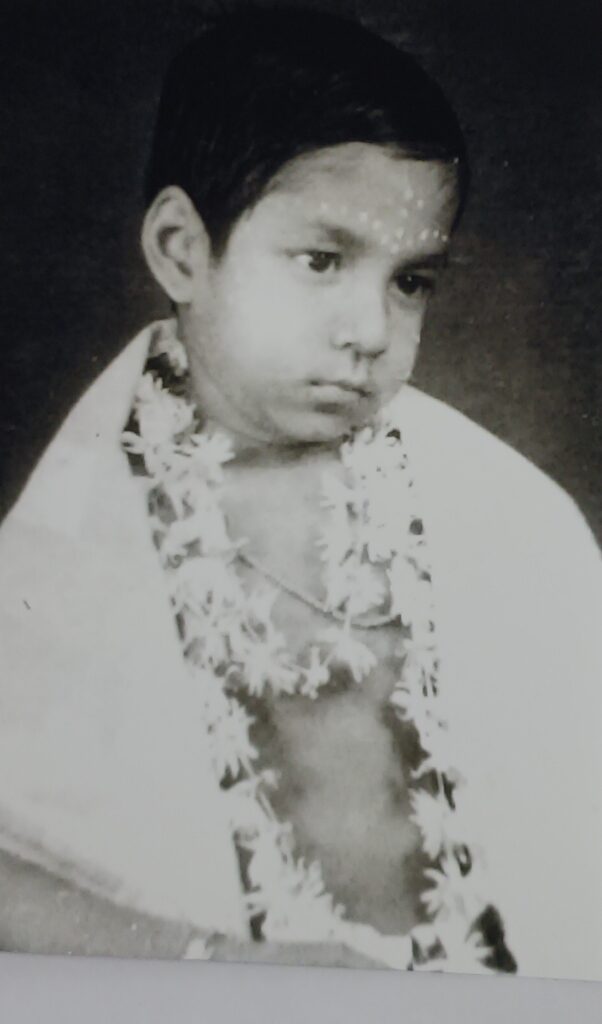
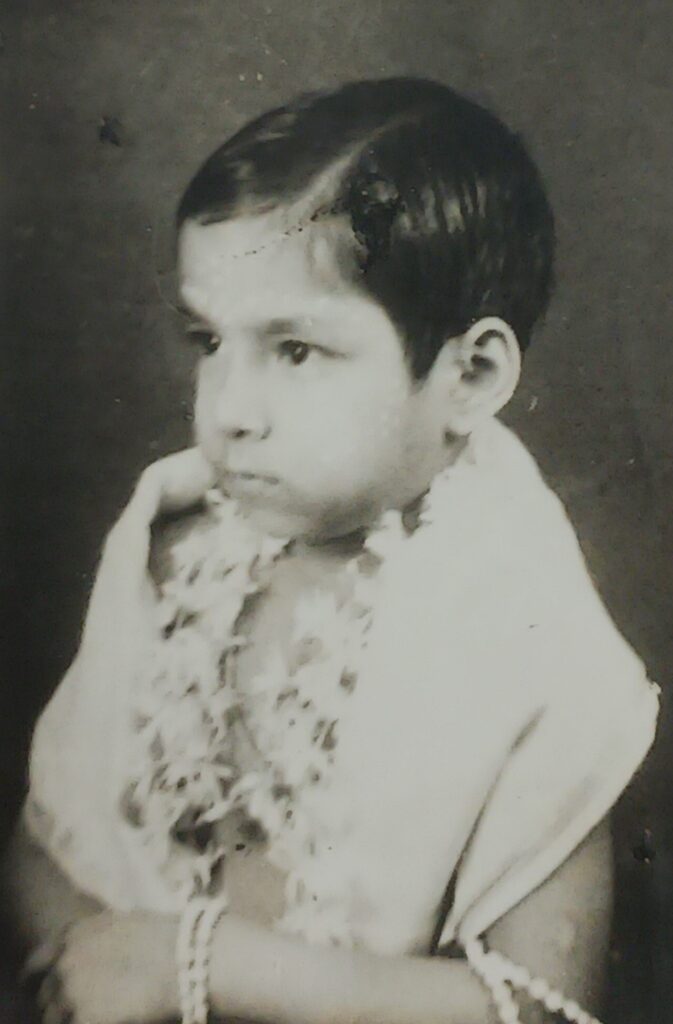
Aurobindo grew up in the company of actors, playwrights and poets. His aunt (Rabindranath’s sister) Niharbala Devi was a famous actress, singer and dancer of her time while her husband, Prabodh Chandra Guha, was the proprietor of a reputed theatre company named ‘Natya Niketan’. As Aurobindo stayed with his aunt, the first six years of his life were spent in the Theatre itself, his living quarters being adjacent to it. He was brought up among poets like Kazi Nazrul Islam, playwrights like Sachin Sengupta and Manmatha Roy, writers like Hemendrakumar Roy, Tarashankar Bandopadhyay, Nripendrakrishna Chattopadhyay, actors and actresses like Sisirkumar Bhaduri, Ahindra Choudhury, Nirmalendu Lahiri, Chhobi Biswas, Durgadas Bandopadhyay, Jahar Ganguly, Monoranjan Bhattacharya, Bhupen Roy, Chhaya Devi, Sarajubala Devi and singers like Indubala Devi, Radharani Devi and others, all of whom frequented and were closely associated with ‘Natya Niketan’. Young Aurobindo received infinite love and affection from Prabodh Chandra Guha, Sachin Sengupta, Kazi Nazrul Islam, Hemendrakumar Roy, Nripendrakrishna, Radharani, Bhupen Roy, all of whom treated him as though he were one of them. Being the only child in the Theatre, he was loved and pampered by all the artistes. Whenever a new drama was staged by ‘Natya Niketan’, a miniature costume of the hero was prepared for Aurobindo. He was also allowed to be present when these stalwarts of the Bengali stage would have their creative discussions.
Once, Prabodh Chandra Guha produced Nara-devata, a nationalist drama in Bengali written by Sachindranath Sengupta. It was the pre-independence era and producing a nationalist drama meant inviting the wrath of the British Government. But Prabodh Chandra was undeterred. The drama was eventually staged and in its very first show—which had a full house— the Police Commissioner was invited as a guest as his sanction was required for the drama’s continuance. During the first interval, some time after the curtains had dropped, Niharbala Devi could hear sounds of applause in the auditorium. She peeped out and saw, to her utter amazement, Aurobindo—then a child of five or six—standing in one of the opera boxes and giving out the most dangerous dialogues of the drama. The audience enjoyed the theatrical antics of the child but the Police Commissioner was not amused. He refused to grant permission to stage the drama any more. “If a child could get influenced thus, how would others react!” he said. “That was the beginning and end of my theatrical career!” Babu-da had remarked to the present author with a smile.
After ‘Natya Niketan’ closed down, Niharbala Devi shifted to Chennai where Prabodh Chandra started a business. They had heard of Sri Aurobindo’s Ashram at Pondicherry. So in April 1944, Prabodh Chandra visited Pondicherry, had the Darshan of Sri Aurobindo and the Mother and was profoundly impressed by the serene atmosphere of the Ashram. When he narrated his impressions to his wife and young Aurobindo, it was decided that they would revisit Pondicherry in August to have the Darshan of Sri Aurobindo and the Mother. Accordingly, the three of them went to Pondicherry in August 1944 accompanied by Nolinikanto Sarkar, the famous Bengali parodist who was a family friend. Aurobindo knew nothing of the Ashram at that time, not even the fact that there were other children of his age in the Ashram and that there was a school and a playground for them. But after seeing Sri Aurobindo and the Mother and staying for a few days in the Ashram he did not want to leave Pondicherry which was like a heaven on earth for him. A book-lover since his early years, he was fascinated with the vast collection of books in the Ashram Library which was, in those days, situated in the present-day Reading Room in the Ashram main building. But his guardians wanted him to finish his studies in Kolkata before taking any decision. So he had no other alternative but to return to Kolkata to continue his studies at Scottish Church Collegiate School.
Here is an interesting vignette. During his first visit to Pondicherry in 1944, Aurobindo had received two books autographed by Sri Aurobindo. The inscriptions ran as follows: “To Aurobindo, Blessings. Sri Aurobindo.”
In 1945 Niharbala Devi slipped and broke her leg at Pondicherry. So Aurobindo came to Pondicherry with his father to look after her. After her recovery, they went back to Kolkata. But in December 1945, Aurobindo suffered a severe bout of typhoid which almost brought him to the doorstep of death. Niharbala Devi, who was extremely fond of her nephew, came to Kolkata to nurse him to health. After he recovered and owing to certain unforeseen circumstances, Aurobindo’s parents decided to send him to Pondicherry with Niharbala Devi. Thus, he joined Sri Aurobindo Ashram as a permanent inmate on 10 April 1946 at the age of thirteen.
Soon after, Nolini Kanta Gupta and Dilip Kumar Roy, two of Sri Aurobindo’s closest disciples, proposed that Aurobindo should be rechristened as his name and their Guru’s name were the same. Two names were suggested: Amitabha and Aniruddha and the last name was selected by the Mother.
In those days at 8 p.m. the Mother used to conduct a collective meditation with the inmates of the Ashram. At times she would turn up late. Some of the members would ask Aniruddha—who would be doing his homework while waiting for her—to inform them as soon as the Mother arrived. So when the Mother came, Aniruddha would run out, take his bicycle and go round the four corners of the Ashram main building announcing that the Mother had come. At times the Mother would come at 10 or 11 or even at midnight for this meditation. And if she was still late, Sri Aurobindo would send word asking the inmates to go back to their respective houses. “The record delay took place when the Mother once came at 3 a.m.” recalled Aniruddha.
Since Aniruddha was already a student of Class IX in Scottish Church Collegiate School at Kolkata while the highest class in the then Ashram School was only Class V, he was allowed by the Mother to complete his Matriculation in the local Calve College. She also permitted him to fully participate in the Playground and other Ashram activities. He passed his Matriculation in 1949 and joined the Ashram School which had come up to Class VII level by that time. Since the standard of teaching was very high at the Ashram School with stalwarts like Tehmi Masalawalla, Sisir Kumar Mitra, Pavitra, Nolini Sen, Norman Dowsett, Ravindra Khanna, Dr. Indra Sen, Amal Kiran and others on the teaching staff Aniruddha did not lose anything. He had remarked that Dr. Indra Sen was a “wonderful man and a wonderful speaker” and that he was Dr. Indra Sen’s star-student. “Don’t think of me as a teacher”, Dr. Indra Sen had once said to Aniruddha, “There is no difference between you and me. The path you have taken, I have trodden on it a little earlier. So I am your guide.” According to Aniruddha, Dr. Indra Sen would repeat what he taught so that the teachings got settled in the brain of his pupils. Once, Dr. Indra Sen told his students that the questions for the final examination would be given beforehand and to answer them one would have to study certain books. The students were naturally elated but after going through the questions they realized that in order to answer them they need to study carefully all the suggested books.
Aniruddha completed his studies in 1955 and started teaching in Sri Aurobindo International Centre of Education from that very year. He was also appointed a Captain and wrestling coach in the Department of Physical Education.
The year 1953 witnessed the arrival of Aniruddha, the poet. His poem in English entitled Thou was published in the May 1953 issue of Mother India, the monthly review of culture, of which K.D. Sethna alias Amal Kiran was the founder-editor. Let’s have a look at his first published work:
Thou
When the day is done and light there’s none
I wander seeking, seeking Thee;
And in the gloom as the star-buds bloom
Thy formless form I feel, I see.
Pervading the water, earth and sky
It mounts up, mounts up, mounts up high,—
Until in Thine own bourneless vast
I lose Thee at last.
In every heart I know Thou art,
I seek Thee in Thy myriad abodes,
In flowery meads of dreams and deeds
That lift man higher than the gods,—
And in every noble human shrine
I see Thee blazing, O Divine!
And now I stand at its luminous door
To lose Thee no more.
Subsequently, six poems (Beauty—June 1953; Seen and Unseen and The Blue Light—August 1953; The Blue King—September 1953; Upwards—October 1953 and The Traveller—Nov.-Dec. 1953) and two short stories (The Flower that Waited—July 1953 and The King of Rainbowland—Nov.-Dec. 1953) were published in Mother India. For his literary contributions he received a sum of fifty-one rupees. He kept one rupee aside to buy chocolates and offered the remaining fifty rupees to the Mother. Amal Kiran, during one of his trips to Pondicherry, had sent word that he wanted to meet Aniruddha urgently. Aniruddha was, at that time, in the Gymnasium busy working out. When he received Amal Kiran’s message, he stopped his exercises and went to meet the famous poet and critic. When Amal Kiran saw Aniruddha, he remarked: “For the first time I am seeing poets doing body building!” In the following years, several poems and articles authored by Aniruddha were published in Mother India.
What follows is another poem composed by Aniruddha which reveals not only his sense of metre but his stupendous sense of humour:
Ode to A Maidservant
(With due apologies to Mr. John Keats and his Ode to Autumn)
Woman of wiles and endless artfulness
Close bosom friend of the maid next door,
Gossiping with her and giggling sans cesse
(When thou shouldst be at the Department Store
Purchasing groceries for thy master’s house),
Discussing with her all the neighbour’s doings,
And sharing juicy scandals and shocking news
Regarding this one’s tiffs and that one’s wooings;
And cursing the cook and nursing some old grouse
That never fails thy rancor vile to rouse,
For about the cook indeed strong are thy views!
Who hath not seen thee often at thy chores?
Sometimes whoever seeks abroad may find
Thee sitting careless on the unswept floors
MGR’s charisma still haunting thy mind;
Or beside an unmade bed sound asleep
Drowsed by the cool of the morning, while thy broom
Spares all the cobwebs and the thickening dust;
And sometimes like a miser thou dost keep
Little knick-knacks secreted in thy room,
Bought or purloined or perhaps from the groom
Received as tokens of his love and trust.
Where are Time’s ravages? Ay, where are they?
Think not of them, thy work is as keenly felt,—
When cups and saucers made of china-clay
Are smashed to bits, as by blows with hammers dealt;
When washing comes back dirtier than before,
And furniture gathers dust and mouldy grows,
And things just vanish leaving no trace behind,
And goods weigh less but the price paid is more.
One feels thy power then, and surely knows
What it is to hire a maid! And all these woes
Lead one to acquire a philosophic mind!
(Mother India, October 2003)
Not only was Aniruddha a gifted poet but he was also a unique translator who could translate from French to English and Bengali to English with utmost ease. Two of his monumental translations which had appeared in the pages of Mother India were Itinerary of a Child of the Century (translation of Philippe Barbier Saint Hilaire’s Itinéraire d’un enfant du siècle) and Between the Arrival and the Departure (translation of Nolinikanto Sarkar’s reminiscences in Bengali entitled Asha Jawar Majkhane) were serialized in Mother India.
When Udar Pinto launched a business venture named The Honesty Book House, Aniruddha built up this business starting from scratch. In 1962 he was asked by Navajata to start a Bengali quarterly magazine for the young people. Thus he became the editor of Purodha and shared the responsibility of editing the quarterly with Ranajit Sarkar. After Ranajit Sarkar left for France four years later, Aniruddha continued to edit Purodha till August 1972. Towards the end of 1982 the Honesty Book House was taken over by one of his former students, thus enabling Aniruddha to devote more time to teaching English Literature in the Ashram School and “Knowledge”—the Higher Course of Sri Aurobindo International Centre of Education. In 2005 he relinquished the captaincy in the Playground for health reasons.
To the present author, with whom he shared quite an intimate relationship, Aniruddha would recount incidents related to the bygone eras of Sri Aurobindo Ashram. He was a master story-teller and his narrations were so lively and detailed that one could even visualize the events with ease. And what to remark about his delightful sense of humour! He didn’t crack jokes as such but while narrating an incident he would pass a comment which would make one burst out laughing. Here is an instance. One day he was telling the present author about Goldie, a pet dog of Dr. Ramachandra, who had easy access to Sri Aurobindo’s apartments in the Ashram main building. While other inmates of the Ashram had to wait for months to have a glimpse of Sri Aurobindo on Darshan days, Goldie used to go straightaway to Sri Aurobindo’s room every day. “I was envious of Goldie”, Aniruddha recalled and then added with a broad smile, “and you should have seen the look of disdain that Goldie gave us.”
Another instance: “I was intrigued by the word ‘Pondicherry’ and tried to trace its origin. Since people living in the Ashram in those days were Pundits and Brahmacharis (celibates) finally I arrived at the conclusion that Pondicherry was a derivative of these two words.”
Aniruddha would find sheer joy while recalling the glorious past of Sri Aurobindo Ashram and its inmates with whom he was closely associated. His reminiscences of the early members of the Ashram—known for their impeccable sincerity and unshakeable devotion to Sri Aurobindo and the Mother—were an invaluable treasure trove. The present author is taking the liberty of sharing some of Aniruddha’s golden remembrances of the Children of Light.
‘There were three Birens in the Ashram: Biren-da [Palit] of the Old Bindery, Biren-da, the boxer and Biren-da of the Flower Room. The Old Bindery was situated in a downstairs room in the Dortoir [children’s dormitory]. Later this Old Bindery was merged with the Binding Department of the Ashram Press. In Biren-da the Ashram Press received one of its most precious assets. For Biren-da was a sadhak of that generation whose raison d’être was to serve the Mother and Sri Aurobindo body and soul, through work. I came in contact with Biren-da when I had just joined the Ashram as a young boy of thirteen. I have no idea how he got on my track but he did and said to me, “You will need Mother’s and Sri Aurobindo’s photos to keep on your desk. Come to the Bindery tomorrow. I shall have something ready for you.” When I went to the Bindery the next day, he gave me a set of Sri Aurobindo’s and the Mother’s photographs, aesthetically mounted on a piece of very dark green cardboard and covered with glass, the whole bordered by some matching dark green material and supported by a cardboard prop. Very reverently I took the framed photos and, on reaching home, placed them on a chest of drawers in my room. Cardboard and glass! But they were strong enough to withstand the ravages of time, save for some minor repairs, for fifty-eight years!
‘Stamp-collecting was then the craze among the young Ashram boys. Apart from begging and borrowing from likely sources, that is people who received letters from abroad or who were philatelists themselves and ready to barter, we tapped the dustbins of Pondicherry, especially the ones near the French Post Office. When I had collected a sizable number of stamps, the need for a good stamp album was keenly felt. But in those days money was in short supply. I approached Biren-da. My friends had advocated the convenience of a loose-leaf album. But Biren-da was equally in the dark about this particular species. With all the enthusiasm of a young neophyte, I explained everything in detail. Patiently he heard me out then asked me to give him forty-eight hours. When I saw him on the appointed day, he held out my loose-leaf album. Most ingeniously he had punched a couple of holes along one side of a few quires of thick foolscap paper and their thick dark blue cardboard covers and passed two thin white silk ribbons through these holes, holding everything together by means of slip knots. Needless to say that it served my purpose admirably.
‘Biren-da had to spend a few days in our Nursing Home. Being a most undemanding person himself, he was superlative in his praise of the selfless service rendered to him by the doctors and nurses… After this, for quite a few years I did not come into direct contact with him although I often saw his familiar figure walking slowly down the Balcony Street (Rue Saint Gilles)—a quiet man of medium height, clad in white dhoti and chaddar, his long hair neatly descending on his back, the dark face clean shaven except for a thick moustache on his upper lip.
‘One day I heard that Biren-da was keen to see our Lake Estate which he had not visited for many years. In his younger days, like many other Ashramites, he used to go there often, covering the distance of six miles on foot, to enjoy its wild beauty and to meditate. But now old age and frail health prevented him from making the trip. Very providentially, I had at that time a second-hand jeep at my disposal. I offered to take him to the Lake Estate and organized a picnic for him. The happiness that shone on his face when once again he saw his beloved Lake was unforgettable. Slowly but on firm feet he walked quite a distance, breathing in the fresh air and absorbing the glory of Mother Earth. We made plans to repeat the experience but alas, to my everlasting chagrin, circumstances prevented me from keeping my promise.
‘Another quiet, unassuming gentleman was Amal-da. I do not know his surname nor did I ever come to know him personally, although I saw him everyday in the Dining Room. He served rice during the midday meal. He was a tall, wheat-complexioned young man, wore steel-framed glasses and, I heard, lived with his widowed mother. There was nothing in his appearance such as long hair or beard or moustache or even the aura of a strong character to distinguish him from the next man. In the late Forties almost all the members of the Ashram had all their meals in the Dining Room with a few exceptions, those whose nature of work did not permit them to keep the Dining Room hours. There was a special home delivery service for them. A big, man-powered rubber-tyred cart, filled with tiffin-carriers, was a common sight in those days in the streets around the Ashram area. This cart used to be drawn by Ravindra-ji to begin with, and later by Damodar-bhai and Keshav-ji. At the house of each recipient there would be a plate filled with ant-deterrent water and an empty tiffin-carrier, the former to receive the full tiffin-carrier and the latter to be taken away for the next meal. Even after accounting for these exceptions, there were some eight hundred regulars who ate in the Dining Room. Amal-da, apparently, kept track of every one of them. For if by any chance somebody did not turn up for a meal, Amal-da, on his own initiative, would fill up a tiffin-carrier and walk all the way, often under the tyrant glare of a blazing summer sun, to deliver it to that person’s house. He performed this service beyond the call of duty, purely out of goodness of his heart. He did not expect even a smile of gratitude. But, sad to say, a snub or even a rebuff was often the reward for his kind gesture which some people misinterpreted as officiousness. I heard that he was also censored by the higher-ups.
‘Jyotin-da of the Ashram Bakery comes to mind, who gave us delicious hot buns freshly out of the oven and about whom the Mother had said that after his death his soul had ascended to the solar world. There was Jiban-da of the Flower-Room, a tall, thin, dark gentleman who poured out his love when he gave you flowers to take to the Mother and who made special bouquets for you to receive them from the Mother on your birthday. There was Satyanarayan-da, universally known as Dadu (not to be confused with Sri Aurobindo’s friend, Shri Charu Chandra Dutt, also called Dadu by the young children in an earlier period), the Homeopath par excellence, yet so humble and unassuming, to whom so many people were grateful for curing them and relieving their suffering. There was Sanjiban-da with a charming shy smile always playing on his lips. He was a true artist, heart and soul. Beauty had a magnetic attraction for him. I myself have seen him and so had many others, three or four miles out of Pondicherry, walking in the hot afternoon sun with an umbrella over his head. To our astonished query as to what he was doing so far out of town and at that godforsaken hour, he would reply sheepishly, “I saw a beautiful cloud formation in the western sky. I had to come out in the open fields to see it in all its grandeur.”
‘When Bhavani Prasad-ji joined the Ashram he was a full-fledged sannyasi who had renounced the world. He was in his early thirties then, a tall, strongly built, very handsome person, with a golden complexion, clad in spotless white dhoti and chaddar. But as the Mother gave a lot of importance to the physical education in those days, he immediately made his appearance in the playground donning the group uniform of shorts and banian. I used to see him regularly in the Body Building Gymnasium seriously exercising with the barbells and the dumb-bells or in the Sports Ground putting the shot or studiously preparing for some athletic event. Came the day when Bhavani Prasad-ji participated in a track event for which he had practised assiduously over a whole year. His dedication bore fruit. Enthusiastically cheered by all the spectators he led the pack. But at the last moment tragedy struck. Just short of the finishing line he slipped and fell flat on his face. A general groan went up, commiserating with him for his misfortune. But Bhavani Prasad-ji got up with a big smile. Later when we went to sympathize with him, he said, “What does it matter that I did not get a place? Didn’t you see where I fell? Right at the Mother’s feet! I am very, very grateful to Her for granting me this rare privilege.”
‘Nripen-da was a tall, handsome, well-built gentleman, with an ever-present beatific smile twinkling in his eyes. Although he himself lived most frugally on whatever was supplied by the Ashram, he made arrangements for the Ashramites, especially the children, to have additional nutrition in the form of soup and “vitamins”, a spinach preparation. A former student of mine told me a story about Nripen-da. Theirs was a big family with lots of children whom the parents wanted to educate in the Ashram. The father lived in England while the mother stayed in Pondicherry with the children, the eldest of whom was a girl, barely sixteen years old. Due to some unavoidable circumstances the mother had to rush back to England, leaving all her children behind, some of whom were mere toddlers, in the care of the eldest daughter. For a while all went well but soon their money ran out. Nripen-da, who was always very close to small children, came to know that they did not have enough food at home. At once he wrote an urgent letter to the Mother. On reading the letter the Mother exclaimed, “How can my children go hungry!” and arranged for them to have free food from the Dining Room.
‘Nripen-da’s special attention was reserved for the little children. He was indefatigable in catering to their needs. To distract them from their suffering he would draw pretty pictures for them. If a child had a plaster cast, he would take out his paints and brushes and decorate it with colourful flowers and animals, bringing a smile to the child’s tear-stained face.
‘Nripen-da had a soft corner for animals too. One July afternoon a friend of mine and I found a squirrel entangled in a jumble of thin wire. With the help of a wire cutter we disentangled the creature only to find that two of its lower incisors were inextricably caught in some wire. Not only that, in its frantic effort to get free, the squirrel had placed itself in a most serious situation. The two lower incisors had been pulled out of the gum to an unnatural length, completely blocking its mouth so that if we set it free it would starve to death. There was only one thing to do—take the squirrel to a veterinary surgeon. But there were no vets in Pondicherry in those days. So after cutting the offending wire, we took the squirrel to Nripen-da. It was a hot afternoon and Nripen-da was taking his much-needed rest. But answering our timid knocks, he came out and at once glance took the situation in. Full of sympathy for the wretched creature, he went immediately to the Dispensary, opened the cupboard, took out the necessary instruments and with infinite care snipped off the extra length of the obstructing incisors. All this he did in a most professional manner but what distinguished him from any other doctor was the beautiful, compassionate smile that never left his face. It was as though he was thanking God for giving him this opportunity to alleviate the pain of a helpless creature.
‘Our Rani-di—Rani Moitra, wife of the well-known professor of philosophy, Dr. Sisirkumar Moitra, of the Benares Hindu University, was my guardian here when I joined the Ashram. The Mother had given me a room in the house where she lived so that she could keep an eye on me. She was not a demonstrative person by nature but I was always aware of her quiet love and affection. She did her duty in an unobtrusive way and saw to it that I never lacked anything. The most striking thing about her was her elegance, outer as well as inner. She was then in her forties, a beautiful lady, very fair in complexion with dark black hair; she always looked tip-top in the simple Ashram cotton sari, with never a strand of hair or crease out of place. The outward appearance reflected the inner person. I never saw her lose her temper or get ruffled. Her whole life was a saga of selfless, dedicated service.’
Here is a humorous vignette Aniruddha had shared with the present author about Dr. Sisirkumar Moitra. As Dr. Moitra used to suffer from severe arthritis Pranab Kumar Bhattacharya, the Director of the Physical Education Department of Sri Aurobindo Ashram, advised him—during one of his visits to Pondicherry—to practise the twelve steps of Surya Namaskar and assured him that he would certainly find it beneficial. When they met again during Dr. Moitra’s next visit to Pondicherry, he informed Pranab Kumar that there had not been any improvement in his health. Pranab Kumar asked him whether he was doing the steps of Surya Namaskar correctly. Dr. Moitra replied that he practised only two of the prescribed steps—the first and the very last ones—and had skipped the rest.
‘One benevolent face with a cherubic smile that comes floating before my mind’s eye is that of Nolini Sen-da. An eminent mathematician, Nolini Sen-da was a classmate and peer of such stalwarts as Dr. Satyendranath Bose (of the Bose-Einstein theory fame) and Dr. Meghnad Saha. He had given up his lucrative position in the Railways to join the Ashram with his highly intellectual family. His son Satyabrata was Sri Aurobindo’s physician. Nolini Sen-da taught us mathematics and geography to our juniors. He was so full of the milk of human kindness that it was beyond him to scold a child for any misdemeanour and most of the children took full advantage of his goodness.
‘In those days the Mother gave a special Darshan to the children at about 12.30 in the afternoon. In the beginning the children gathered in the Hall upstairs in front of the Darshan Room, that is, just above the present Meditation Hall. Later, when our number increased, the Mother saw us in the Meditation Hall downstairs. At first this Darshan was over by 1.30 at the latest, leaving us plenty of time to attend the afternoon classes punctually. But came a time when owing to her pressure of work the Mother used to be late. Even then, if we wanted we could have gone to her first and reach our classes, which were then held in the Playground, on time. But the little devils that many of us were, we would go to the Mother in a leisurely manner, dawdle as much as we could on the way and invariably be late for our class. We were secure in the knowledge that most of the teachers would accept our ironclad excuse, and they did. But in Nolini Sen-da’s class we were in for a surprise. Very quietly but firmly he explained to us that as students our first duty was to attend our classes without fail and to be punctual. To fulfill this obligation if we had to miss going to the Mother, even that should be preferable. Our eyes almost dropped out of our head when we heard this. Then he said something which was indelibly imprinted on my mind. He said, “When you do anything with total concentration you come very close to the Mother. When you are fully absorbed in solving even a problem of mathematics it is as good as being in a state of meditation. Self-forgetfulness is all, for then you are one with the Divine, your true Self.”
‘Sisir-da, the well-known historian Sisir Kumar Mitra, was the head master of our school. He was a very self-effacing person in spite of holding such an important position. Fair, clean-shaven, well-built, of medium height, clad in spotless white dhoti and chaddhar, Sisir-da always reminded me of a Roman senator in his toga. His fringe of short white hair surrounding a shining tonsure further enhanced that image. Incidentally, often he spoke of Cicero. Could it be that he himself was Cicero in a past incarnation? Formerly from Shantiniketan, Sisir-da was a historian and had authored, among others, two well-known books, The Vision of India and The Liberator. In the Ashram School he taught history and English to the senior students. The soul of gentleness, he let us get away with many minor infringements of rules. Once in a while he asked us to do a little something for him, such as posting a letter. But when we came back to report to him that the work was completed, there would always be some eatable waiting for us as a token of his appreciation.
‘Tehmi-ben was an excellent teacher and a strict taskmistress who taught us with utmost diligence. I am indebted to her for my deep love and whatever little I know of English poetry. Herself a brilliant scholar and perfectionist in everything that she did—her poems and paintings bear witness to that—she insisted on perfection in our work. And most of her students, including the habitual shirker that was me, strove hard to come up to her expectations. Whether she taught us Shakespeare or Shelley, Francis Thompson or A.E., she could generate such an enthusiasm in us that I for one learnt great swaths of poetry by heart. The subjects that she chose for our essay writing were always so challenging that many of us burnt the midnight oil and worked for hours on end to produce our masterpieces.
‘I knew Pujalal-ji, but not intimately. A short, thin, quiet man, Pujalal-ji was a Sanskrit scholar and one of the foremost poets of Gujarat. Although I did not have the opportunity of studying under him, I have heard from his former students of his intense love for Sanskrit with which he could enthuse them. Apart from writing an introductory Sanskrit grammar for adult learners, he compiled two books of Sanskrit shlokas, Sarala Shlokah and Sarasa Shlokah. They are easy to memorize but at the same time they contain the essence of Indian philosophy.
‘Anilbaran Roy, who lived in the Ashram Main Building just above the present Reading Room, was well known as a firebrand political figure of Bengal in the post Sri Aurobindo-Barindra Kumar era. After joining the Ashram he attained more fame for his Bengali translation of the Srimad Bhagavat Gita with commentary, in the light of Sri Aurobindo’s exposition. Sri Aurobindo did him a signal honour by superbly rendering into English Anilbaran’s Bengali poem, Mahalakshmi, the first line of which Sri Aurobindo immortalized as ‘In lotus groves Thy spirit roves: where shall I find a seat for Thee?’ Professor of English and Economics, Anilbaran Roy had joined the Revolutionary movement inspired by Deshbandhu Chittaranjan Das. When he was arrested and lodged in the Presidency Jail, he began corresponding with Sri Aurobindo. With Sri Aurobindo’s approval he started translating Sri Aurobindo’s Essays on the Gita into Bengali. Whenever he needed any clarification he wrote to Sri Aurobindo who, in his turn, dictated his answers either to Nolini-da or Amrita-da and these were later posted to Anilbaran. Based on these answers the book Yoge Diksha (Initiation in Yoga) was published.
‘Anilbaran Roy was a handsome man, clean-shaven with sharp features. Tall, well-built, very fair in complexion with a reddish tinge, he was almost totally bald with a fringe of longish white hair covering the sides and back of his head. Always clad in white dhoti and chaddar, he cut a fine figure. I came in contact with him under rather unusual circumstances. In the evening of August 15, 1947 when the whole of India was celebrating her Independence, the Ashram was attacked by a violent mob, instigated by a local political party to carry out this nefarious deed. A young disciple, Mulshankar, was fatally stabbed. For a few days after this tragic incident, the Ashram was put in a state of alert. Guidelines were put up on the Ashram Notice Board regarding our code of conduct during those tense times. I still remember a few of them: always to be calm, never to get excited; to behave in a dignified manner; to remain within the Ashram area and to have a companion while going anywhere; always to be conscious and be specially alert while turning a corner, etc.
‘Every night male inmates of the Ashram were posted in strategic areas around the Ashram to observe and report on the hostile activities, if any, and to guard the various Departments. Udar-da and Pranab-da went patrolling in Millie’s famous Jeep, moving from check-post to check-post. To coordinate all these activities, Headquarters were set up in the present Ashram Reading Room (the Ashram Library in those days) manned by Anilbaran with myself, then a lad of fourteen, as his secretary. My task was to write down in long hand all the reports as they came in and put them in order according to the date and time of their arrival. But I encountered my first and biggest hurdle when I had to write the word “suspicious”. I did not know the spelling and was ashamed to expose my crass ignorance to such a learned man as Anilbaran Roy. And the gods took a perverse pleasure in my discomfiture, for the blasted word occurred in every report. I had never dreamt that the adjective “suspicious” was so ubiquitous and could qualify so many different nouns. There were “suspicious characters”, “suspicious movements”, “suspicious noises”, even “suspicious signals”. I was praying either for a lull in the reports so that I could consult a dictionary, or for ten o’clock to strike so that we could close office for the day. There was no lull but eventually ten o’clock did strike. Next day as soon as the Library opened, I got hold of the trusted Chambers’ and corrected all my suspect spellings which I had deliberately made illegible on the previous night.’
The inmates of Sri Aurobindo Ashram held Anilbaran Roy in high esteem owing to his erudition. But there were some youngsters who did not shy away from playing pranks on him. Aniruddha recalled to the present author that two naughty young girls would save the seeds of dates which they received from the Mother. When Anilbaran used to meditate in front of the Samadhi of Sri Aurobindo, they would drop the seeds on his bald-patch.
There was a Tamil sadhak named Shuddhananda Bharati (known as Radhananda in the Ashram community) who had his room in the Ashram main building. In the 1940s and 50s, the Mother would come down at 12 noon to inspect vegetables for the Dining Room. This was known as the ‘Vegetable Darshan’. When the Mother would come down and stand near the room of Nirodbaran for the ‘Vegetable Darshan’, Shuddhananda Bharati would go and make his obeisance to the Mother. But after having the Mother’s Darshan, he would not see anyone. He closed his eyes and went straight to his room. “We could not believe that he could walk with his eyes closed. Sometimes we would put our foot in front of him. But he never tripped!” recalled Aniruddha with a sweetly mischievous smile.
Nolinikanto Sarkar was a famous author, humorist and singer of parody songs in Bengali. Every moment he could cut a joke and make everyone laugh. Aniruddha had quite an intimate relationship with him. What follows are some of the anecdotes of Nolinikanto Sarkar which Aniruddha had shared with the present author.
‘Nolinikanto Sarkar was a very good friend of our family and, whenever he came to Pondicherry, was either a guest at or a frequenter of Dilip Kumar Roy’s house. Later when he settled down in Pondicherry he took our Bengali classes. So I have had the good fortune of seeing him often and from very close quarters.
‘In the mid forties we lived in Madras, present Chennai. My aunt, uncle and I. In those days there was only one train from Kolkata to Madras, which reached the Madras Central Station at 5 o’clock in the morning. And there was only one train from Madras to Pondicherry, leaving Madras Egmore Station at 10.30 at night and reaching Pondicherry at 5.30 the next morning. There was no Madras to Pondicherry bus service. So friends and acquaintances from Kolkata who wanted to visit the Sri Aurobindo Ashram always spent the day in our house. We picked them up from the Central station in the morning and took them to the Egmore Station at night. One day we received a post card from our very close family friend, Nolinikanto Sarkar. The succinct message read, “Mr. H. Majumdar is a very good friend of mine. He will be reaching Madras on such and such date. This is his first visit to the Ashram. Please do what is necessary.” We were in a quandary. We did not know Mr. Majumdar from Adam. How would we recognize him in that crowd in the Central station? Fortunately there was still a little time at our disposal. My uncle immediately wrote to Nolinikanto Sarkar explaining our predicament. Within a week came a terse reply, “Mr. Majumdar will be travelling Second class and he looks like a dry haritaki.” Only this and nothing more. (Haritaki : in Latin terminalia chebula: in English yellow myrobalan)
‘We did not know whether to laugh or cry. There was no time now for further elucidation. On the appointed day, armed with this all inclusive description of a man who looked like a dry haritaki, my uncleand I went to the Central station. The train arrived on time. We kept our eyes peeled on the Second Class compartments. Then I spotted him! In spite of the well tailored European clothes he was wearing, the phrase “dry haritaki” fitted his lean, short stature, thinning hair and wrinkled, hollow cheeks to a T. We approached him confidently and said, “Mr. Majumdar? Nolini Sarkar has asked us to meet you.” The embarrassing moment came in the car on our way home. As we were talking of ‘cabbages and kings’, Mr. Majumdar suddenly asked my uncle, “One thing is puzzling me. How did you recognize me in the first place?” On such a short acquaintance could we tell him of the perfect simile that Nolinikanto Sarkar had found for him?
‘We were having dinner in Dilip Kumar Roy’s house in Pondicherry. The table was small so, in the typical Indian tradition, the ladies were serving the men folk. Nolinikanto Sarkar asked for a glass of water. Promptly Sahana Devi handed it to him. As he was taking it from her hand he remarked very casually, “Sahana-di , pani grahan koralen tahole.” (So you got me married then.) The pun was on the word pani which In Hindi means water but in Sanskritised Bengali it means hand and pani grahan in bookish languagedenotes getting married. In the somewhat strict Ashram life of those days humour of this sort was frowned upon. But that did not stop us from roaring with laughter at Sahana Devi’s visible discomfiture.
‘We knew that Nolinikanto Sarkar was a well known radio artist and he sang comic songs which sent his audience in stitches. His famous “Kanchon tolar Cup”, the song in which a not too bright young rustic describes a game of football to his even more benighted uncle, is hilarious beyond words. So is his “Jadu Madhu” where two young men vie with each other in extolling the merits of their respective wives. But that he was also an accomplished actor of the very first order was unknown to us.
‘One evening Dilip Kumar Roy and his cousin Sachindralal Roy, who was visiting him, arranged for an impromptu variety programme in his house. It was a very private and very hush hush affair and only a few broad minded people with a good sense of humour were invited. At the appointed hour all the doors and windows were closed so as not to disturb the people who lived downstairs and to discourage prying eyes.
‘The programme began soberly enough with my aunt and uncle enacting a scene from Sarat Chandra Chatterjee’s play “Roma”. Then Dilip Kumar and Sachindralal appeared on the stage with their arms on each other’s shoulder. With a lot of gusto they sang D.L. Roy’s well known satire: “Hari hey, dekhlam tomar chidiakhana…” (Lord, we have seen this zoological garden of yours …) They ended their song amidst much applause.
‘They retired, the stage was empty. We were waiting for the next item with eager expectation but quite ignorant of what to expect. Slowly the door giving on the eastern verandah opened a crack. As the crack widened “Oh Christ! what saw we there!” No, not Coleridge’s seraph-man but a staggering, tottering drunkard! He was clad in a filthy, once white dhoti, half of which was trailing behind him; his upper body was totally bare; his long curly disheveled hair covered most of his face; and in his right hand he clutched a half-empty green bottle. Rani-di (Rani Moitra) gave a small cry of horror which was drowned in the drunkard’s song: “Rani Mudinir goli, shoraber dokankhani, joto chao totoyi pabe, paisa dite hobe na…”(Rani Mudini Street, the wine shop, as much as you desire you can get, no payment required …)
‘Needless to say that the drunkard was none other than Nolinikanto Sarkar. He sang for some five minutes, slurring the words, punctuating them with occasional hiccups and all the while reeling and swaying, on the point of measuring his length on the floor but then recovering his balance by some miracle. Finally he staggered his way to where Rani-di was sitting and as she shrank from him, he reassured her in a clear, perfectly sober voice, “I am sorry if I frightened you, Rani-di. I was only acting the role. See, there is nothing but water in this bottle.”
‘How everybody applauded him! I have seen many great actors doing the role of drunks but I can confidently declare that even such a specialist as Keshto Mukherjee could have learnt a few things from his performance.
‘Nolinikanto Sarkar settled in the Ashram with his wife and two talented daughters. He worked in the Ashram Press and taught Bengali in the school, while his daughters worked in the Press and the Library and taught singing. Soon he became a legendary figure in the Ashram for his wit and humour. Even when his jokes were at the expense of some particular person or the other, no body took offence because of their cleverness, harmless nature and the disarming smile with which they were delivered.
‘In those days there were three Nolinikanto’s in the Ashram: Nolini Kanta Gupta, Sri Aurobindo’s companion and secretary of the Ashram; Nolinikanto Sen, a brilliant scholar, classmate of the famous scientists, Satyen Bose and Meghnad Saha; and Nolinikanto Sarkar. Each of these surnames has another meaning in the Bengali language: Gupta means secret, Sarkar means the government and Sen, as the word is wrongly pronounced as ‘shyen’ in West Bengal, may be taken to mean a hawk. This information is indispensable for enjoying the joke.
‘One afternoon while Nolini Sarkar was sitting at the Ashram Main Gate, Indulekha-di (wife of Nolini Kanta Gupta,) entered the premises. At once Nolinikanto Sarkar’s fertile brain saw the opportunity of having some fun. Very deliberately he fixed her with a penetrating stare. As he continued staring, quite naturally Indulekha-di was annoyed. She walked up to Nolini Sarkar and asked, “What’s the matter with you? Why are you staring at me like that?” Nolinikanto Sarkar took his time before answering dramatically, “This is not a Gupta Drishti, nor a Shyen (Sen) Drishti, it is a Sarkari Drishti. (It is not a clandestine look, nor the keen look of a hawk, it is a governmental look.) So beware.” Indulekha-di burst out laughing as did the others who were present at the gate.’
Another sadhak with whom Aniruddha had quite an intimate association was Dilip Kumar Roy whom Sri Aurobindo had called a ‘friend’ and a ‘son’. Since the present author happened to be a biographer of Dilip Kumar Roy, Aniruddha had shared with him several anecdotes of the great music maestro.
‘Dilip-da used to organize musical soirees at his residence in Trésor House. Since I had nothing to do with music and had a restless nature, I would look for opportunities to escape unnoticed. One evening, there was a soiree at Dilip-da’s place. I had gone to his residence to borrow a novel of Somerset Maugham from his library but as I was about to sneak out, I found that the programme had started already. So I had to wait in the adjacent room. After two hours, the soiree ended. When everyone dispersed, Dilip-da saw me and said to Rani-di: “Look, Rani! What a wonderful day it is for me! Babu is here, listening to my songs.” And I blurted out: “No, I came to borrow this book, not to listen to your songs!”’ And he laughed aloud while recalling this incident.
‘Do you know that Anilbaran Roy used to sing?” Aniruddha asked the present author one evening. This was indeed a revelation! Aniruddha continued: “Anilbaran used to sing sometimes at night. Not that he was a singer but still he used to sing. One day, I had gone to the Lake. It was quite late at night and I was coming back from the Lake on my bicycle. While I was passing by the Ashram main building, I heard Anilbaran’s voice—he was singing! And it sounded really good! I went to Dilip-da’s house and told Rani-di: “I heard some wonderful singing today.” “Where did you listen?” She asked back. “As I was passing by the Ashram, I heard Anilbaran singing.” “You listen to Anilbaran’s song and you avoid Dilip’s songs!” Rani Maitra could not help but exclaim!
One day, while discussing the good old days of the Ashram, the present author asked Aniruddha: “Babu-da, is it true that Dilip Kumar Roy could never accept the Mother?” “Not true at all,” Aniruddha replied, “Dilip-da had the highest respect for the Mother. There was only one person whom he could not accept and he was Pranab-da. I had overheard Dilip-da say, “God knows why the Mother gives Pranab so much time and attention. He is such a dull boy!” “Was it because of the fact”, the present author asked, “ that the Mother was giving extra importance to the development of physical education in the Ashram? We have read about Dilip Roy’s initial disapproval of sports and physical training in the Ashram in his book, Sri Aurobindo Came to Me. Of course, later he had changed his views.” “Not only that,” Aniruddha said, “Dilip-da also participated in the March Past in the Playground. There were many in the Ashram who were not fond of Pranab-da; some expressed their resentment, others remained mum.”
Not many people outside the Ashram community are aware of the fact that Aniruddha was among those chosen ones who had carried the Mother’s casket on 20 November 1973 when she was put to rest in the Samadhi vault.
As a teacher and ardent lover of English poetry, Aniruddha had realized that once the student left school, he lost interest in poetry. So he developed a syllabus in which he brought in the very best of English literature from the Elizabethan age to the mid-20th century. Not only was his teaching style immensely enjoyable but what he taught remained etched in his pupils’ memory. He was everyone’s favourite and his students became his lifelong admirers. One of his former students had remarked: “His English classes were a tradition.” His students were his very life and breath.
Although he was quite fond of romantic and Victorian poetry, it was the poetry of Sri Aurobindo which was most dear to Aniruddha. He never claimed Sri Aurobindo’s poetry to be easily understandable but he has shown the way how one could grasp the essence of his poetical works. ‘Sri Aurobindo’s poetry’, he wrote, ‘is like the mantra, very difficult to comprehend with the intellect. One has first to still one’s mind and prepare oneself to listen to the divine words and feel and store them in the heart. Whether we understand them or not, if we read them beautifully and sonorously, some time or the other they will reach our soul and there burn bright… If one studies Sri Aurobindo’s works wholeheartedly with total absorption, one is first wonderstruck by the height and breadth and depth of his knowledge—not just ordinary knowledge but what may be more appropriately described as Gnosis—and then gradually waking up to the underlying compassion in his words, one is spontaneously filled with respect, devotion and love for him.’ (Introducing Sri Aurobindo’s Poetry, Mother India, March 2004, p. 225)
In an age when humans are becoming heartless machines, Aniruddha had a uniquely sensitive and compassionate heart. He could feel the subtle or consciously concealed pain of those who were close to him. But what stands out as a most commendable trait of his personality was that he was full of gratitude. His letters to his servitors bear testimony of his gratefulness.
Three emails written by Aniruddha to the present author are quoted beneath to illustrate his loving personality. The first email dated 14 March 2016 was in response to his greetings email to him which he had written on the occasion of Aniruddha’s eighty-third birthday.
‘My dear Anurag,
Thank you very much for remembering me on my birthday and paying me that rare compliment even though I am not really worthy of it. However it may serve to give me an added impetus to try to earn it rightfully. I am reminded of Sri Ramakrishna’s famous parable of the thief in Benaras, who, to avoid detection by the police, had mingled with the genuine holy men and, to cut a long story short, ended up by himself becoming a holy man ! Miracles do happen in God’s world!
I must not take up more of your time with my rambling.
With lots of love and my best wishes to the two of you,
Babu-da’
The following two emails were sent by him when the present author was going through one of the toughest periods of his life.
‘My dear Anurag,
I am happy to learn that your Ma is now in better health. I pray for her complete recovery.
With my love and best wishes to all of you and hoping to see you sometime during Christmas,
Babu-da’ (18 October 2016)
‘My dear Anurag,
I got the sad news about your mother. I have no words to comfort you on your great loss. All I can do is to pray for her. I am sure in the Mother’s lap she will find peace and happiness.
With love and best wishes,
Babu-da’ (28 October 2016)
In January 2022 Aniruddha suffered a mild heart attack. Although he recovered he never regained his lost health. Asthma and advanced age added to his physical distress. Nevertheless he continued to conduct his classes for the students of the Higher Course of Sri Aurobindo International Centre of Education at his residence. From his bedroom he would slowly walk to the adjacent room with the help of a walker where he conducted his classes for the past several years. Walking these few steps was tiresome to his frail body yet he refused to stop teaching. Ila Joshi, his former student and an inmate of the Ashram, looked after him day and night with utmost sincerity. When the present author met him on 20 February 2023 at his residence, he was visibly weak and almost panting while talking. Having spent an hour in his ever-delightful company, the author and his friend Souvik took leave of Aniruddha, not knowing that it would be their very last meeting.
In July 2023 Aniruddha’s health deteriorated further. Nebulizers became his constant companion. Yet he continued to take his classes. Following the insistence of his well-wishers, he stopped his classes, thus ending his career as a teacher after sixty-eight years of faithful service. On 29 July he suffered another heart attack and was taken to the Ashram Nursing Home for treatment and recuperation. On 10 August he was discharged from the Nursing Home and brought back home. But there was no improvement in his health. His kidneys began to fail; internal haemorrhages began to take place; his oxygen level too was steadily falling. His face and feet had swelled up yet he remained calm, absolutely unperturbed. On 21 September he suffered his third heart attack and was persuaded to go to the Ashram Nursing Home. Reluctantly he agreed for he was not at all keen to leave his home—maybe he knew that he would not come back. He was immediately put on oxygen which continued to be administered till the end. There was a minor improvement in his condition in the first week of October but it was temporary. Meanwhile on 29 September his younger brother Amarnath passed away.
Gradually Aniruddha’s lungs and heart began to fail. At times he would say, “Hurry up! Hurry up!” Afterwards he stopped talking but would welcome visitors with his eyes. From 1 November, he remained mostly asleep. By 10 November, the doctors had realized that although he was conscious within the end was imminent. From 11 November he stopped opening his eyes. The next day his nephew (younger brother Amarnath’s son) visited him. On 14 November 2023, at 4 a.m. Aniruddha Sircar alias ‘Babu’—the darling of the Ashram community—left his ailing body peacefully and consciously.
How would one remember Aniruddha Sircar? He would be remembered by his pupils as the one who had opened to them ‘Fixed with gold panel and opalescent hinge/A gate of dreams ajar on mystery’s verge.’ (Savitri, Canto I, Book I, p. 3) And we, his admirers and recipients of his unconditional love and affection, would remember him as a unique sadhak and scholar who possessed ‘that content surpassing wealth/Which sage in meditation found/And walked with inward glory crowned.’ (Stanzas Written in Dejection, Near Naples by P.B. Shelley)
*
About the Author: Born on 13th October 1984 to Jayanta and Sanghamitra Banerjee (eminent actress of Bengali cinema), Anurag Banerjee is a multiple award-winning poet, essayist, researcher, biographer and translator. A former faculty at NexGen Institute of Business and Technology, Kolkata and Sri Aurobindo Centre for Advanced Research (SACAR), Pondicherry, he established the Overman Foundation, one of India’s leading research institutes dedicated to the ideals of Sri Aurobindo and the Mother, at the age of twenty-five in March 2010. He has lectured in several national symposiums and seminars organized by Sri Aurobindo Centre for Advanced Research, Sri Aurobindo Bhavan (Kolkata), National Council of Education and Jadavpur University and authored more than two hundred and fifty research papers which have been published in anthologies and journals of repute. He is a Trustee of Sri Aurobindo Sakti Centre Trust which runs the Sri Aurobindo Bal Mandir School at New Alipore, Kolkata, and editor of Srinvantu, one of the oldest bi-annual journals of West Bengal dedicated to an exposition of the teachings of Sri Aurobindo and the Mother. In April 2011, he received the prestigious Nolini Kanta Gupta Smriti Puraskar awarded by ‘Srinvantu’ and Sri Aurobindo Bhavan, Kolkata. In December 2021 he received the Shiksha Bharati Award from the Indian Achievers’ Forum ‘in Recognition of Outstanding Professional Achievement & Contribution in Nation Building’. In 2024 he received the Golden Book Award (declared Asia’s most prestigious book award by the Business Standard newspaper) for his magnum opus, Sri Aurobindo and His Ashram in Contemporary Newspapers. On 15 August 2025, he was awarded the prestigious Sri Aurobindo Puraskar by Sri Aurobindo Samiti, Sri Aurobindo Bhavan, Kolkata, for his contributions to Aurobindonian Studies in Bengali.
____________
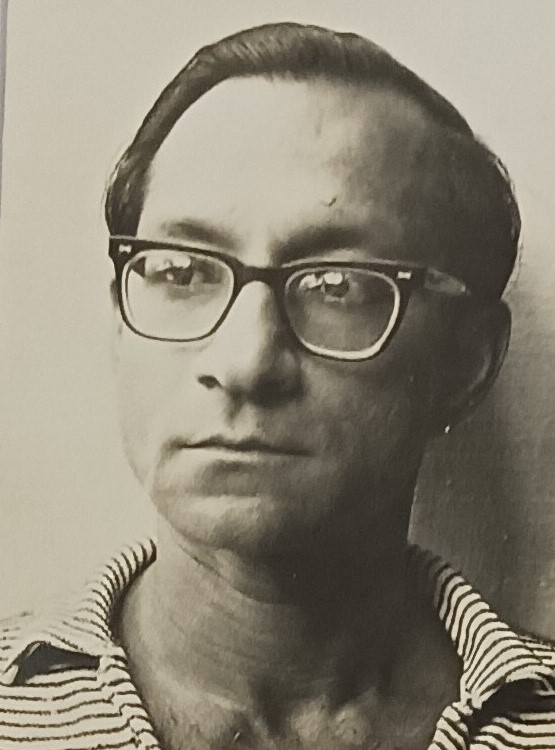
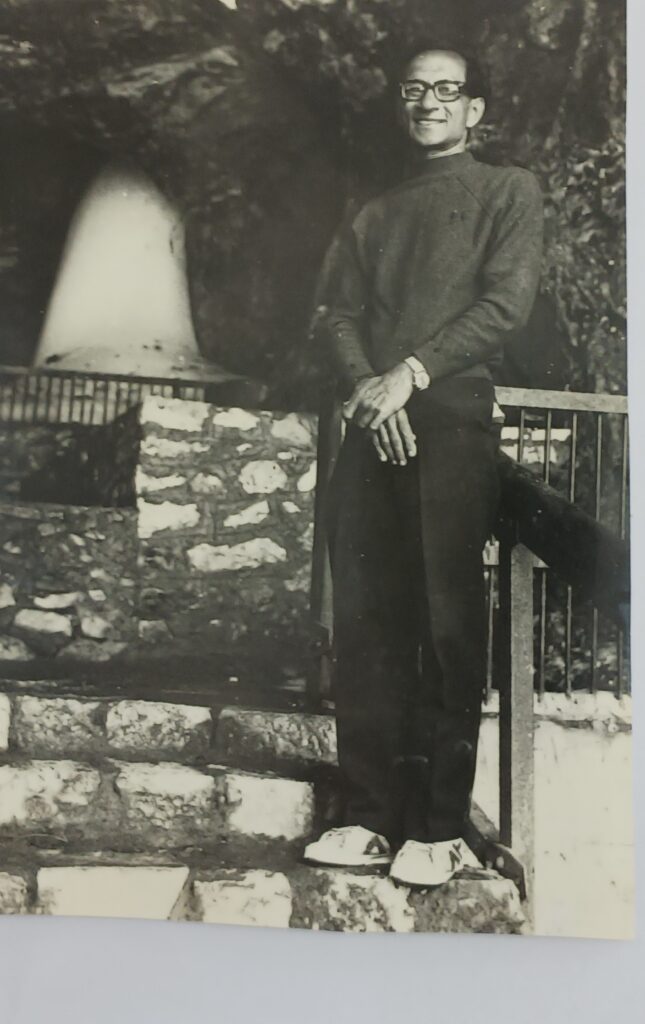
Aniruddha Sircar: A Pictorial Tribute
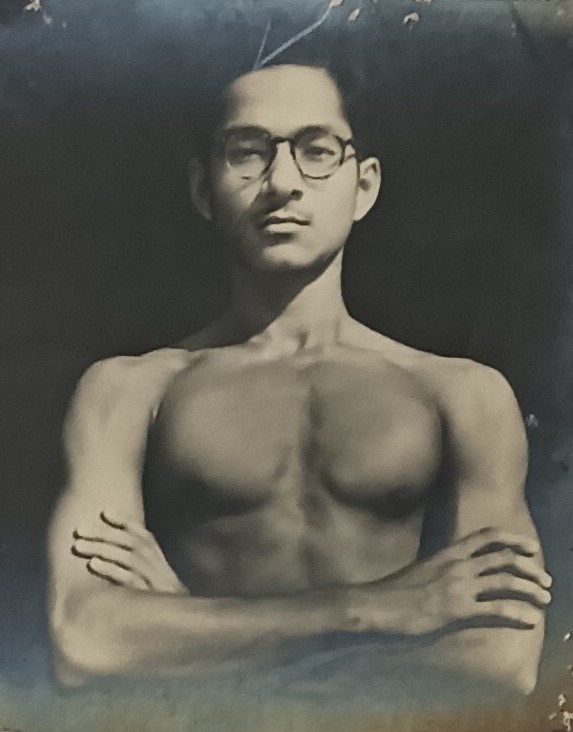
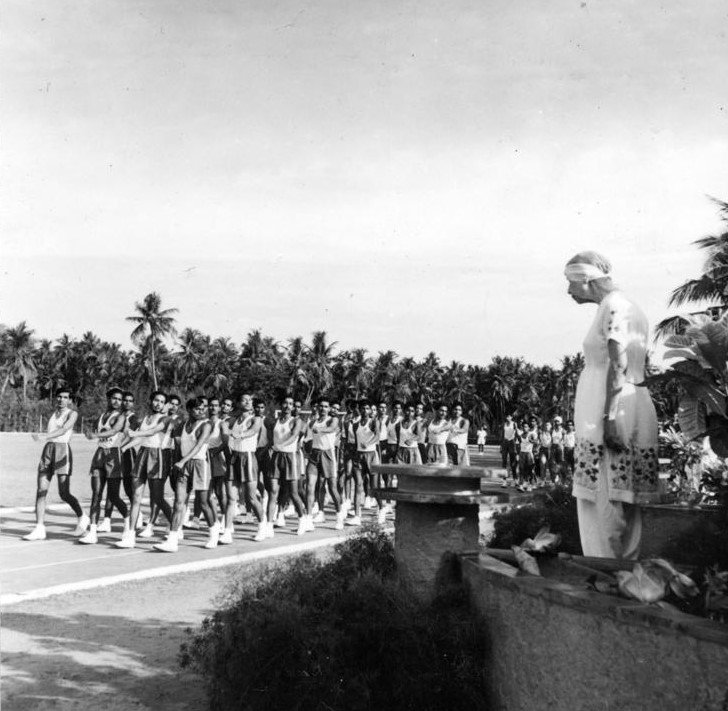
Aniruddha Sircar in the second row at the Sportsground on 1 July 1954.
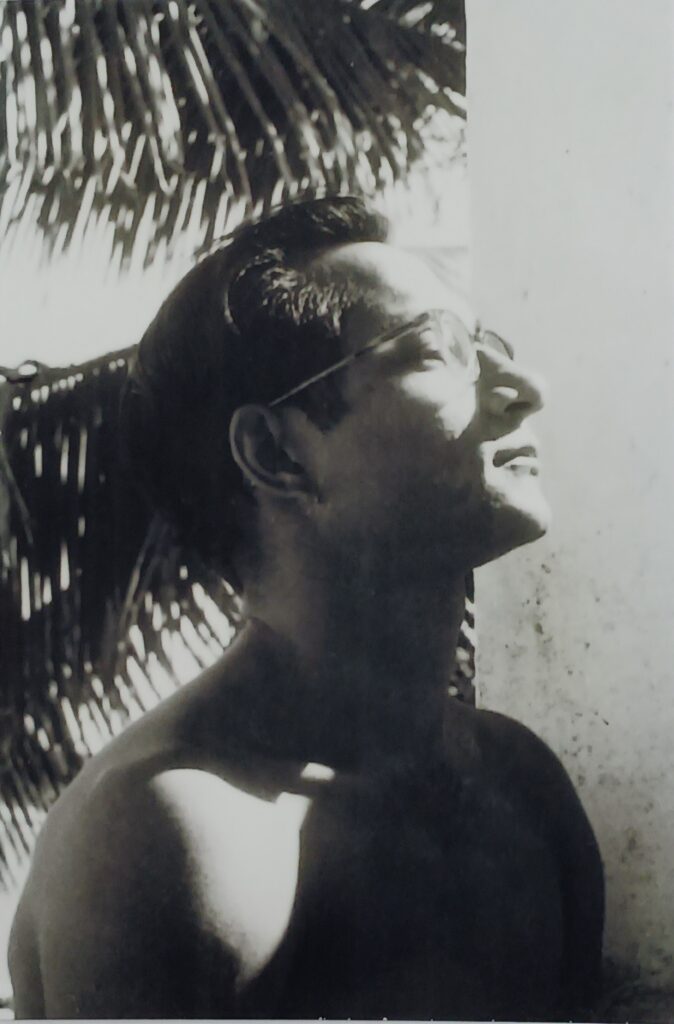
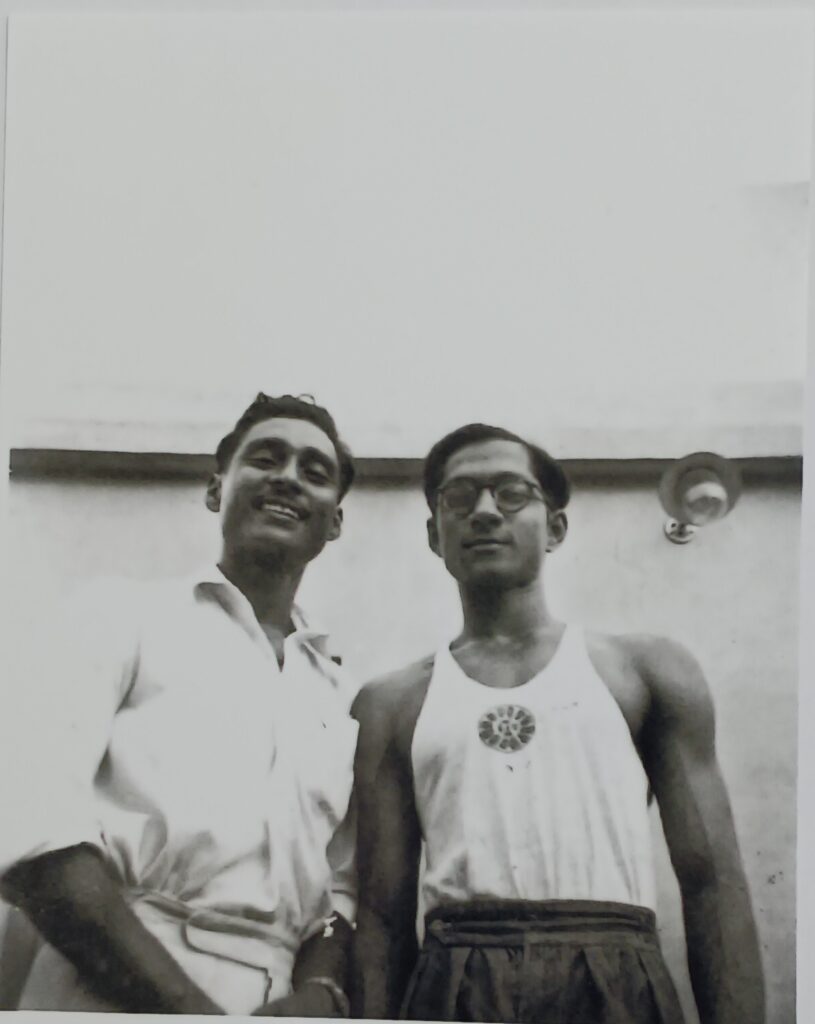
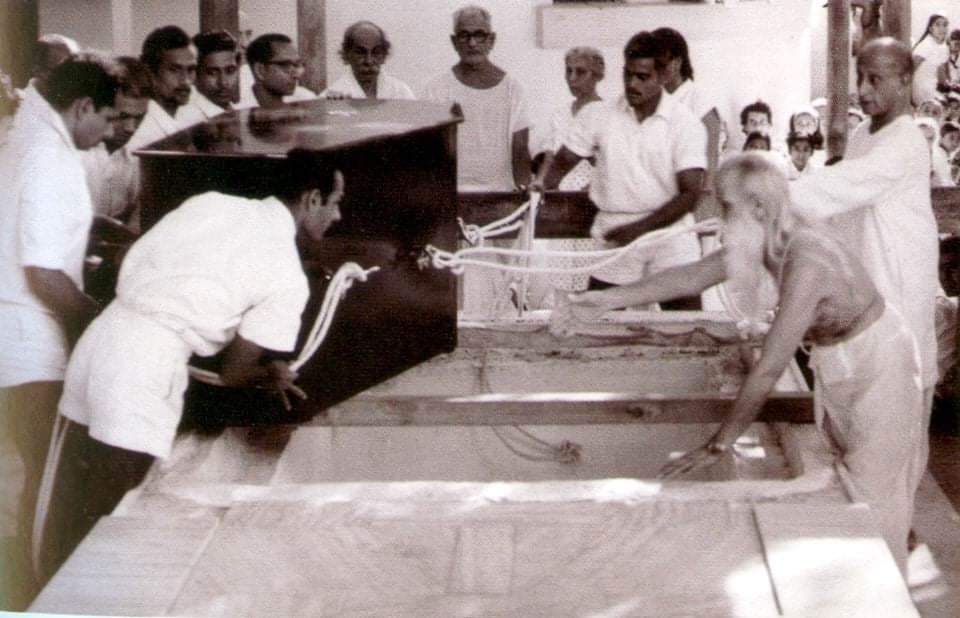
Aniruddha Sircar (on the right of Nolini Kanta Gupta) with the Mother’s casket on 20 November 1973.
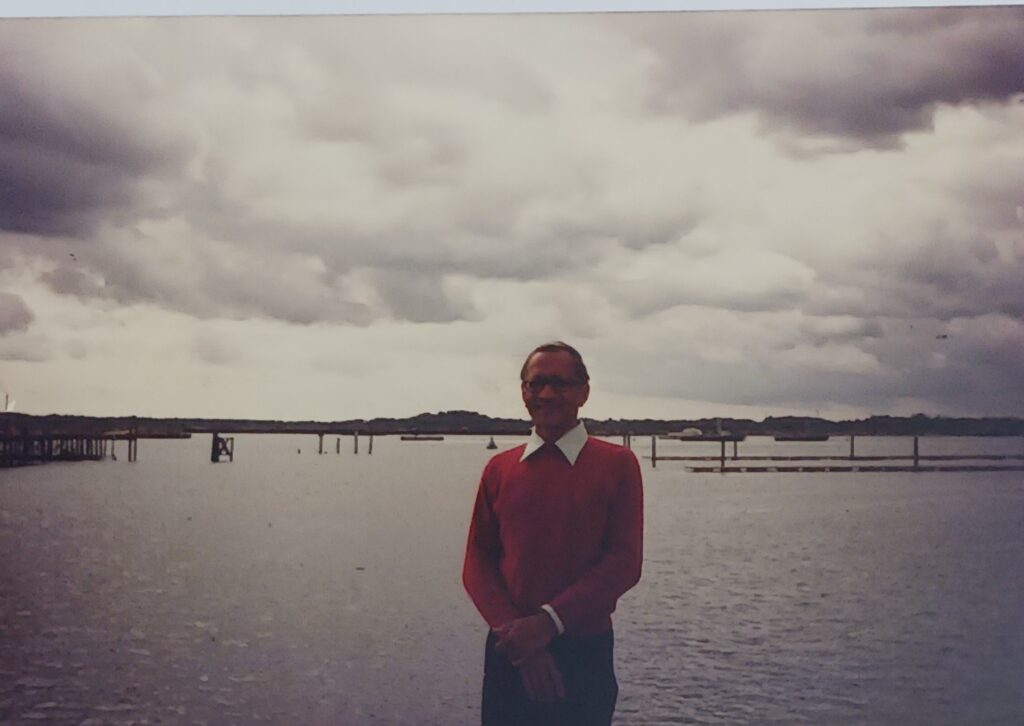
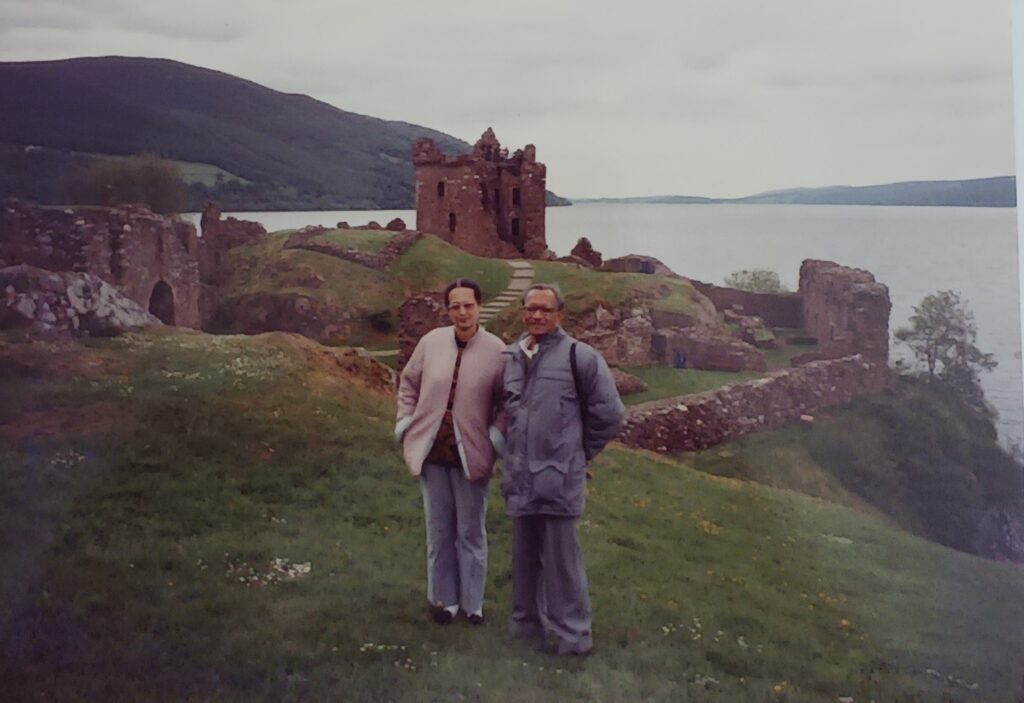
Aniruddha Sircar and Gauri Pinto.
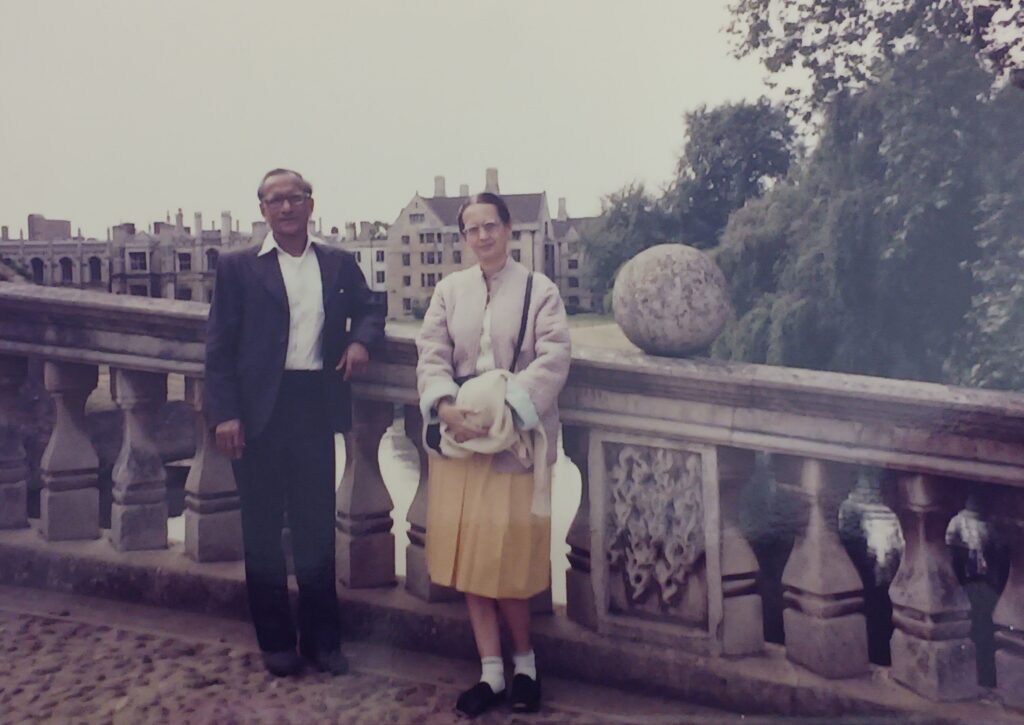
Same as above.
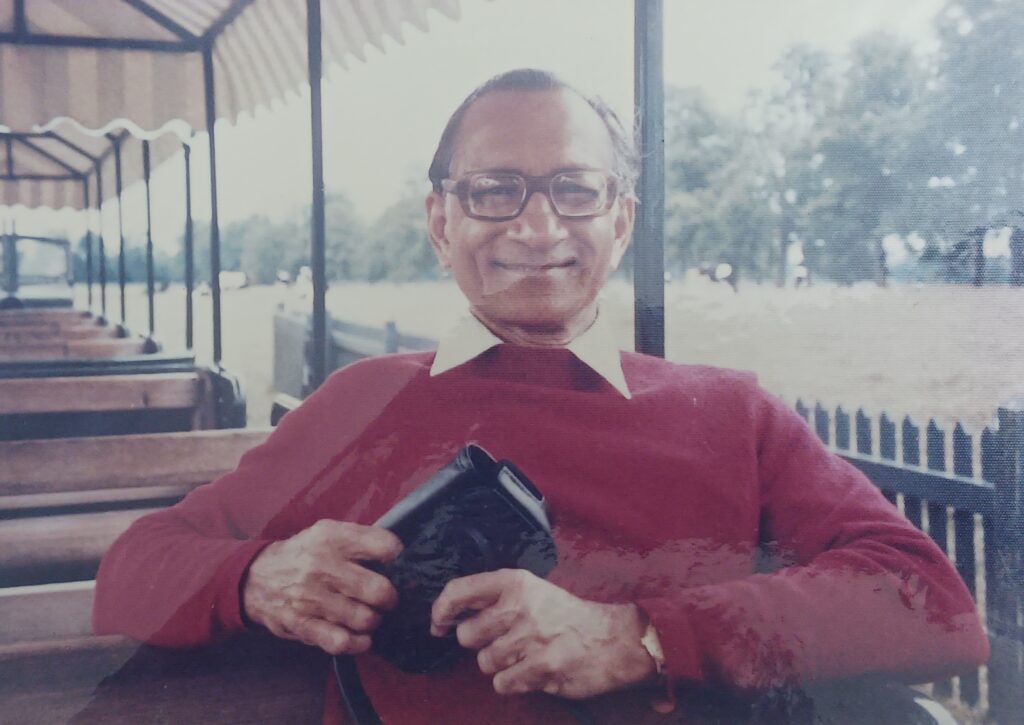
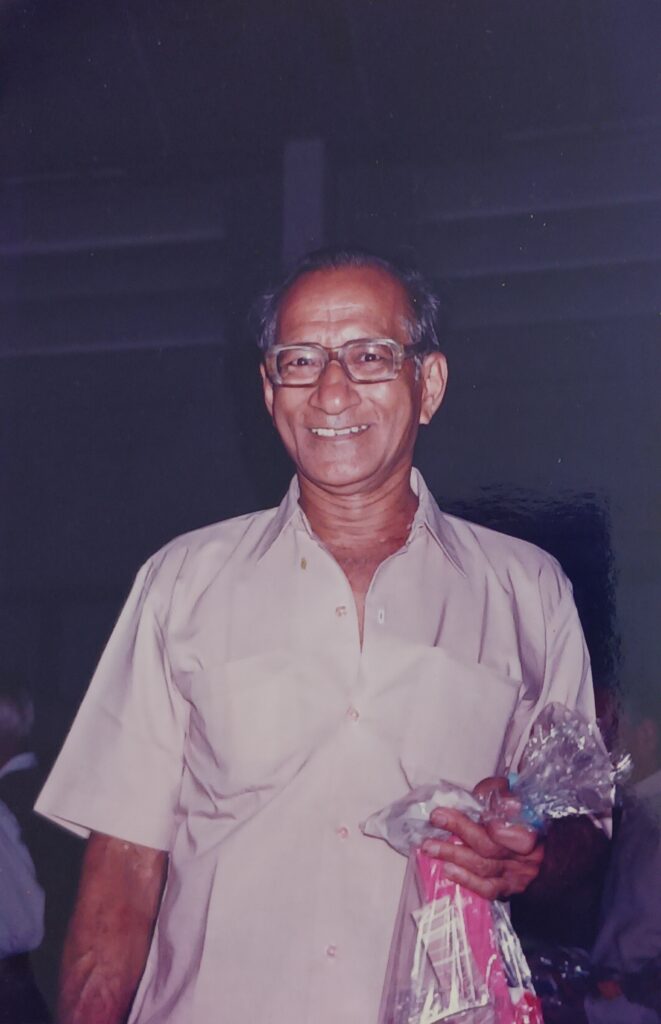
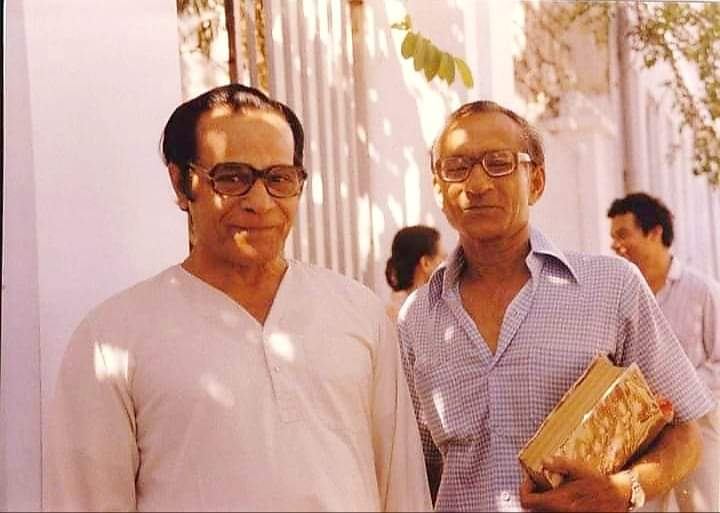
Aniruddha Sircar and Chiman-bhai.
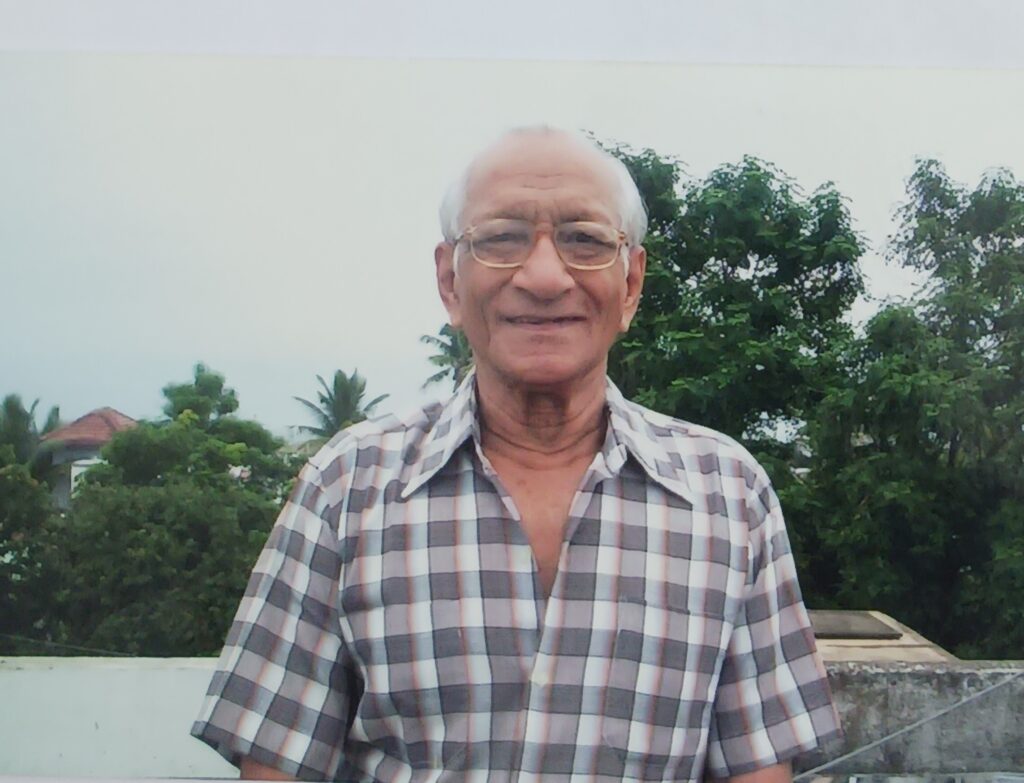
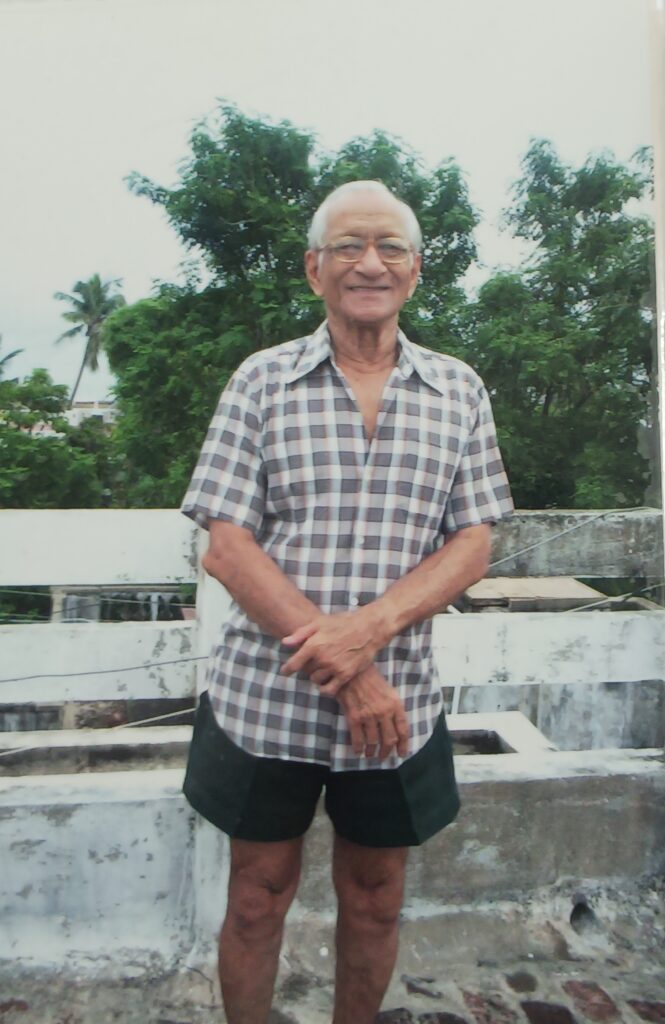
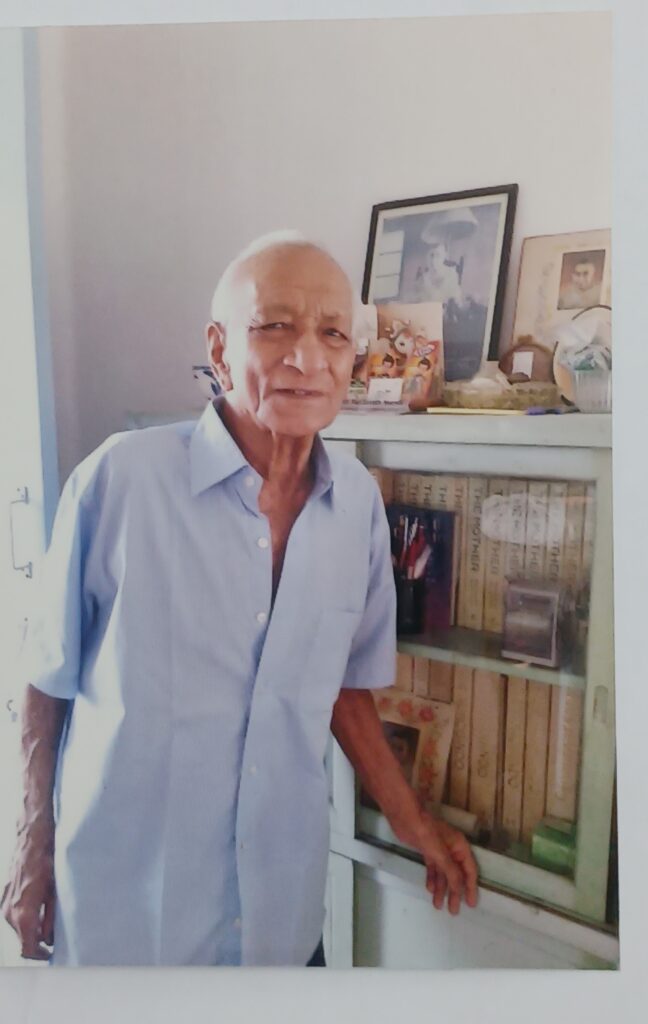
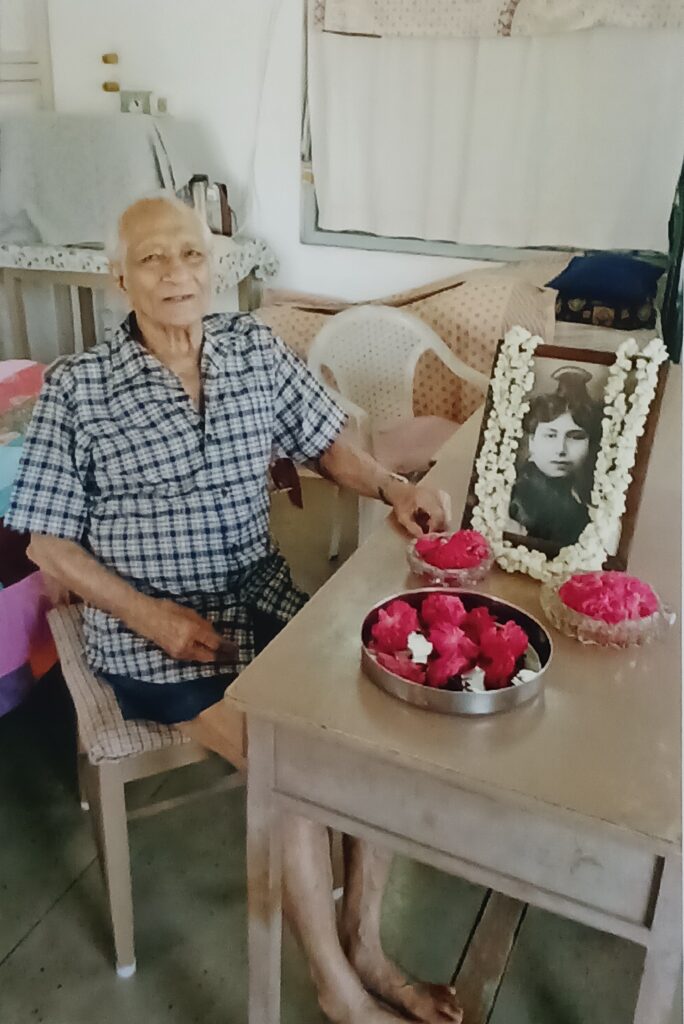
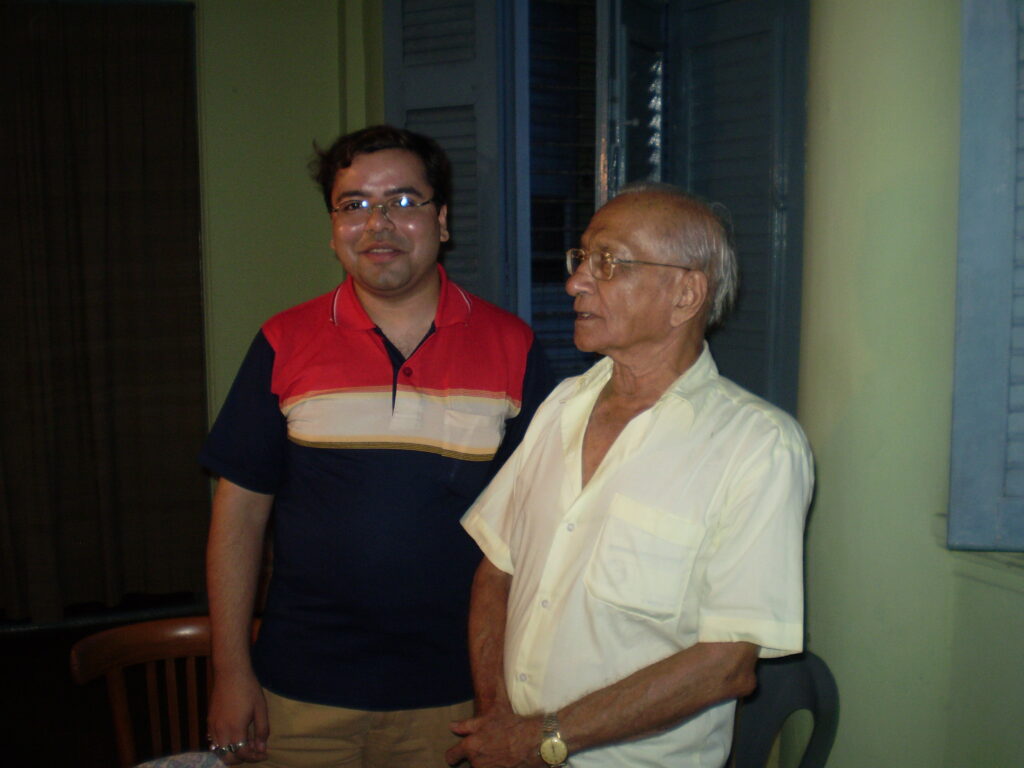
Aniruddha Sircar with Anurag Banerjee in November 2013.
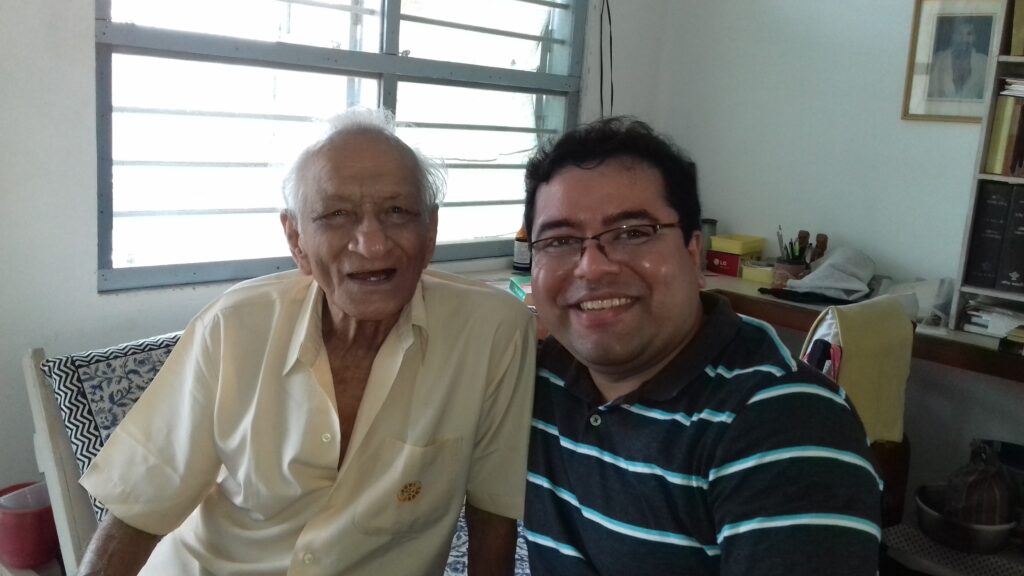
Aniruddha Sircar and Anurag Banerjee on 1 March 2020.
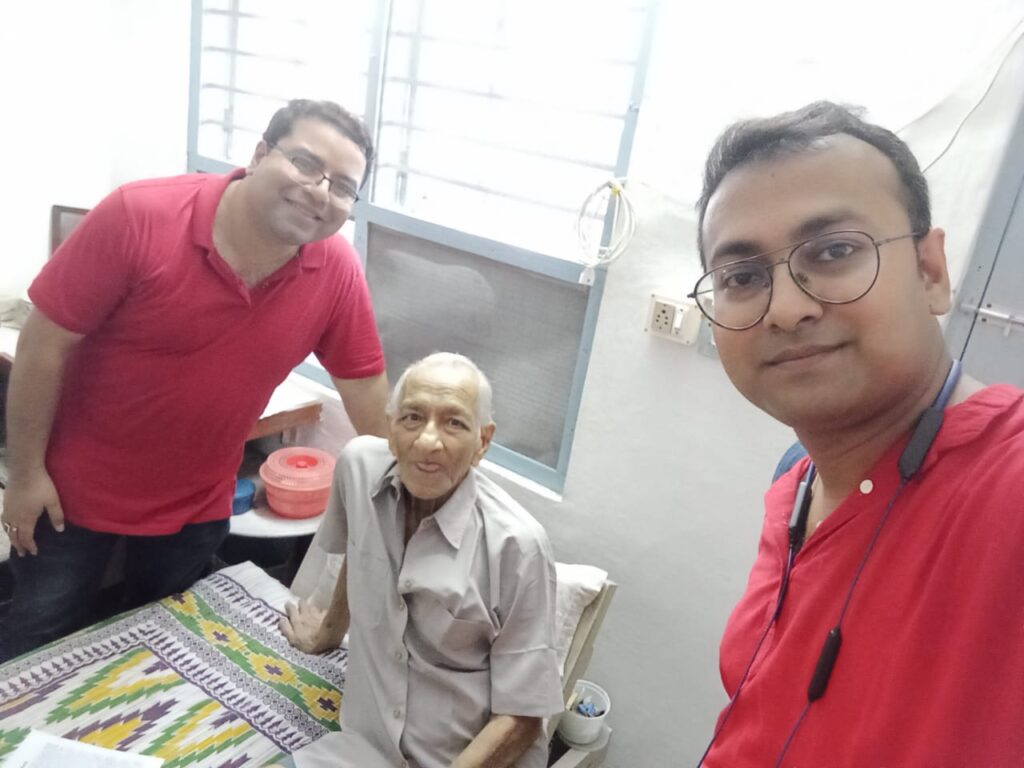
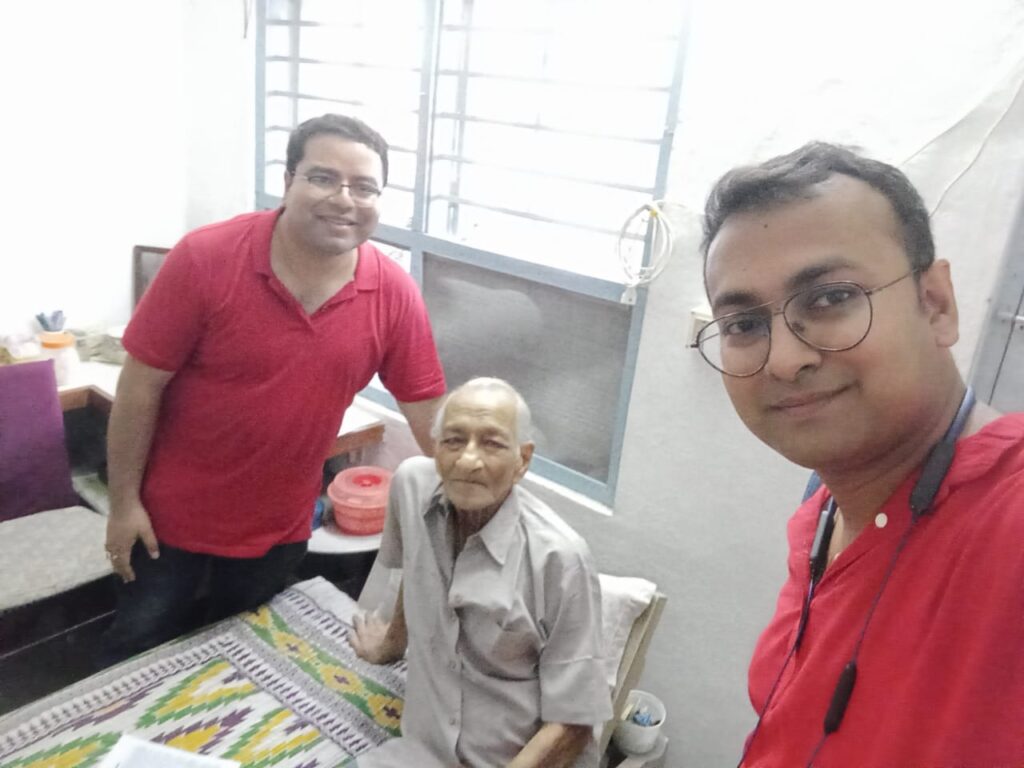
Aniruddha Sircar with Anurag Banerjee and Souvik Banerjee on 20 February 2023.
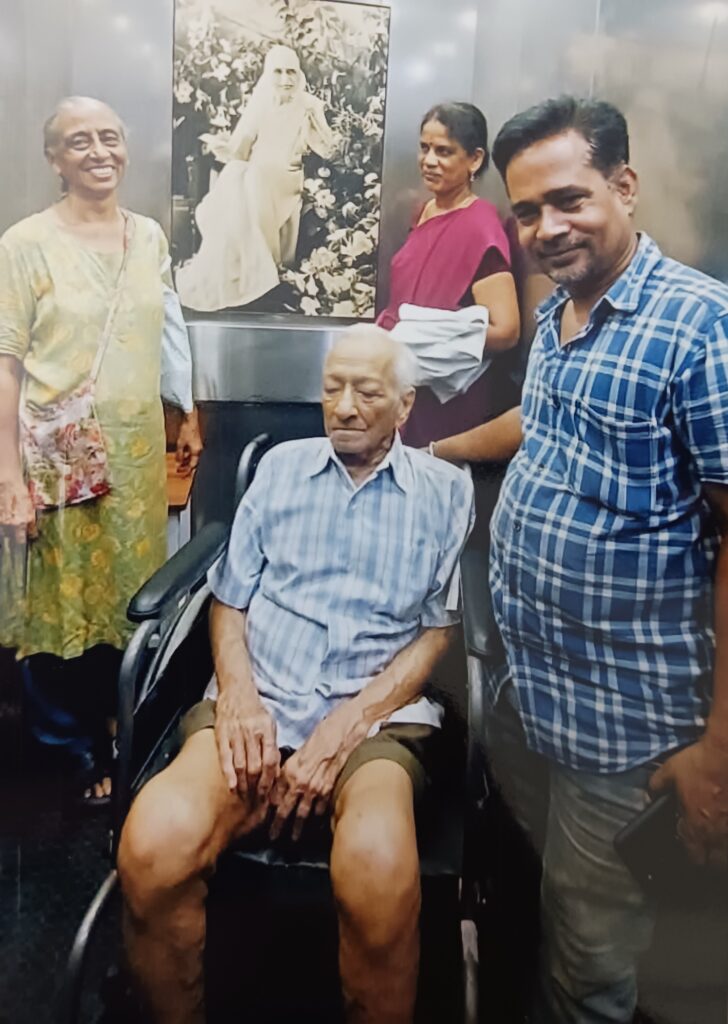
Beautiful
Thank you, Anurag, for sharing such details of Shri Aniruddha Sircar .
A truly wonderful read. Anurag, thank you for these delightful anecdotes — each one of them is a little treasure.
Excellent, with so many side details.
Many thanks for the lovely write-up on our dear Babu-da, one of my most favourite teachers! I do not know if we are referring to the same book or not, Babu-da once showed me a book given by Sri Aurobindo to him in which the inscriptions in black ink ran as follows: “To Aurobindo, Blessings. Sri Aurobindo” where the Aurobindo name was stricken off and re-written as Aniruddha!
Dear Anurag da,
A million thanks for this illuminating article on Babu da. It is a finely wrought and perceptive study of a man for whom I have long cherished the deepest admiration. Your essay revealed to me many facets of his life and personality that had remained unknown to me; through your words, I encountered him anew.
When I first came to Pondicherry in 1965, I could not have imagined that I would come to adore two Aurobindos. Sri Aurobindo had been my chosen guru since childhood, a spiritual presence who silently shaped my inner world. Yet I later learned that the teacher I most admired in the Ashram—our Babu da—had also originally been named Aurobindo. It seemed to me a providential symmetry.
Upon my arrival in Pondicherry, I wrote to The Mother expressing my ardent wish to join the Ashram School. I was to be assessed and placed in an appropriate class. My entrance test was conducted by Paru di, who judged me fit for the seventh class. Dissatisfied, and perhaps a little ambitious, I wrote again to The Mother, enclosing my original Senior Cambridge Certificate ‘O’ Level, and pleaded to be admitted to a higher grade.
I was then sent to Babu da, who received me with warmth and spoke to me in a manner both cordial and reassuring. As a result, I was admitted to the Higher Course, joining the same class as Ravi, Kanu, Amitangshu, Shrijeet, Prema, and Rita (Sardana). It did not take long for me to discover that, though I was older in years, I was the weakest student in the class. Babu da was our English teacher. He was invariably poised, gentle, and affectionate towards me. My English was superficial; my French, as Yatanti di candidly remarked, was below even the fourth-standard level. In no sphere could I compete with my classmates. Babu da perceived this without my having to confess it.
Yet he never allowed me to feel diminished. On the contrary, he encouraged me quietly, offering practical suggestions and subtle guidance to help me improve. His was not the encouragement that flatters, but the kind that fortifies.
I remember vividly a day in 1967—20th December. I arrived late to his class, having gone to The Mother for darshan. As I entered, the entire class broke into “Happy Birthday,” and Babu da, with affectionate mischief, announced, “I will read a story from PG Wodehouse.” He then read aloud, and the classroom dissolved into waves of laughter. The hour was luminous with joy. That day remains etched in my memory as a celebration not merely of a birthday, but of a spirit.
I have often written to my friends in Pondicherry that Babu da taught me how to laugh, just as the filmy song goes, “तुमने मुझे हँसना सिखाया“. For that gift—the gift of laughter—I remain eternally grateful.
Some of my most treasured hours with him were spent far from India, when he visited me in Vienna. Babu da, Gauri di, Pinou Patel, Amita (my wife), and I wandered through that beautiful city together. We visited museums, attended a concert, and even drove to Salzburg to see the Mirabell Gardens, immortalized in the film The Sound of Music. Those days were filled with a quiet, abiding joy.
Often I visualize him seated on a small chair in our modest flat, in the very corner where, years later, Sri Champaklal also sat during his visit with Mohan Bhai. The image has become almost sacramental in my memory.
I cherish Babu da’s words—words that reveal both philosophical depth and poetic vision:
“Where are Time’s ravages? Ay, where are they?
Think not of them, thy work is as keenly felt,—
When cups and saucers made of china-clay
Are smashed to bits, as by blows with hammers dealt;”
To write thus requires not merely linguistic skill but a far-reaching vision—one that sees beyond decay to enduring significance.
Anurag da, once again, my heartfelt thanks for this tribute. It holds special significance, appearing as it does just before his birthday. Apropos, for many years I have remembered Babu da on his birthday, since it falls just a day after Amita’s—12th March. The proximity of those dates has always seemed to me a tender coincidence.
I wish I could write more about Babu da. But I am not as gifted as you are, and at eighty my memory has, as they say, gone wool-gathering. Yet what remains is not fragmentary—it is luminous.
With warm regards,
Nilesh Nathwani
Vienna