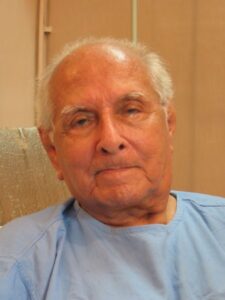
The Mother and the Beings of the Vital Plane
K.D. Sethna (Amal Kiran)
The Mother and Sri Aurobindo did not work only on the physical plane. Behind the physical are subtle realms with influences good, bad and indifferent. The Victory Day of 24 November 1926 brought the Overmind Gods into direct alliance with our Gurus’ purpose of earth-transformation and rendered more effective their fight with the occult Evil that acts upon earth from its headquarters on the vital plane either directly or through human beings open to it.
The Overmind dynamism, preliminary to the Supermind power which was the ultimate aim, came into repeated use during the Second World War. This war brought into play two figures whom Sri Aurobindo and the Mother recognised as extending into the physical plane the occult Evil at its most dangerous. Hitler was seen as possessed by the Rakshasa-aspect of that Evil. The Rakshasa is a devouring “Giant” who openly declares his enormous greed and makes no secret of his ambition to dominate the world with a master-race of ruthless henchmen. Hitler’s Mein Kampf is a glaringly open manifesto of such greed and ambition. In Stalin Sri Aurobindo and the Mother discerned a phenomenon not merely of possession but of incarnation, a vital being born in a human form and not just employing that form as its medium—and here was the Asura-aspect. The Asura is an all-gripping “Titan” who is even more destructive than a “Giant” but with a cold cunning intelligence which conceals its subversive policy under a mask of high ideals like economic equality and social classlessness. Stalin’s pronouncements are all couched in noble-sounding terms borrowed from Marx and Lenin but directed to nefarious ends.
There are several other orders of vital beings bent on harm—like those who bear the Pisacha-aspects. The Pishacha is the “Demon” obsessed with a defiling and mutilating mania: he is utter foulness and ugliness personified. The Pisacha always puts himself slavishly at the service of the Rakshasa and Asura.
The characteristic mark of all these denizens of the vital plane is that the force they express is “typal” and not, like the earth’s, “evolutionary”. The sign of a typal force is a drive towards mechanical uniformity, rigid regimentation, strict conformity to one type alone—a drive contrary to the many-sided, flexible and free movement of the evolving human soul striving, by means of trial, error, self-correction and through a thousand truths and innumerable impulses, to live and let live more and more abundantly, more and more profoundly.
The Mother and Sri Aurobindo considered the Second World War as their own war because of Hitler’s typal tyranny which, if successful, would have blocked their work of spiritual evolution. Sri Aurobindo kept in close touch with every development by means of a radio fixed in his room by Pavitra. Many of us understand that he intervened at various turning-points. But not many realise a most crucial intervention by the Mother. I came to know of it from private sources nearly twenty years ago, directly from Udar and indirectly through André. We may look upon it as based on a prophecy Sri Aurobindo had made at the end of his poem “The Dwarf Napoleon”.
This poem ridiculed Hitler’s pretensions to equal “the immense colossus of the past” who had arisen as a master-militarist to save the results of that progressive uprising, the French Revolution, from being submerged by the old-world powers ranged against it in all Europe outside France. Indeed, Napoleon was an autocrat, but Sri Aurobindo always pictured him paradoxically as a despotic defender of democracy. As the poem puts it:
A movement of enormous depth and scope
He seized and gave cohesion to its hope.
Far other was Hitler, yet “a mighty Force” had taken hold of him:
In his high villa on the fatal hill
Alone he listens to that sovereign Voice,
Dictator of his action’s sudden choice,
The tiger leap of a demoniac skill. [Sri Aurobindo, Collected Poems, The Dwarf Napoleon]
And Sri Aurobindo concludes:
Thus driven he must stride on conquering all,
Threatening and clamouring, brutal, invincible,
Until he meets upon his storm-swept road
A greater devil—or thunderstroke of God. [Sri Aurobindo, Collected Poems, The Dwarf Napoleon]
This prophecy was penned in October 1939, when Hitler and Stalin had already signed a pact of non-aggression. Thus Stalin, the “greater devil”, seemed close-linked to the lesser—and against them both there could be only God’s thunder stroke preparing in the dim future. But within two years—to be precise, on 22 June 1941—the possibility of Sri Aurobindo’s prophetic words coming true loomed up: Hitler attacked Russia. Strangely enough, Stalin was caught somewhat on the wrong foot and there were German victories at the start. But “the Man of Steel” soon showed his diabolic superiority and, after the decisive blow at Stalingrad in 1942 on 25 November (Amal Kiran’s thirty-eight birthday, by the way!), the lesser devil was critically weakened. Spiritual-minded historians may surmise that Sri Aurobindo, especially since Russia was now automatically allied to Churchill’s England and Roosevelt’s America, backed with his Overmind puissance the greater devil temporarily in order to smash Hitler who was at that time the bigger immediate menace to civilisation. But would any of them guess that the folly Hitler committed of turning upon Stalin and drawing the more heinous devilry against himself had the Mother’s occult goad behind it?
The Mother knew exactly what Vital Being was egging Hitler on. She has dubbed him “The Lord of Falsehood”, a Rakshasa and Asura in one, as it were, who arrogates to himself the title: “The Lord of the Nations.” Finding Hitler going from strength to strength, she resolved to imitate the special form in which the Lord of Falsehood always appeared to him at his secret headquarters in the Bavarian Alps and inspired him to fantastic actions which yet proved triumphant. He used to come to Hitler clad in a silver cuirass and with a silver helmet from which a plume-like flame shot forth. Taking the same form in her subtle body and exteriorising her consciousness, the Mother went to the Führer and commanded him to launch on the most fantastic-seeming action of all: an attack on Stalin’s Russia, his publicly avowed ally. Hitler, as usual, accepted the order implicitly. In view of the unexpected brilliant successes in the past, there was no question now of his doubting the new mandate delivered out of the same flashing presence by the “sovereign Voice”. His resolve to unleash a sudden onslaught on his former partner was unbreakably set.
The Mother, on her way back from him, met the real Lord of Falsehood proceeding towards the Fuhrer’s “bunk” at Berchtesgaden. He was astonished to see his own special form face to face with him. He realised what must have happened. He hurried to Hitler to contradict what had been commanded. But Hitler remained unconvinced and carried out the attack. Secretly he had himself wished to destroy Communist Russia and, when that long-cherished yet hitherto checked dream, which had been outlined in his Mein Kampf, was given so glorious a push forward, he could not help thinking that the second appearance of the guiding spirit was some piece of fraud.
As Sri Aurobindo had predicted, the greater devil brought about the lesser’s downfall, but the prediction now revealed an unsuspected significance. At first sight Sri Aurobindo’s words would seem to posit two alternatives as responsible in the future for the downfall: either an encounter by Hitler with a more diabolical darkness than his own or else a terrific bolt from the Divine’s blue. Now the dividing “or” turned out to imply not a pair of different destructive forces but simply two different names for one and the same Mahakali, for the greater devil was pulled into action willynilly by the hands of the Divine. The Mother, by a bold piece of what we may call a divine outdevilling of the super-devil, the Lord of Falsehood, created directly a head-long clash between the two arch-enemies of Light, and managed to make this very clash a thunderstroke of God.
*
The Mother and the Lord of Falsehood: A Reader’s Letter and the Author’s Answer
The Letter
I was going through the article “Our Light and Delight”, No. 18 and was astounded by the statement that the Mother assumed a form of the Lord of Falsehood in order to misguide Hitler and make him launch an attack on Stalin’s Russia. This seems incredible. I have not heard of this before and surely it is not the way the Mother worked for achieving results. Did she really say at any time that she had assumed this form?
The Answer
I am sorry I have disturbed you. But what I have written about is factual. Both Udar and André heard it from the Mother herself. It is also in a talk dated 12 January 1965, which was taped and is included in the publication called Agenda. I am told that the Mother is on record there as having said to Hitler: “Go… To have the supreme victory, go and attack Russia.” You have been shocked because you have misconceived the world-roles played by revolutionary Avatars like Sri Aurobindo and the Mother. Old ideas about spirituality are leading you astray in the assessment of the Supramental Incarnations.
Let me elucidate my point. But before I come to immediate particulars I may say a word on Incarnations in general—Incarnations in the Indian sense. The two greatest and most recognisable Avatars before Sri Aurobindo were Rama Dasarathi and Krishna Vasudeva. Both of them carried out sanguinary tasks involving the direct destruction of those who embodied anti-divine titanic forces. A lot of lives were lost not only on the side of these embodiments but also on the side of the Avatars. War in the full sense of the term, involving secrecy, ruse and surprise, was accepted as part of the Avataric mission. Orthodoxy is bound to get shocked and several attempts have been made to allegorise away the lives and deeds of Rama and Krishna. Particularly Krishna has given orthodoxy pause; it is finally through his stratagems—contrary to the traditional warriors’ code—that, according to the Mahabharata, the Pandavas destroyed their enemies and Yudhishthira became Emperor.
By insisting on transformation of the physical existence and not merely a purification as a step towards transcendence of earth and life—by bringing the new message of the Supramental Descent—Sri Aurobindo and the Mother are more specifically evolutionary in their mission and more openly opposed to the rule of the Asura and the Rakshasa in the world. Sri Aurobindo did not hesitate to take part in revolutionary politics in the days before he came to Pondicherry. His work meant risk of life both to himself and his followers, as well as to those who were ranged against him. He had even in mind an armed insurrection.
When World War II broke out he went out of his way to give support to the Allied Cause. This evoked a protest from orthodox spiritual thinkers: “How can a master of spirituality associate himself with a war instead of standing above both the parties? Surely the Allies are no saints as compared to the Nazis!” Sri Aurobindo took care to show that, whether the Allies be saints or not, they could not be equated to Hitler and his henchmen: the Allies represented a side which was in accord with the many-moded evolutionary drive of Nature, unlike Nazism which was an inrush from the typal Rakshasic plane to take possession of the human world. Sri Aurobindo also pointed out the common error of putting together a human historical phenomenon like British Imperialism and Hitler’s barbarous gospel of the Master Race. Lastly he not only espoused the Allied Cause but also took the bold step of calling the War “The Mother’s War”.
All this should show you how intimately the Mother and he were connected with the conduct of the war and with all its vicissitudes. They were like two Super-Generals. Sri Aurobindo has explicitly declared that he pitted his spiritual force against the Nazis and later against the Japanese. He kept himself acquainted with all the turns and twists of the campaigns both on the European front and on the Asian. What the Mother did at a critical moment was absolutely in accord with the roles they had assumed—and it was a continuation or development of the subtle and occult process which Sri Aurobindo had hinted at in the concluding lines of The Dwarf Napoleon.
I hope I have clarified the doubt you had expressed saying that the Mother could not have acted in the manner I have depicted and that this could not be her way of action.
[Source: Our Light and Delight]
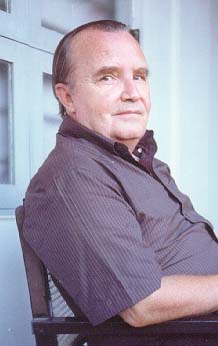
Lest We Forget
Georges Van Vrekhem
On 6 June 2004 the Chancellor of Germany participated for the first time in the yearly commemoration ceremony of the Allied landing in France, on the beaches of Normandy, the decisive military operation which would lead up to the end of the Nazi regime and of the Second World War in Europe. The invitation of the German Chancellor, Gerhard Schröder, and his embrace by the French President Jacques Chirac were meant as the final gestures of reconciliation which would put, after sixty years, a definitive end to World War II. In the newspapers one could read: “Time has healed the wounds. It’s time the Germans were there”, and the words of Mr Schröder, saying that his presence was ‘hugely symbolic’ and that it meant that “the Second World War is finally over.”
The Second World War is still very much alive in the consciousness of humanity, as shown by such successful films like Schindler’s List, Saving Private Ryan, The Pianist and the TV-serial Band of Brothers. There is, however, little knowledge about the historical facts. What remains in the general awareness are some vague notions of the Holocaust, the bombings of Great Britain and Germany, the SS, and the still fascinating but often caricatural personality of Adolf Hitler. Some prominent historians, like HR Trevor-Roper and Alan Bullock, admit that they cannot explain Hitler, which means, considering the importance of the Führer in Nazi Germany, that they cannot understand the war. There is much writing about Hitler’s ‘charisma’, about the magic power his words exerted on his audiences, and about the ‘evil’ embodied in the SS and their reign in the concentration and extermination camps. But explanations of the gigantic and terrible event that was the Second World War there are as many as there are students of history, and most key-facts are prudently worded in the subjunctive mode.
We, Aurobindonians, have a general explanation of this war, in fact an encompassing one, provided to us by Sri Aurobindo and the Mother. In 1942 Sri Aurobindo wrote to a disciple: “I affirm to you most strongly that this is the Mother’s war. You should not think of it as a fight for certain nations against others or even for India; it is a struggle for an ideal that has to establish itself on earth in the life of humanity, for a Truth that has yet to realise itself fully and against a darkness and falsehood that are trying to overwhelm the earth and mankind in the immediate future. It is the forces behind the battle that have to be seen and not this or that superficial circumstance.” The emphatic force with which Sri Aurobindo wrote here was rather unusual of him.
And he continued: “It is a struggle for the liberty of mankind to develop, for conditions in which men have freedom and room to think and act according to the light in them and grow in the Truth, grow in the Spirit. There cannot be the slightest doubt that if one side wins, there will be an end of all such freedom and hope of light and truth, and the work that has to be done will be subjected to conditions which would make it humanly impossible; there will be a reign of falsehood and darkness, a cruel oppression and degradation for most of the human race such as people in this country [i.e. India] do not dream of and cannot yet at all realize.” [Sri Aurobindo, Autobiographical Notes, p.463]
For Hitler did not act on his own initiative. Sri Aurobindo and the Mother have stated repeatedly that Hitler was possessed by an emanation of one of the great Asuras, ‘the Lord of Falsehood’ who calls himself ‘the Lord of the Nations’, and that he acted as his instrument. “One can say that Hitler is not a devil but is possessed by one.” [Nirodbaran, Talks with Sri Aurobindo, p. 575] Of this possession Hitler was ‘very conscious’, for he was ‘an excellent medium’. “Without this possession he would be a crudely amiable person with some mental hobbies and eccentricities … No one thought of Hitler as having anything in him. Then came the vital development, the vital Power holding him in his clutch.” [Purani, Evening Talks, p. 645; Nirodbaran, Talks with Sri Aurobindo, p. 85] This two-sidedness of Hitler’s character is mentioned by all his biographers. Often seemingly floating and indecisive, he could suddenly, “when the spirit descended upon him”, jump into verbal action and unleash a torrent of words with a power which left nobody in his presence untouched.
“The problem is to save the world from domination by the Asuric Forces”, said Sri Aurobindo in September 1939. “It would be awful to be ruled by the Nazis or Fascists. Their domination will let loose on mankind what are called the Four Powers of Hell—obscurantism, falsehood, suffering and death. Suffering and death mean the horrors of war.” [Nirodbaran, Talks with Sri Aurobindo, p. 232] In his sonnet ‘The Iron Dictators’, Sri Aurobindo calls these powers of hell “The iron dreadful Four who rule our breath, / Masters of falsehood, Kings of ignorance, / High sovereign Lords of suffering and death.” [Sri Aurobindo, Collected Poems, p. 136] It may be remembered that the four great Asuras, of whom Sri Aurobindo and the Mother always spoke respectfully, were the reversal, at the beginning of the cosmic evolution, of the essential divine attributes which are Light, Truth, Life and Bliss.
Hitler is still often misrepresented as something like the droll figure in Charlie Chaplin’s parodical film The Great Dictator, or as a kind of screaming, half-mad sexual pervert. The fact is that he was driven by the vision inspired into him by his Lord, and that this vision was world-encompassing. The Aryans (read: the Aryan Germans) were the master race, whose rightful duty it was to submit all other peoples and rule the earth. He, Adolf Hitler, was the German Messiah, sent with the mission to lead his people towards a golden age, the Empire of a Thousand Years. As the Germans were the Chosen People, there was no place for another people which claimed to be chosen, namely the Jews, who therefore had to be eliminated by any means. The human acquisitions of intelligence, individual liberty and social fraternity, together with the virtues of the soul, were no longer of importance. They had to be replaced by the properties of power, physical strength, harshness, insensitivity, and other attitudes which would favour the global domination of the (white) Aryans.
As each God contains in himself all the qualities of all other Gods and of the Divine as such, so each Asura contains in himself all the anti-divine qualities of the other Asuras. Falsehood, ignorance, suffering and death never exist separately, though they may be dominant according to the circumstances. In India the beings who are these powers are known as ‘Asuras’, the basically anti-divine cosmic powers said to be older than the Gods and who will do battle with them for as long as the divine Providence allows or deems necessary. This battle between the good and the evil Forces is the main theme of the mythology of all peoples. In the West the same four scourges are known as ‘the Four Horsemen of the Apocalypse’.
This takes us directly to Hitler, acting under the inspiration of the Lord of Falsehood, and the background of the Second World War which necessitated the direct intervention of Sri Aurobindo and the Mother. It is the intention of the Asuras, still lords of the earthly evolution, to maintain their reign over the earth and all beings on it, for their existence depends upon this reign. The battle between the Asuras and the Gods has always been, in essence, a fight about the possibility of evolution upon the Earth. The Asuras want to keep things as they are, for they thrive in darkness and ignorance; the Gods want to construct the path of evolution that, from that darkness and ignorance, will lead back to the divine Light, Truth and Bliss. (One can follow the gradual advance of the progress made up to the present evolutionary stage in what Sri Aurobindo calls ‘the procession of the Avatars’.) The battle of the Gods has rendered the apparition upon earth of the human being possible. Humanity has now reached the critical point of transformation into a higher, supramental, divine being.
This transformation is, of course, what the work of Sri Aurobindo and the Mother were and are about. The sequence of hot and cold global wars of the 20th century, seen in this light, acquires a significance which explains the huge acts of destruction and death, and even the menace of the extinction of mankind. One may search in vain for another explanation which so fully and clearly fits the facts. But the concepts mentioned in the previous paragraphs are, generally speaking, not within the horizon of Western thought at present and only still partially alive in the East. Besides, our ‘post-modern’ era is a time of confusion.
“What we have to see is on which side men and nations put themselves”, wrote Sri Aurobindo. “If they put themselves on the Asuric side, they at once make themselves instruments of the Divine purpose in spite of all defects, errors, wrong movements and actions which are common to human nature and all human collectivities. The victory of one side (the Allies) would keep the path open for the evolutionary forces; the victory of the other side would drag back humanity, degrade it horribly and might lead even, at the worst, to its eventual failure as a race, as others in the past evolution failed and perished.” [Sri Aurobindo, Autobiographical Notes, pp. 465-466]
The human being consists of matter, the life forces and the mind. So does humanity as a whole. The possibilities of the individual being remain limited by the possibilities created in the species in the course of the long battle of the divine and the anti-divine forces during the upwardly spiralling cycles of humanity. Within humanity this battle is fought as the yoga of the select souls which carry the destiny of humanity, by the vibhutis, and at the most crucial moments by the Avatars. The Avatars incarnate in times of greatest need, when humanity itself, in its great souls and vibhutis, is not able to go beyond its capabilities. These times of greatest need have always an evolutionary significance: the Avatar comes to take evolution a step forward.
It would be illogical to suppose that humanity can produce the next higher being, provisionally called the ‘superman’, if it is not fully developed, if it has not fully explored and realized its inherent capabilities. According to Sri Aurobindo, humanity at the present point in its cycle of evolution has reached the required maturity for that unique moment in human evolution: the moment of transition into a new, higher, divine being. For this to be possible at least an upper layer of the mass of humanity had to reach the full mental development, which was the task of the Renaissance and the Enlightenment. The new values created in these accelerating periods of the human development were to become an integral part of the general human constitution.
“If mankind is to be spiritualized, it must first in the mass cease to be the material or the vital man and become the psychic and the true mental being. It may be questioned whether such a mass progress is possible, but if it is not, then the spiritualization of mankind as a whole is a chimera.” [Sri Aurobindo, The Human Cycle, p. 253] “The mind and intellect must develop to their fullness so that the spirituality of the race may rise securely upward upon a broad basis of the developed lower nature in man, the intelligent mental being … So long as the hour of the rational age has not arrived, the irrational period of society cannot be left behind, and that arrival can only be when not a class or a few but the multitude has learned to think, to exercise its intelligence actively.” [Ibid., p. 88]
“Whatever modifications may arrive, whatever new tendencies intervene, whatever reactions oppose, it could hardly then be doubted that the principal gifts of the French Revolution must remain and be universalized as permanent acquisitions, indispensable elements in the future order of the world,—national self-consciousness and self-government, freedom and enlightenment for the people and so much social equality and justice at least as is indispensable to political liberty; for with any form of fixed and rigid inequality democratic self-government is incompatible.” [Sri Aurobindo, The Ideal of Human Unity, p. 345]
Whatever happens in history—and the path of evolution is dotted with catastrophes, which seem to be, like the wars, a means of intensified change—“to go back is impossible, the attempt is always, indeed, an illusion.” [The Human Cycle, p. 42] But to counteract the unique possibility of progress now present in humanity was precisely the intention of the Lord of Falsehood who, firstly, caused an anti-Enlightenment and anti-intellect wave, called Fascism, and who, secondly, inspired Hitler with a similar, although much more radical far-reaching, programme. “God’s front is the spiritual front … Hitler’s Germany is not God’s front. It is the Asuric front, through which the Asura aims at world-domination. It is the descent of the Asuric world upon the human to establish its own power on the earth.” [Nirodbaran, Talks with Sri Aurobindo, p. 669] “Hitler did not want the keep the wheel of history moving, he wanted it to turn backwards”, writes the German historian Guido Knopp, who also speaks about Hitler’s intention “to go back to pre-modern, even pre-civilized forms of society”. [Hitler – Eine Bilanz, pp. 176, 177.]
There can be no doubt about this when one reads Hitler’s Mein Kampf—which at the time too few did seriously—and when one reads his recorded sayings about his vision. “Creation is not finished”, he said, “at least not as far as the human being is concerned. The human being stands, biologically speaking, clearly on a turning point. A new kind of human being becomes discernible … This causes the old species Man, as we have known it until now, to become inexorably decadent … All the creative power will be concentrated in the new species Man. Both species will quickly separate and develop in opposite directions. The one will sink below humanity, the other will rise far above the present humanity. I might call the former ‘god-man’ and the latter ‘mass animal’ … Yes, man is something that has to be overcome. Nietzsche knew already something about this in his own way. … Man becomes God, this is what it means in simple words. Man is the becoming God … Do you understand now the depth of our National Socialist movement?” Hitler asked Hermann Rauschning, the man to whom these words were addressed. “He who understands National Socialism only as a political movement knows practically nothing about it. It is more than a religion: it is the will to create a new humanity.” [Hermann Rauschning: Gespräche mit Hitler, pp. 231-232.]
These astonishing and revealing words leave little doubt that Hitler’s vision was, by way of speaking, the shadow of Sri Aurobindo’s. In fact, he systematically counteracted everything the Enlightenment stood for in order to build his pseudo-Darwinist racist world in which the ideal, its ‘god’, would be a kind of magnificent beast of prey, and the individual a cell in the integrated body of the people or nation. “If nature does not wish that weaker individuals should mate with the stronger, she wishes even less that a superior race should intermingle with an inferior one, because in such a case all her efforts, throughout hundreds of thousands of years, to establish an evolutionary higher stage of being, may thus be rendered futile”, we read in Mein Kampf. And in the comments to his Table Talk we read that Hitler said: “My pedagogics are ruthless. What is weak must be hammered away. I want my youth strong and beautiful, masterful and fearless. The free, magnificent beast of prey must flash from their eyes. In this way I wipe out the years of human domestication and I obtain the pure, noble material of Nature. And I will be able to create what is new.”
Germany became the uniformed, drilled, militarized society which would be ‘the fist of the Führer’ and ‘the sword of God’. (Hitler has always been convinced that he was faithfully carrying out the instructions of his ‘God’.) It became “the rigid, armoured, aggressive, formidable Nazi state”. [The Human Cycle, p. 42] But “uniformity is death, not life”, wrote Sri Aurobindo, for whom individual freedom was an absolute principle without which real growth is impossible. He wrote in the heyday of Nazism: “If this trend becomes universal, it is the end of the Age of Reason, the suicide or the execution … of the rational and intellectual expansion of the human mental being. Reason cannot do its work, act or rule if the mind of man is denied freedom to think or freedom to realize its thought by action in life. But neither can a subjective age be the outcome …” [Ibid., p. 206] We know that the subjective age is necessary for the further development of the spirit in humanity and for its transformation into a higher kind of being.
This must suffice to indicate what was really at stake in the Second World War: the future of humanity, of the earth, of evolution. “Even if I knew that the Allies would misuse their victory or bungle the peace or partially at least spoil the opportunities opened to the human world by that victory, I would still put my force behind them. At any rate things could not be one-hundredth part as bad as they would be under Hitler. The ways of the Lord would still be open—to keep them open is what matters. Let us stick to the real, the central fact, the need to remove the peril of black servitude and revived barbarism threatening India and the world …” [Autobiographical Notes, p. 467]
Most people did not know what Hitler really had in mind, they did not realize that if they did not belong to the white Aryan master race, they would have to polish its boots. Especially the coloured peoples, rated somewhere with the animals, were the subject of his disdain. “To me, as a nationalist who appreciates the worth of the racial basis of humanity, I must recognize the racial inferiority of the so-called [colonially] ‘oppressed nations’, and that is enough to prevent me from linking the destiny of my people with the destiny of those inferior races”, he wrote in Mein Kampf. The treaty with the Japanese was only a matter of opportunity, for they were a kind of yellow monkeys, as the Nazis said behind their back. What the ‘reign of falsehood and death’ really meant became terribly clear when the gates of the concentration camps were crushed by the invading tanks, and when the documentary films and huge stacks of files were produced before the first military tribunal at Nuremberg.
Some details of the way in which Sri Aurobindo and the Mother put their force behind the anti-Hitler armies can be read in Nirodbaran’s Talks with Sri Aurobindo, in Purani’s Evening Talks, in Sri Aurobindo’s letters and in the conversations of the Mother. This, however, is only a small part of their real action, which was constant. The Mother would later say that in those years the situation was so serious that the avataric Yoga came to a complete standstill. This happened at a point that the descent of the Supermind was expected, as we find confirmed in K.D. Sethna. It must have been the last chance for the Asura to prevent the great turnabout the world is now subject to—the great swirling confusion which actually is the result of the momentous birth of a new world.
It should never be forgotten that when Hitler was at the zenith of his powers, in 1940 and 1941, he had, according to Sri Aurobindo, ‘a fifty percent chance of success’. [Nirodbaran, Talks with Sri Aurobindo, p. 939] Sri Aurobindo said clearly: “He is the enemy of our work.” [Purani, Evening Talks, p. 710] And in the days of Hitler’s greatest triumphs Sri Aurobindo said: “There is no chance for the world unless something happens in Germany or else Hitler and Stalin quarrel.” [Nirodbaran, Talks with Sri Aurobindo, p. 552] “Now only Hitler’s death can save the situation.” [Ibid., p. 721] Sketching the tactical moves of Hitler in October 1940, Sri Aurobindo commented: “So Hitler comes to Asia Minor and that means India.” [Ibid., p. 939] That Hitler’s pincer movement, through the Balkans and Southern Russia on the one hand and through North Africa on the other, was intended to reach India, is now abundantly documented. If Hitler had won, the evolution of the world, in its most critical stage, would have been turned back ‘for centuries if not for millennia’.
Now India is free, the Asian nations have taken their places among the nations of the world, the world is growing one, Indian spirituality is penetrating into the mind of the West, and the roads into the future, where man will become superman, have remained open. (These are ‘the five dreams’ of Sri Aurobindo as formulated by him in his radio message on the occasion of India’s independence.) Few know about the role ‘the Sage of Pondicherry’ and his ‘companion’ the Mother have played in rendering these developments possible. Sri Aurobindo lived secluded in his apartment, there on the first floor of a compound in Rue de la Marine, where apparently he sat mostly in a big chair. But in his autobiographical poems (and in Savitri) we read about his wounds which were ‘a thousand-and-one’, caused by the attacks of ‘the Titan Kings’. Nobody knew of his battles, except when in one such attack his thigh was broken. Nobody knew or knows much about the superhuman work Sri Aurobindo and the Mother have done for the world.
It is Sri Aurobindo himself who has compared the spiritual battle of the Second World War with Kurukshetra. “Ours is a sadhana which involves not only devotion or union with the Divine or a perception of Him in all things and beings”, he wrote, “but also action as workers and instruments and a work to be done in the world or a force to be brought in the world under difficult conditions; then one has to see one’s way and do what is commanded and support what has to be supported, even it if means war and strife carried on whether through chariots and bows and arrows or tanks and cars and American bombs and planes, in either case ghoram karma: the means and times and persons differ but it does not seem to me that Nolini is wrong in seeing in it the same problem as in Kurukshetra.” [Sri Aurobindo, Letters on Himself and the Ashram, p. 219]
[Source: The New Spirituality]
About the Authors: K.D. Sethna (25.11.1904 — 29.6.2011) was a Parsi sadhak who joined Sri Aurobindo Ashram at the age of twenty-three in December 1927. He was a noted poet, author, scholar and cultural critic whose published works include more than fifty titles. In 1930 he received the name of Amal Kiran from Sri Aurobindo. He was the editor of the monthly magazine Mother India from the time of its inception in 1949. Some of his notable books are The Secret Splendour, The Poetic Genius of Sri Aurobindo, The Adventure of the Apocalypse, The Passing of Sri Aurobindo: Its Inner Significance and Consequence, The Indian Spirit and the World’s Future, Sri Aurobindo on Shakespeare, The Vision and Work of Sri Aurobindo, Sri Aurobindo—The Poet, Altar and Flame, The Mother: Past-Present-Future, The Problem of Aryan Origin: From an Indian Point of View, Ancient India in a New Light, The Spirituality of the Future: A Search Apropos of R.C. Zaehner’s Study in Sri Aurobindo and Teilhard de Chardin, Aspects of Sri Aurobindo, The Beginning of History for Israel, The Inspiration of Paradise Lost, Problems of Early Christianity, Problems of Ancient India, Our Light and Delight: Recollections of Life with the Mother, Science, Materialism, Mysticism: A Scrutiny of Scientific Thought and The Development of Sri Aurobindo’s Spiritual Thought and the Mother’s Contribution to it.
Georges Van Vrekhem (28 March 1935—31 August 2012) was a Flemish Belgian journalist, poet and playwright who became acquainted with the teachings of Sri Aurobindo and the Mother in 1964. He visited the Sri Aurobindo Ashram in 1970 and joined it as an inmate. In 1978, he shifted to Auroville. A prolific writer on the lives and teachings of Sri Aurobindo and the Mother and recipient of the prestigious ‘Sri Aurobindo Puraskar’ awarded by Sri Aurobindo Samiti, Sri Aurobindo Bhavan, Kolkata, his published works include masterpieces like Beyond Man: The Life and Work of Sri Aurobindo and the Mother, The Mother: The Story of Her Life, Overman: The Transitional Being between the Human and the Supramental Being, Patterns of the Present: From the Perspective of Sri Aurobindo and the Mother, Hitler and His God—The Background to the Nazi Phenomenon, Evolution, Religion and the Unknown God and Preparing for the Miraculous. His last book The New Spirituality was published after his demise in 2012.
“The Titan Kings Attack …”
Sri Aurobindo never considered his seclusion at the end of 1926 to be definitive. It was a necessity of his yoga, imposed upon him by the inner Voice which he obeyed unconditionally. His seclusion was misunderstood by many, and the temporary seal of secrecy on his yoga, as on all inner explorations, did not allow him to set things straight at once. “Those concerned with day-to-day politics deplored his retirement and thought that he was lost to India and the world, being interested only in his own spiritual salvation. So he was called a truant and escapist. Even now there is insufficient understanding of what led to his decision,” Nirodbaran writes in Twelve Years with Sri Aurobindo.
In spiritual as in political matters Sri Aurobindo was a radical. The unconditional independence of India was thought to be a chimera when he was the first to demand it from the colonial occupant; now the integral transformation of Matter in its divine essence, with the formation of a new evolutionary species, was supposed to be equally chimerical. Sri Aurobindo had not started with this idea, or with any other idea. He had been gradually led to its revelation by his ever expanding realizations, and was at times daunted by them and by the effort they demanded from him. But he was stubborn and his surrender to the inner Guidance could be shaken but not eradicated. “Let all men jeer at me if they will or all Hell fall upon me if it will for my presumption – I go on till I conquer or perish. This is the spirit in which I seek the Supermind, no hunting for greatness for myself or others”, he wrote in a letter.
“The thing to be done is as large as human life, and therefore the individuals who lead the way will take all human life for their province. These pioneers will consider nothing as alien to them, nothing as outside their scope. For every part of human life has to be taken up by the spiritual – not only the intellectual, the aesthetic, the ethical, but the dynamic, the vital, the physical; therefore for none of these things or the activities that spring from them will they have contempt or aversion, however they may insist on a change of the spirit and a transmutation of the form.” (The Human Cycle) “Sri Aurobindo once wrote to a disciple: ‘I think I can say that I have been testing day and night for years upon years’ his spiritual knowledge and experience ‘more scrupulously than any scientist his theory or his method on the physical plane’. The ‘Record of Yoga’ bears this out in detail. It may be looked on as the laboratory notebook of an extended series of experiments of yoga.” (Peter Heehs) For he had no intention “of giving his sanction to a new edition of the old fiasco” by bringing a new yoga “with no true and radical change in the law of the outer nature”.
If Sri Aurobindo’s withdrawal from public life was not a retirement, it was still less a retreat in the sense of a separation from worldly matters. He read the newspapers and followed attentively what was going on in the world. There were also the yogic means of perception which he had developed: “I look across the world and no horizon walls my gaze …” And there was the daily chore of answering the letters from his disciples who could correspond freely with him and sometimes availed themselves rather indiscriminatingly of the privilege. “My dear sir”, Sri Aurobindo wrote to Nirodbaran, “if you saw me nowadays with my nose to paper from afternoon to morning, deciphering, deciphering, writing, writing, writing, even the rocky heart of a disciple would be touched …” In these letters, published in the still increasing volumes of Letters on Yoga, all problems of the human condition are discussed, from the trivial to the sublime, and they reflect faithfully the political developments within and outside India.
Then there were the unceasing yogic battles he had to fight, for no yogic exploration or new effort at progress remains unchallenged, as the invisible powers-that-be want first and foremost to keep their grip on a world which is still under their rule. About this aspect of his work, at the time unknown to anybody, Sri Aurobindo wrote in 1935 one of the most wonderful poems in any language, A God’s Labour. It is a kind of ballad in a light, almost nonchalant rhythm narrating the ordeal of the pioneers of evolution. “He who would bring the heavens here / Must descend himself into clay / And the burden of earthly nature bear / And tread the dolorous way … My gaping wounds are a thousand and one / And the Titan kings assail, / But I cannot rest till my task is done / And wrought the eternal will … I have delved through the dumb Earth’s dreadful heart / And heard her black mass’ bell. / I have seen the source whence her agonies part / And the inner reason of hell …”
The “Titan kings” attacked Sri Aurobindo in the very early hours of 24 November 1938, one of the four yearly darshan days on which disciples and visitors could come in his presence, with the Mother at his side, and receive their blessings. Sri Aurobindo fell heavily in his apartment and broke his right thigh. This happened at a time that, after years of continuous effort, the descent into matter of the higher, supramental Consciousness was expected. Now the circumstances of Sri Aurobindo’s life changed drastically. Where before only the Mother and the faithful Champaklal had been regular visitors to his rooms, now doctors, medical assistants and one or two other helpers had to be admitted, for the fracture of the thigh had been nasty and took a long time to heal. The people present with Sri Aurobindo profited of the occasion to talk with him and ask questions. These conversations have been noted down by A.B. Purani in his “Evening Talks with Sri Aurobindo” and by Nirodbaran Talukdar in his “Talks with Sri Aurobindo.” Their notes remain a direct source of the involvement of Sri Aurobindo and the Mother in the Second World War.
To a disciple Sri Aurobindo will write in July 1942, when the outcome of the war was still in the balance: “You should not think of [the war] as a fight of certain nations against others or even for India; it is a struggle for an ideal that has to establish itself fully and against a darkness and falsehood that are trying to overwhelm the earth and mankind in the immediate future. It is the forces behind the battle that have to be seen and not this or that superficial circumstance … It is a struggle for the liberty of mankind to develop, for conditions in which men have freedom and room to think and act according to the light in them and grow in the Truth, grow in the Spirit.
“There cannot be the slightest doubt that if one side wins, there will be an end of all such freedom and hope of light and truth and the work that has to be done will be subjected to conditions which would make it humanly impossible; there will be a reign of falsehood and darkness, a cruel oppression and degradation for most of the human race such as people in this country [i.e. India] do not dream of and cannot yet at all realize. If the other side that has declared itself for the free future of humanity triumphs, this terrible danger will have been averted and conditions will have been created in which there will be a chance for the Ideal to grow, for the Divine Work to be done, for the spiritual Truth for which we stand to establish itself on the earth. Those who fight for this cause are fighting for the Divine and against the threatened reign of the Asura.”
[Source: ‘Hitler and His God’ by Georges Van Vrekhem]
Georges Van Vrekhem writes in his extremely well-researched book, “Hitler and His God” in the chapter entitled: Parallels and Contrasts
There are striking parallels between the conceptions of Adolf Hitler and the vision of Sri Aurobindo. After all, Hitler saw himself as the announcer and initiator of a new era in human history which was succeeding the millennium of the Christian era; it was his intention to create a race of supermen who were to be the lords of a new world; this race of supermen would create and rule their new world supported by their faith in their race and the mission of this race; their domination would ultimately be global and last a thousand years, in other words forever; the supermen would, moreover, become always purer and nobler because they would be freed of the peril of degradation by lower races and especially by the demonic race that was the lowest of all, the Jews. As Sri Aurobindo’s vision was that of a new era initiating the transformation of the human race into a race of higher beings he also called “supermen”, and as these higher beings would populate a new world, the expression of the higher consciousness which they would embody, it could be said that in broad outline Hitler’s vision was the shadow of Sri Aurobindo’s vision. Considerations of this sort have indeed led some to declare Hitler an “avatar”, i.e. a divine incarnation come to initiate a new age (cf. Miguel Serrano: Hitler – El ultimo Avatar).
Yet, where Sri Aurobindo’s vision is intrinsically progressive, Hitler’s view and initiatives were retrograde, intending to lead humanity back to an era of barbarism which it was supposed to have left definitively behind. Hitler’s “new man” was educated to be blindly obedient and no longer subject to feelings or emotions; he was trained to behave in a superior, ruthless way towards people not of his kind, and to consider hardship and war as his element, death as his glorification. He took pride in being hardhearted and violent to the point of cruelty. His identity was expressed by his uniform, his usefulness to the Volk by his regimentation. What Hitler’s superman would die for, he knew; what he would live for remains an enigma. Would racial pride, some resurrected folklore and a religion of the masses suffice? Could the life of a superior racial robot be satisfactory? And who would be their living god after Hitler had left the earthly stage?
In contrast with this terrible prospect of a world ruled by racial robots, Sri Aurobindo stressed the crucial importance of the individual, always of a higher consciousness than the group or the mass, and the centre or “dynamo” of the cosmic forces in humanity. “The communal mind holds things subconsciously at first or, if consciously, then in a confused chaotic manner; it is only through the individual mind that the mass can arrive at a clear knowledge and creation of it held in its subconscient self. Thinkers, historians, sociologists who belittle the individual and would like to lose him in the mass or think of him chiefly as a cell, an atom, have got hold only of the obscurer side of the truth of Nature’s workings in humanity. It is because man is not like the material formations of Nature or like the animal, because she intends in him a more and more conscious evolution, that individuality is so much developed in him and so absolutely important and indispensable.”
“The principle of individualism is the liberty of the human being regarded as a separate existence to develop himself and fulfil his life, satisfy his mental tendencies, emotional and vital needs and physical being according to his own desire governed by his reason; it admits no other limit to this right and this liberty except the obligation to respect the same individual liberty and right in others … In this idea of life, as with the individual, so with the nation, each has the inherent right to manage its own affairs freely or, if it wills, to mismanage them freely and not to be interfered with in its rights and liberties so long as it does not interfere with the rights and liberties of other nations.” In these formulations of Sri Aurobindo one hears a direct echo of Kant and the ideals of the Enlightenment.
As we have seen repeatedly, Fascism as a whole and Nazism in particular were a revolt against everything the Enlightenment stood for, especially the idea of “progress”. The message of Sri Aurobindo lay precisely in the possibility and the necessity of an upward transformation of the human being, the only way of real progress. But this is a most difficult undertaking, which may be the reason why it was never tried out before. Now Mother Earth seemed to have reached a point in the human race where the conditions had grown opportune to try the impossible. Were not all indications around 1900 pointing towards a momentous change, for better or worse?
Sri Aurobindo strongly asserted the importance of the ideals of the Enlightenment to sustain the impetus of the forward movement in humanity. The new values – the “democratic trinity” of liberty, equality and fraternity – had to be made permanent fixtures in the psychological structure of humanity. The ways of “the forward evolution” had to be kept open. “What we have to see is on which side men and nations put themselves; if they put themselves on the right side, they at once make themselves instruments of the Divine purpose in spite of all defects, errors, wrong movements and actions which are common to human nature and all human collectivities. The victory of one side (the Allies) would keep the path open for the evolutionary forces; the victory of the other side would drag back humanity, degrade it horribly and might lead even, at the worst, to its eventual failure as a race, as others in the past evolution failed and perished.”
Georges Van Vrekhem writes in ‘The Four Asuras’ chapter of his book, ‘Hitler and His God’:
“When we say that Hitler is possessed by a vital power, it is a statement of fact, not a moral judgement. His being possessed is clear from what he does and the way he does it”, said Sri Aurobindo in January 1939. He confirmed this repeatedly: “One can say that Hitler is not a devil but that he is possessed by one.” As mentioned before, Sri Aurobindo followed the events in the world closely. The Mother will even say that the war interrupted their yogic work completely, as the global situation was so critical that they could not afford to turn away from it even for a moment.
One finds indications of Sri Aurobindo’s growing concern with Nazism in his Correspondence with Nirodbaran, covering the middle 1930s. The run-up to the war and its initial stages were a daily subject of discussion with the small group of disciples gathered around him after he had broken his right thigh. He will even install a loudspeaker connected with an outside radio in his room to hear the BBC-news directly for himself. “I have not seen any other person who has followed the Asura with such extraordinary fidelity”, he said about Hitler after his invasion of France. “He never considers possibilities. Possibilities don’t matter. This is how he goes against all the generals … All through he has been guided by inspiration and he has gone ahead depending on luck … He has a most original mind because it is not his own mind.”
Hitler was, according to the Mother, “very conscious of being the instrument” of the asura. We read in a letter to her son André written in October 1938, after the fate of Czechoslovakia was sealed at Munich: “Speaking of recent events, you ask me whether it was ‘a dangerous bluff’ or whether we ‘narrowly escaped disaster’. To assume both at the same time would be nearer to the truth. Hitler was certainly bluffing … Tactics and diplomacy were used, but on the other hand, behind every human will there are forces in action whose origin is not human and which move consciously towards certain goals. The play of these forces is very complex and generally eludes the human consciousness. But for the sake of explanation and easy understanding, they can be divided into two main opposing tendencies: those that work for the fulfilment of the Divine Work upon earth and those that are opposed to this fulfilment … Hitler is a choice instrument of these anti-divine forces which want violence, upheavals and war, for they know that all this delays and hinders the action of the divine forces. That is why disaster was very close although no human government consciously wanted it.”
In one of the Mother’s recorded talks to the children of the Ashram school, she said in 1951:
“Hitler communicated with a being which he considered to be the Supreme. This being came and gave him advice, it told him everything he had to do. Hitler used to retire into solitude and remain there as long as necessary to come into contact with his ‘guide’ and receive from him the inspirations which afterwards he carried out very faithfully. This being, which Hitler took for the Supreme, was quite simply an asura, the one who is called ‘the Lord of Falsehood’ in occultism, and who has proclaimed himself ‘the Lord of the Nations’. His appearance was resplendent, he could mislead anybody except those who had the real occult knowledge and could see what was there behind the appearance. He would have deceived anybody, he was really splendid.
“He generally appeared to Hitler wearing a silver cuirass and helmet; it was as if fire irradiated from his head, and there was an aura of dazzling light around him … He told Hitler everything he wanted him to do: he played with him like with a little monkey or a mouse. He had clearly decided to make Hitler commit all possible excesses till the day he would break his neck – which was what happened … Hitler was a very good medium. He had great mediumistic capacities but he lacked intelligence and discernment. That being could tell him anything whatsoever and he would swallow it all. It was he who pushed Hitler onward little by little. And he was doing this for fun, he did not take it at all seriously. For such beings humans are tiny things with which they play as cats play with mice, till they eat them up.”
“In his youth, [Hitler] was considered an amusing crank and nobody took any notice of him”, said Sri Aurobindo. “It is the vital possession that gives him his size and greatness. Without this vital power he would be a crudely amiable fellow with some hobbies and eccentricities. It is in this kind of person, whose psychic is underdeveloped and weak, that possession is possible. There is nothing in the being that can resist the Power. In his latest photographs [in January 1939] I find that he is becoming more and more criminal and going down very fast.” It was also in those days that Sri Aurobindo remarked: “It seems strange that the destiny of the whole world should depend on one man and yet it is so, for everybody looks up to him. From one point of view there never was a time when humanity came down so low as it has now. It looks as if a small number of violent men are the arbiters of humanity and the rest of the world is ready to bow down before one man.”
“Hitler was quite simply a human being, and as a human being he was very soft, very sentimental,” said the Mother. “He had the conscience of a simple workman, some said of a shoemaker – in any case of a simple workman or a little schoolmaster, something of this kind. But he was possessed … He was a medium, a very good medium. Besides, it was during spiritist séances that the possession took hold of him. It was at such times [of possession] that he was seized by those fits which were said to be epileptic. They were not epileptic: they were crises of possession … When he wanted to know something from that being, he went to his villa [on the Obersalzberg] to meditate. There he really made an intense appeal to what he called his god, his supreme god, who was the ‘Lord of the Nations’ … Of course [that being] did not appear physically. Hitler was a medium, he ‘saw’, he had a certain power of clairvoyance. And it was at such times that he had his fits … The people in his entourage knew that.”
Rumours of Hitler’s perplexing crises seeped through to the public and were the reason why his opponents called him the Teppichfresser, the carpet chewer. The best known example of a description of this phenomenon is the last chapter of Hermann Rauschning’s talks with Hitler, quoted in a previous chapter. The authenticity of Hitler’s crises is still disputed. There are, however, many reports of his states of utter rage, especially in conferences with his generals, when he shrieked, his face became purple and foam appeared in the corners of his mouth; therefore the disposition was certainly present.
Ambassador François-Poncet also mentions that Hitler’s entourage talked about crises he was subject to “which went from excesses of a devastating rage to the plaintive whimperings of a wounded animal … What is sure is that he was not normal; he was a morbid man, near to being demented, a personage from Dostoyevsky, one of the ‘possessed’.” And there is the following passage in Shirer’s Rise and Fall of the Third Reich about the days of Hitler’s meetings with Chamberlain, when the Führer was “in a highly nervous state”: “He seemed to be, as I noted in my diary that evening, on the edge of a nervous breakdown. ‘Teppichfresser!’ muttered my German companion, an editor who secretly despised the Nazis. And he explained that Hitler had been in such a maniacal mood over the Czechs the last few days that on more than one occasion he had lost control of himself completely, hurling himself to the floor and chewing the edge of the carpet. Hence the term ‘carpet eater’. The evening before, while talking with some of the party hacks at [Hotel] Dreesen, I had heard the expression applied to the Führer – in whispers, of course.”
“To be a successful instrument of the Asuric forces is easy, because they take all the movements of your lower nature and make use of them, so that you have no spiritual effort to make.” (Sri Aurobindo) “There is always somebody to receive the influence [of the demonic forces] and who then immediately thinks that he is a very superior being. For this gives people the feeling that they are really, exceptionally remarkable … This happens to ambitious people, especially to ambitious people who want power, who want to dominate others, who want to be great masters, great instructors, who want to perform miracles and acquire extraordinary powers.” (The Mother) Not only can opening to such a possession result in the soul’s ruin, it usually also has a devastating physical effect – as shown by the stooping, slouching and trembling Hitler during the last days in the Berlin bunker.
“Hitler opened himself to forces which carried him onward, forces of dark and destructive power. When he still thought that he had the free choice of his decisions, he had already for a long time surrendered to an influence which one might call, on good grounds and not only metaphorically, demonic magic. And instead of a man who in his upward climb freed himself step by step from the remnants of a dark past, one saw a being that became more and more possessed, at every step more tightly bound, enslaved, incapacitated, the prey of powers who had him in their grip and did not let go of him anymore … He choose the easier way, let himself go down and entrusted himself to the forces which carried him in his fall.” (Hermann Rauschning)
“Hitler is a sort of a mystic”, said Sri Aurobindo. “Hitler is a new type, an infra-rational mystic, representing the dark counterpart of what we are striving to arrive at: a supra-rational mysticism … He is a mystic, only a mystic of the wrong kind! He goes into solitude for his messages and waits till they come.” This was the reason why Hitler asserted time and time again that “true knowledge was not to be sought in the examination of intellectual matters”, and that he insisted on unconditional faith in his leadership, for which the knowledge was given to him by a hidden but very powerful and irrefutable source. Most of what is stated here in occult terms was sensed, as we have seen, by perceptive contemporaries who lacked an adequate vocabulary to formulate their perceptions. They called Hitler a shaman, a being of light, a miracle man, a superman, a messiah endowed with the powers to accomplish his world-saving mission. This was how his magic influence and his oratorical and “mesmeric” powers were explained.
In the chapter entitled Fallen Angels of Hitler and His God, Georges Van Vrekhem continues:
For centuries “the devil” was one of the most feared presences in European civilization. Learned studies describe how this anti-divine being from the nether worlds originated in Chaldean Mesopotamia. The European imagination represented it as a repulsive replica of the great god Pan. The childishness of this representation was one of the main reasons of the devil’s disappearance from the modern religious scene. He looked too ridiculous to be taken seriously by a mentality which now rated itself as scientific. As a result evil became unexplainable, and the boundless evil committed in the Second World War seemed no longer sufficiently substantial to be worthy of serious consideration by some leading historians, while its extreme forms left the theologians tongue-tied.
“The hostile forces exist and have been known to yogic experience ever since the days of the Veda and Zoroaster in Asia (and the mysteries of Egypt and the Cabbala) and in Europe also from old times”, wrote Sri Aurobindo. Yogic experience composed a much more detailed and complete repertory of the forces which have established their domain on earth and attack any aspiration in the human soul towards a goal that surpasses them and attempts to eliminate them. According to the Indian tradition there are in descending order the asuras, the great hostiles of the vital-mental plane, sometimes compared to the Titans of Greek mythology; then there are the rakshasas, the ugly ogres of the vital plane, which are nevertheless perfectly capable of taking on the most seductive appearance; and on the lowest level there are the pishachas, the little beings which revel in causing the greatest possible mischief and making life miserable for everybody. Why are these hostile forces there in the cosmos – in a world which after all is fully and totally Brahman?
To explain how the hostile forces had come about, the Mother told a story to the children of the Sri Aurobindo Ashram School, insisting that it was no more than a parable to clarify realities which transcend human understanding. The Supreme Being is sat-chit-ananda, in other words Existence-Consciousness-Bliss in eternity, she said. As everything imaginable is contained in it, at one (eternal) moment there arose in it also the urge to manifest its being, and this urge was sufficient to manifest or “create” the whole scale of the worlds, because what the Divine “sees” instantly becomes reality. Thus the supercosmic tower of worlds was built, from the lowest to the highest, like a huge staircase of universes all peopled with countless beings. This tower of worlds exists in eternity, for there is never an end to the creative urge in the Divine, although in a simultaneous state He remains withdrawn and detached, self-existent in sempiternal self-contemplation and bliss. These worlds do not change, they do not evolve, and all beings in them are perfectly happy in the state in which they exist.
But as all possibilities are contained in the Divine, there was also the possibility of creating an evolutionary world, a world of total freedom. And because of this freedom it happened that the essential attributes or personalities of the Divine, in a supernal act of ego-centredness, saw themselves as the Supreme, each of them, and turned away from their one Origin. The Truth (sat) became Falsehood; Consciousness (chit) became Darkness and Ignorance; Life (tapas, the power of chit) turned into Death; Bliss and Love (ananda) changed into Suffering. They are the four great asuras, the Lords of Falsehood, Darkness, Death and Suffering – the four powers at the basis of our evolutionary universe, capable of multiplying themselves in cascades of lesser emanations, of lesser demons. They are “The iron dreadful Four who rule our breath, / Masters of falsehood, Kings of ignorance, / High sovereign Lords of suffering and death”, as Sri Aurobindo wrote in a sonnet titled “The Iron Dictators”. They are also the four Horsemen of the Apocalypse, the four powers of hell.
Obviously something had gone wrong with this creation: the Supreme Being had turned into its contrary. And as asuras are absolute, implacable egos, this creation would remain forever a world of falsehood, ignorance, suffering and death. Who was responsible for the “accident”? The creative Power of the Supreme Being, in other words the Universal Mother, the female Principle of all existence. Therefore she turned towards the Supreme Being for the permission to put forth a second wave of creation following on the first one, and she created the gods, as great as the asuras but less independent-minded. Because of the gods the original state of stagnation could begin to evolve again in a long-term movement which would lead back to the Divine Truth, Light, Life and Love. But the “iron dictators” do not let go of their power over our universe easily. This is why evolution is a continuous battle between the divine and the asuric forces, as narrated in the traditional stories of all peoples, in their myths.
In the great Fall “the cosmic Intelligence separated itself from the light” of the divine Consciousness, which is a consciousness of unity and therefore of essential, infallible Truth. “As a result, instead of a world of integral truth and divine harmony created in the light of the divine Gnosis, we have a world founded on the part truths of an inferior cosmic Intelligence in which all is half-truth, half-error.” Falsehood is an extreme result of this Ignorance. “It is created by an Asuric power which intervenes in the creation and is not only separated from the Truth and therefore limited in knowledge and open to error, but in revolt against the Truth or in the habit of seizing the Truth only to pervert it. This Power … puts forward its own perverted consciousness as true knowledge and its wilful distortions or reversals of the Truth as the verity of things.”
It was this Power, the Lord of Falsehood who calls himself “the Lord of the Nations”, by whom Hitler was possessed. At the time the nations were undergoing a decisive change towards a new, higher consciousness of truth and harmony, this asuric Power fought with all its might to conserve the status quo of its dominion over the earth. It was, according to Sri Aurobindo and the Mother, the initiator of the twentieth century wars, and prompted not only Hitler but all those who through falsehood and violence acted against the progressive movement of the world and the unification of humanity. It was also the Power by which Hitler was protected.
In the chapter entitled A Charmed Life in Hitler and His God, Georges Van Vrekhem writes:
Hitler regularly visited the widow of his first favourite architect, Paul Troost. She asked him one day why he cared so little about his personal security. His answer was that he was following “his inner voice” which had told him that he was destined to remain alive “as long as he was needed by the German people”. When Germany did not need him any longer, he would be “called back to his maker”. Albert Speer writes: “The more events drove him into a corner, the more obstinately he opposed to them his certainty about the intentions of Fate. Naturally, he also soberly understood the military facts. But he transmuted them by his own faith and regarded even defeat as a secret guarantee, offered by Providence, of the coming victory. Sometimes he could realize the hopelessness of a situation, but he would not be shaken in his expectation that at the last moment Fate would suddenly turn the tide in his favour. If there was a fundamental insanity in Hitler, it was this unshakeable belief in his lucky star.”
It is a fact that Hitler’s eventful life seemed to be protected on numerous occasions and in amazing ways. In the preface to his book about “Die 42 Attentate auf Adolf Hitler”, Will Berthold writes: “It is difficult to say exactly how many attempts on Hitler’s life there have actually been; the documentation remains incomplete, and the lines between wishful thinking and factual action in the eyewitnesses and executors have become blurred in the meantime.” The 42 attempts he narrates are the ones he could satisfactorily document, but “if one took all cases into account of what conspirators have plotted, agreed upon, tried out, started and initiated, the number of attempts would be considerably higher”. Some of these attempts are well known, like the one by Johann Elser in the Munich Bürgerbräukeller on 8 November 1939, when Hitler left early, and the Stauffenberg attempt on 20 July 1944 at the Rastenburg headquarters, when in the conference room the briefcase with the bomb was displaced behind a support of the oak table, away from Hitler, by an unsuspecting general.
During the four years of the First World War, Hitler performed the dangerous job of Meldegänger, a runner who had to carry messages from headquarters to the outposts and was, when zigzagging through the rubble and the bomb craters, the favourite target of enemy snipers. “That he always returned unhurt, although he tempted his luck rather brashly, increased his self-confidence immensely. After the ordeals of the first years and several sensational escapes from death, he felt himself more than ever an exceptional figure, one who is protected by the Lord himself – a conviction strengthened by the fact that his apparent invulnerability provided him with a kind of halo among his comrades: “If Hitler is present nothing will happen.”
When the police opened fire on the marchers during the 1923 putsch, Hitler was lucky again. “He escaped by a whisker the deadly bullet which killed the man who marched at his right side, Erwin von Scheubner-Richter.” This, however, is an incomplete statement of Hitler’s luck. For his bodyguard, Ulrich Graf (the burly moustached man one always sees with his Führer’s shepherd dog in photos from the first Nazi years) was marching to his left. When the shots rang out, Graf threw himself upon Hitler, who had been pulled down by the weight of Scheubner-Richter, and was hit no less than eleven times. (He survived.)
Ernst Hanfstängl narrates how, during one of his propaganda tours, Hitler’s plane, on its way from Königsberg to Kiel, nearly crashed in the Baltic. “The weather was very bad and overcast, but Bauer [Hitler’s pilot] got above the clouds and we flew along in bright sunshine. What had not been taken into account was the increasing headwind and when we finally came down again we could see nothing but rain-lashed water. Bauer had the direction finding apparatus on, but for some reason the Berlin station had failed and Bremen and Lübeck were badly interrupted and kept giving us different readings. Fuel was starting to run low and the atmosphere got very tense … I remembered that [Hitler] could not swim … In the end he could stand it no longer and yelled at Bauer: ‘You must turn south, it is the only way to hit land!’ … The situation was now really serious. The petrol tanks were as good as empty, but at the last moment we hit the coast over a small medieval town which none of us could recognize.” The town was Wismar, and Bauer could land at a nearby airport with “literally no more than a few pints of fuel to spare. Hitler was quite groggy, and it was one of the few occasions when I saw him in a physical fright.”
After the Stauffenberg attempt on his life in July 1944, “Hitler displayed his tattered trousers like a trophy and did the same with his jacket, which had a square hole ripped out of the back. His calm derived principally from the sense of a ‘miraculous rescue’. It was as if he owned to this treacherous act his reinforced sense of his own mission. That, at any rate, was his interpretation of the event when Mussolini arrived in Rastenburg in the afternoon for a previously announced visit. As they looked at the devastated conference room, Hitler said: “When I call it all to mind again, I conclude that nothing is fated to happen to me, all the more so since this isn’t the first time I’ve miraculously escaped death … After my rescue from the peril of death today I am more than ever convinced that I am destined to carry on our great common cause to a happy conclusion.”
And then there is the peculiar phenomenon that took place in the Führerbunker, at the unhappy conclusion when Hitler had taken leave of his entourage and everybody knew that his suicide was imminent. “An unexpected thing happened”, tells Trevor-Roper. “A great and heavy cloud seemed to roll away from the spirits of the bunker-dwellers. The terrible sorcerer, the tyrant who had charged their days with intolerable melodramatic tension, would soon be gone, and for a brief twilight moment they could play. In the canteen of the Chancellery, where the soldiers and orderlies took their meals, there was a dance. The news [of the imminent suicide] was brought, but no one allowed that to interfere with the business of pleasure. A message from the Führerbunker told them to be quieter, but the dance went on. A tailor who had been employed in the Führer’s headquarters … was surprised when Brigadeführer Rattenhuber, the head of the police guard and head of the SS, slapped him cordially on the back and greeted him with democratic cordiality … “I noticed that the mood had completely changed”, he said. Then, from one of his equals, he learned the reason of this sudden and irregular affability. Hitler had said good-bye, and was going to commit suicide.” The instrument stopped functioning; the spell dropped off; the asuric influence vanished.
Two Poems
Ultimately the individual man is weak in all his nature and actions when he goes contrary to almighty Providence and its will, but he becomes immeasurably strong the moment he acts in harmony with this Providence! Then there pours upon him that force which has distinguished all the great men in the world.—Adolf Hitler
Judging from the this-side of existence, Sri Aurobindo could perhaps be seen in the first place as a poet, if poetry is understood in its original sense as an activity of the levels above the mind with the power to discover, to “see”, to act and to create. Words have power; being the seer who is inspired with the words of power and able to formulate them is to be a revealer of truth. “To us [people of the contemporary world] poetry is a revel of intellect and fancy”, wrote Sri Aurobindo, “imagination a plaything and caterer for our amusement, our entertainer, the nautch-girl of the mind. But to the men of old the poet was a seer, a revealer of hidden truths, imagination no dancing courtesan but a priestess in God’s house commissioned not to spin fictions but to image difficult and hidden truths; even the metaphor or simile in the Vedic style is used with a serious purpose and expected to convey a reality, not to suggest a pleasing artifice of thought. The image was to these seers a revelative symbol of the unrevealed and it was used because it could hint luminously to the mind what the precise intellectual word, apt only for logical or practical thought or to express the physical and the superficial, could not at all hope to manifest.”
Sri Aurobindo was one of the great poets of the twentieth century and its greatest spiritual poet. He stood aside from and above the poetic trends, although he was fully aware of them and kept himself informed about their developments even in his apparent seclusion. He greatly appreciated Mallarmé, Yeats, Whitman and Eliot, among others. But in him the poets of ancient Greece and Rome had also remained alive, as well as the “hearers” of the Vedas and Upanishads and the classical Sanskrit poetry, and what he sought for was the adequate, irreplaceable expression of the inner experience in the adequate, irreplaceable form, without any concessions whatever.
Sri Aurobindo’s major opus in poeticis was Savitri, his epic of nearly 24000 lines on which he worked from his years in Baroda till a few days before his passing. From a story in the Mahabharata it grew into the creation of a poetical universe. “I used Savitri as a means of ascension. I began with it on a certain mental level; each time I could reach a higher level I rewrote from that level”, confided Sri Aurobindo to Nirodbaran. The epic was revised eleven or twelve times, a labour which resembles metaphorically the multi-layered city of Troy. “Savitri has not been regarded by me as a poem to be written and finished, but as a field of experimentation to see how far poetry could be written from one’s own yogic consciousness and how that could be made creative.”
Raymond Piper, professor at the University of Syracuse (USA), has rated Savitri as follows: “During a period of nearly fifty years … [Sri Aurobindo] created what is probably the greatest epic in the English language … I venture the judgment that it is the most comprehensive, integrated, beautiful and perfect cosmic poem ever composed. It ranges symbolically from a primordial cosmic void, through earth’s darkness and struggles, to the highest realms of Supramental spiritual existence, and illumines every important concern of man, through verse of unparalleled massiveness, magnificence and metaphysical brilliance.”
Yet, in Sri Aurobindo’s poetry one finds not only the sublime. His attention, like his yoga, covered all aspects of human existence, and this open, all-embracing attitude is reflected in his poetry by concrete and even scientific statements, epigrams, the lyrical mood, humour, satire, rhythmical innovations, autobiographical facts, historical reconstructions and mythological interpretations.
“The Dwarf Napoleon”
Sri Aurobindo wrote two poems about Hitler and Nazism; both poems are reproduced in extenso below. The first, called “The Dwarf Napoleon – Hitler, October 1939”, is written in a polemical, scathing vein; it is an ad hominem attack on Adolf Hitler shortly after his invasion of Poland. The poetic quality of these lines is of secondary importance. The writing of “The Dwarf Napoleon” was much more a yogic act, an act of yogic magic, to counter the aggression of a dictator who had already annexed Austria and Czechoslovakia and was therefore, now that Poland’s turn had come, frequently compared with Napoleon. Sri Aurobindo has often stressed the importance of standing up against a spreading negative force, and in this case he doubtlessly wanted to inform the Asuric Power behind Hitler that the spiritual opposition had taken note.
Behold, by Maya’s fantasy of will
A violent miracle takes sudden birth,
The real grows one with the incredible.
In the control of her magician wand
The small achieves things great, the base things grand.
“Maya” is often understood to be Illusion. However, Maya is essentially the manifesting power of the Divine, in other words the supreme feminine principle or Universal Mother. She is “Shakti”, the inherent power of the Divine, or “Prakriti”, Nature as opposed to the Spirit. It should always be kept in mind that, in spite of the dualities for the working out of the Divine self-manifestation, the Spirit and its Shakti are inherently one and the same. She is He; He is She; both are the One.
In The Human Cycle and The Ideal of Human Unity, his two books most relevant to our story, Sri Aurobindo often uses the word “Nature” for what in this poem he calls “Maya”. He writes for instance: “There is nothing that can be set down as impossible in the chances of the future, and the urge in Nature always creates its own means.” Our universe is the work of Nature, and so is its evolution, “moving with difficulty upward from Matter to Spirit”. The primal condition, responsible for the fact that this is an evolutionary universe, is the work of Nature, for so is the manifestation of the great negative beings, called “asuras”, and the great positive beings, called “gods”. And all is the work of the One, for nothing can exist without That.
“When we speak indeed of the errors of Nature, we use a figure illegitimately borrowed from our human psychology and experience, for ‘in Nature there are no errors’ but only the deliberate measure of her paces traced and retraced in a prefigured rhythm, of which each step has a meaning and its place in the action and reaction of her gradual advance … For Nature tired of the obstinate immobility of an age-long resistance seems to care little how many beautiful and valuable things are destroyed so long as her main end is accomplished; but we may be sure that if destruction is done, it is because for that end the destruction was indispensable.”
This puny creature would bestride the earth
Even as the immense colossus of the past.
Napoleon’s mind was swift and bold and vast,
His heart was calm and stormy like the sea,
His will dynamic in its grip and clasp.
His eye could hold a world within its grasp
And see the great and small things sovereignly.
A movement of enormous depth and scope
He seized and gave coherence to its hope.
It is now usually forgotten how often Adolf Hitler, at the zenith of his glory, was favourably compared with Napoleon Bonaparte. The annexation of Austria, the cutting up of Czechoslovakia, the invasion of Poland and afterwards the surprise attacks on Denmark and Norway, and the invasion of France – all these were occasions of praising Hitler to the skies and calling him the greatest genius, military strategist and conqueror in history. This spontaneous appreciation of their Führer by the people of Naziland will continue till the first serious setbacks in Russia, when Goebbels’ propaganda machine will be needed to carry it on.
Hitler had been the first to compare himself with the French Emperor. “What Napoleon did not accomplish, I will succeed in doing”, he boasted to Rauschning in the 1930s. “Hitler saw himself in a certain traditional line with the Corsican”, writes Reuth. Toland and Maser, in their biographies of Hitler, work out parallels between the Führer and the Emperor. John Lukacs writes: “The parallels – or, more precise, the similarities – between Napoleon’s and Hitler’s careers (their careers rather than their lives), should be apparent even to general readers who do not possess detailed historical knowledge … but the differences are still more substantial.”
Thomas Mann saw Napoleon as the man who had to secure the ideals of the Enlightenment as formulated by the French revolutionaries, and who had to divulge these ideals everywhere in Europe. Sri Aurobindo was very strongly of the same opinion. “If [Napoleon] had not risen at the time, the [reactionary] European powers would have crushed French democracy. What he did was to stabilize the French Revolution so that the world got the idea of democracy. Otherwise it would have been delayed by two or three centuries.” Napoleon gave not only glory to France, “he gave peace and order, stable government and security in France. He was not only one of the greatest conquerors but also one of the greatest administrators and organizers the world has seen … The only trouble was that he was not bold enough. If he had pushed on with the idea of unification of all Europe, which he had at the back of his mind, then the present Spanish struggle [the Spanish Civil War] would not have been necessary, Italy would have been united much earlier and Germany would have been more civilized. If instead of proclaiming himself Emperor he had remained the First Consul, he would have met with better success.”
“Hitler can’t stand any comparison with Napoleon”, said Sri Aurobindo. “Hitler is a man of one idea … while Napoleon had many ideas: he was not only a military general, but also an administrator, organizer, legislator and many other things. It was he who organized France and Europe, [and who] stabilized the French Revolution. Besides being a legislator he established the bases of social laws, administration and finance which are followed even today. He is not only the greatest military genius in history but one of the greatest men, with manifold capacities. Hitler is a man with no intellect and of one idea, which he applies with strong force and violence. He has no control over his emotions. He hesitates in his policies – which some call caution. And all his power comes from the Asura by whom he is possessed and guided while Napoleon was a normal human being acting through the power of his brain, which reached the highest development possible in a human being.”
Far other this creature of a nether clay,
Void of all grandeur, like a gnome at play,
Iron and mud his nature’s mingled stuff,
A little limited visionary brain
Cunning and skilful in its narrow vein,
A sentimental egoist poor and rough,
Whose heart was never sweet and fresh and young,
A headlong spirit driven by hopes and fears,
Intense neurotic with his shouts and tears,
Violent and cruel, devil, child and brute …
Adolf Hitler was a “solipsist”. The dictionaries define “solipsism” as “the theory that the only thing you can be certain about is your own existence and your own thoughts and ideas” or “the extreme form of scepticism which denies the possibility of any knowledge other than of one’s own existence”. In other words: the solipsist is the sole protagonist in his own play of life and the world which he experiences is his stage. In psychology this is also called “narcissism”. Hitler’s biographer Reuth affirms that he was “an egomaniacal loner”, and Kershaw that he was “a narcissistic egomaniac”, suffering of “an egomania of monumental proportions”. “He simply could not bear not to dominate any situation in which he found himself”, Hanfstängl concurs.
Examples of this attitude abound in Hitler’s life. There was, at the age of sixteen-seventeen, his calf love for a girl in Linz, Stefanie, whom his imagination transformed into a Walkyrie but whom he never dared to approach. There was the time in Vienna when he began to write an opera on the theme of an old Germanic legend, “Wieland the Smith”, without as much as knowing how to write a musical score. “Hitler did not accept that the facts of reality should be an obstacle to his dreams and to his will”, is the way his one-time close friend Kubizek puts it. The same Kubizek was also the first sufferer of Hitler’s vehement and endless monologues, “an unquenchable urge to launch into tirades”, which was the only way Adolf could express himself and which was his manner of venting his inner turmoil in surges of verbalization. Hitler would never be capable of normal conversation, in no company, and when he launched into one of his tirades he would address even a single individual as if it were a crowd.
“[Hitler] regarded life as a kind of permanent parade before a gigantic audience”, writes Fest, who also mentions his inability to lead a life without posing. “This desire for theatre touches at the core of his being … He had sought orientation and support against the world in a succession of new roles: from the early role of the son of good family and idling student, promenading in Linz with his cane and kid gloves, through the various roles of leader, genius and saviour, to the imitation Wagnerian end, where his aim was to enact an operatic finale. In every case he practised autosuggestion, presenting himself in disguises and borrowed forms of existence. And when after one of his successful foreign-policy coups he called himself, with naïve boastfulness, ‘the greatest actor in Europe’, he was expressing a need of his nature as well as an ability.”
Towards the end Hitler-the-solipsist was moving for months depleted or non-existing armies across his maps, sending “with swiping gestures” thousands to a meaningless death. His doings became still more absurd during “the imitation Wagnerian end” when there was no longer contact with the exhausted men in the field, and he did not hesitate to hasten the doomsday of a people which he deemed unworthy of him. “If the German nation is now defeated in this struggle, it has been too weak. That will mean it has not withstood the test of history and was destined for nothing but doom.” Besides, all had betrayed him. But “I’ll fight this fight alone!” shouted theatrically the man who had become a physical wreck, and who for years had ordered to kill without himself ever firing a shot in anger.
The subconscious impulses of “this creature of a nether clay” drove him to an existence of “mud and iron”. Underneath all his actions there was his need to hate. Speer calls Hitler “a pathological hater” and Heinrich Mann saw him as “the high priest of hatred”. “Every conversation, however simple, seemed to prove that this man was possessed by boundless hate … He always seemed to need something to hate”, writes Rauschning. Kubizek agrees: “In his thundering tirades of hate he, feeling abandoned and alone, shouted his rage against the existing world, against the whole of humanity which did not understand him, which did not give him a chance, by which he felt persecuted and cheated.” And from his hatred sprang his need to take revenge on anybody who had crossed his path. There is a long list of people who fell victim to his death sentences, and we have met several of them in our story.
“Hitler is terribly cruel”, said Sri Aurobindo, “he has cruelty in his blood”. Sri Aurobindo found in January 1939 that Hitler was “becoming more and more criminal and going down very fast.” It was at this time that he decided upon “the final solution” concerning the Jews, indirectly announcing this decision in his notorious Reichstag speech on 30 January. After coming to power he had exclaimed: “We are ruthless! I have no bourgeois scruples! They think I am uncultured, a barbarian. Yes, we are barbarians! We want to be. This is an honourable epithet.” 1050 Heartless, fearsome and cruel is how he wanted his youth to be. “In general the regime, contrary to its ideal of dispassionate sternness, displayed a remarkably cruelty, for which Hitler himself repeatedly gave the clues”, states Fest rather coolly if one recalls the endless privation, torturing, killing and burning for which “the regime” was responsible during the war.
Hitler’s disdain for human life and for a human attitude towards it has been highlighted at the beginning of our story, when narrating the origins of the NSDAP and the SA. True, the times were chaotic and violent, but there is no doubt that the general inhuman character of the National Socialist movement is to be sought in the personality of its founder and sole decision maker, urged on by the Power that possessed him. “Things are not possible without the will to cruelty … Terror is absolutely indispensable for every foundation of a new power”, he said. And: “Our path is not clean. I know nobody who has not dirtied his feet on the path to greatness. We will leave it to our successors to construct something on clean foundations.” This may sound statesmanlike, but Hitler was also the man who revelled in the damage done to London and the devastation of Warsaw, Belgrade, Leningrad and Stalingrad, and who found pleasure in imagining the toppling of the Manhattan skyscrapers by his planned long-distance bombers. As he was the man who enjoyed the films shot on his orders of the first executions of conspirators in the Stauffenberg attempt on his life, some of whom, hanged with piano wires, took twenty minutes to die.
This screaming orator with his strident tongue,
The prophet of a scanty fixed idea,
Plays now the leader of our human march;
His might shall build the future’s triumph arch.
These perceptions of Sri Aurobindo – it bears repetition – are dated October 1939, a time when the world held its breath but Hitler’s intentions were as yet far from clear. Germany and Russia were still partners under their non-aggression pact; Mussolini had not yet taken his decisive step into Hitler’s camp, staging many shows of “everlasting” friendship with the Third Reich but also often making denigrating remarks about the Germans and their Führer, who to him was something like an epigone; and Japan seemed fully tied down in East Asia.
Now is the world for his eating a ripe fruit.
His shadow falls from London to Korea.
Cities and nations crumble in his course.
A terror holds the peoples in its grip:
World-destiny waits upon that foaming lip.
Sri Aurobindo never had any doubt about the scope of Hitler’s plans. “Hitlerism is the greatest menace the world has ever met”, he said; and “the destiny of the world depends on one man… His aim is clearly world-empire.” Or rather it was “the Asura who aims at world-domination. It is the descent of the Asuric world upon the human to maintain its own power on the earth.”
A Titan Power supports this pigmy man,
The crude dwarf instrument of a mighty Force.
Hater of the free spirit’s joy and light,
Made only of strength and skill and giant might,
A will to trample humanity into clay
And unify earth beneath one iron sway,
Insists upon its fierce enormous plan.
Trampling man’s mind and will into one mould
Docile and facile in a dreadful hold,
It cries its demon slogans to the crowd.
The outcome of the apocalyptic drama, of which the prologue was being performed with the moustached “strident” puppet in the centre of the spotlights, was nothing less than the destiny of humanity:
But if its tenebrous empire were allowed,
Its mastery would prepare the dismal hour
When the Inconscient shall regain its right,
And man who emerged as Nature’s conscious power,
Shall sink into the deep original night
Sharing like all her forms that went before
The doom of the mammoth and the dinosaur.
Sri Aurobindo knew how the possession had come about and where Hitler’s “inspirations” came to him:
It is the shadow of the Titan’s robe
That looms across the panic stricken globe.
In his high villa on the fatal hill
Alone he listens to that sovereign Voice,
Dictator of his action’s sudden choice,
The tiger leap of a demonic skill.
However, those who feel inflated or aggrandized by being the instrument of a black power, and delight in being taken beyond their limits, often forget that they will have to pay the price. Not only are they selling their soul to the devil, as the saying goes, they usually also suffer in their body.
Too small and human for that dreadful Guest,
An energy his body cannot invest, –
A tortured channel, not a happy vessel,
Drives him to think and act and cry and wrestle.
We know now about the “crises of possession” Hitler was subject to, but he was also going down physically from 1937 onwards, according to Werner Maser. He started taking big quantities of drugs prescribed by his personal physician, Theo Morell. “He felt pressed by the idea that his career would be short, that it would not last longer than ten years, and by the worry to accomplish his work before the end of the time span provided to him by destiny.” (François-Poncet) He did not eat meat, drink alcohol or smoke, but he ate enormous quantities of cakes, so much so that in his last days somebody called him “a cake-eating robot”.
“He has fears of being poisoned, fears of being assassinated, fears of losing his health, fears of gaining weight, fears of treason, fears of losing his mystical guidance, fears of anaesthetics, fears of premature death, fears that his mission will not be fulfilled”, wrote Walter Langer, who had this information from people once close to the dictator. He also suffered from enormous nervous tension. At the time of the Munich pact Shirer observed: “The man is on the verge of a nervous breakdown”, and again when awaiting the signing of the non-aggression pact with Moscow. Goebbels noted that during the days leading up to the Russian invasion “the Führer lives in an indescribable state of tension”. A similar tension had taken hold of Hitler in April 1940, during the operations in Norway and a month later during the campaign in the West – “Hitler has got the jitters.”
Things became worse towards the end. “Physically [Hitler] represented a dreadful sight. He dragged himself about painfully and clumsily, throwing his torso forward and dragging his legs after him from his living room to the conference room of the bunker. He had lost his sense of balance; if he were detained on the brief walk (twenty to thirty meters), he had to sit down on one of the benches that had been placed along either wall for this purpose, or else cling to the person he was walking to … He lay there completely torpid, filled with only one thought: chocolate and cake. His ferocious appetite for cake had become actually morbid.” The last documentary films, e.g. the one taken when he pinned an Iron Cross on the chest of a few child heroes of the Hitler Youth, show how much his left hand was shaking, as was his leg when he sat down.
His fits of madness increased. He pronounced offhand one death sentence after the other, even of Eva Braun’s brother-in-law. And sometimes, as his Chief of Staff tells it: “Cheeks flushed with rage, with raised fists, he stood before me with his whole body shaking, beside himself with fury and altogether out of control. After each eruption of wrath Hitler paced back and forth on the edge of the rug, then paused right in front of me and hurled the next reproach at me. He choked up with shouting; his eyes bulged from their sockets and the veins in his temples swelled.” Yet, as we know, “he still preserved something of his magnetic powers”. “A nation in which there is even one righteous man will not perish”, he said during those last days, and Speer comments: “There was no doubt that he regarded himself as this one righteous man.”
In October 1939, though, the dream of the Third Reich and German domination of the world was still alive – indeed it had never been more alive than then:
Thus driven he must stride on conquering all,
Threatening and clamouring, brutal, invincible,
Until he meets upon his storm-swept road
A greater devil – or thunderstroke of God.
[Source: Hitler and His God.]
“The Children of Wotan”
…we have heard about Wotan, the one-eyed God with the green hat who rides at the head of his wild hunters, and who possesses the berserkers with his force and invulnerability. Nazism took pride in this revival of the ruthless Germanic warrior spirit. The Hitler Youth sang: “If all the world lies in ruins, / What the devil do we care? / We will still go on marching, / For today Germany belongs to us, / And tomorrow the world.” And the SS-magazine Das Schwarze Korps saw, in 1940, the burning English cities as gigantic bonfires to celebrate the summer solstice; for it was the god Thor whose lightning (the exploding bombs) was taking revenge on Germany’s enemies.
This elementary force line in Hitler and Nazism has been sufficiently dealt with in our story to interpret Sri Aurobindo’s poem: “The Children of Wotan (1940)”. The date, part of the title, is relevant because at that time the further complexities and the outcome of the war still lay in an uncertain future and the destiny of humanity hung in the balance. It makes this forceful poem, written at that critical juncture of history by an Indian spiritual Master, all the more pregnant.
“Where is the end of your armoured march, O children of Wotan?
Earth shudders with fear at your tread, the death-flame laughs in your eyes.”
“We have seen the sign of Thor and the hammer of new creation,
A seed of blood on the soil, a flower of blood in the skies.
We march to make of earth a hell and call it heaven.
The heart of mankind we have smitten with the whip of the sorrows seven;
The Mother of God lies bleeding in our black and gold sunrise.”
“I hear the cry of a broken world, O children of Wotan.”
“Question the volcano when it burns, chide the fire and bitumen!
Suffering is the food of our strength and torture the bliss of our entrails.
We are pitiless, mighty and glad, the gods fear our laughter inhuman.
Our hearts are heroic and hard; we wear the belt of Orion;
Our will has the edge of the thunderbolt, our acts the claws of the lion.
We rejoice in the pain we create as a man in the kiss of a woman.”
“Have you seen your fate in the scales of God, O children of Wotan,
And the tail of the Dragon lashing the foam of far-off seas?”
“We mock at God, we have silenced the mutter of priests at his altar.
Our leader is master of Fate, medium of her mysteries.
We have made the mind a cipher, we have strangled Thought with a cord;
Dead now are pity and honour, strength only is Nature’s lord.
We build a new world-order; our bombs shout Wotan’s peace.
“We are the javelins of Destiny, we are the children of Wotan,
We are the human Titans, the supermen dreamed by the sage.
A cross of the beast and demoniac with the godhead of power and will,
We are born in humanity’s sunset, to the Night is our pilgrimage.
On the bodies of perishing nations, mid the cry of the cataclysm coming,
To a presto of bomb and shell and the aeroplanes’ fatal humming,
We march, lit by Truth’s death-pyre, to the world’s satanic age.”
[Source: Hitler and His God]
The Munich Agreement (30 September 1938)
On 29 September 1938 Adolf Hitler, Benito Mussolini, Neville Chamberlain and Edouard Daladier met in Munich to decide on the fate of Czechoslovakia, which itself was barred from participation. Hitler wanted Czechoslovakia to be split up so that the Sudetenland with its majority German population could be incorporated into his Greater Germany, and he threatened to go to war on this issue. The Munich Conference is now held to be the high point of the “appeasement” politics by which the non-German speaking West European nations tried to temper Hitler’s ambitions, soft-pedalling on all hot issues and trying to talk the German dictator, aka the Friedenskanzler, into a more reasonable stance toward the situation. This attitude of appeasement, fully exploited by the sharp-sighted Führer, resulted on the following day in the signing of an agreement which gave Hitler complete satisfaction.
Czechoslovakia was forced to cede to Germany “11000 square miles of territory in which dwelt 2800000 Germans and 800000 Czechs. Within this area lay all the vast Czech fortifications which hitherto had formed the most formidable defensive line in Europe, with the possible exception of the Maginot Line in France. But that was not all. Czechoslovakia’s entire system of rail, road, telephone and telegraph communications was disrupted. According to German figures the dismembered country lost 66 percent of its coal, 80 percent of its lignite, 86 percent of its chemicals, 80 percent of its cement, 80 percent of its textiles, 70 percent of its iron and steel, 70 percent of its electric power and 40 percent of its timber. A prosperous industrial nation was split up and bankrupted overnight.”
Great Britain and France had omitted to defend Czechoslovakia, although they were in honour bound to do so by their international treaties. Moreover, as Field Marshal von Manstein would later explain: “If war had broken out, neither our western border nor our Polish frontier could really have been defended effectively by us, and there is no doubt whatsoever that if Czechoslovakia had defended herself, we would have been held up by her fortifications, for we did not have the means to break through.” General Jodl, chief of the German High Command, would concur on this point at Nuremberg: “It was out of the question, with five fighting divisions and seven reserve divisions in the western fortifications, which were nothing but a large construction site, to hold out against 100 French divisions. That was militarily impossible.”
On his return from Munich Chamberlain was greeted as a hero. “Brandishing the declaration which he had signed with Hitler, the jubilant Prime Minister faced a large crowd that pressed into Downing Street … He smilingly spoke a few words from a second-story window in Number 10. ‘My good friends’, he said, ‘this is the second time in our history that there has come back from Germany to Downing Street peace with honour. [The first time had been Disraeli’s return from the Congress of Berlin in 1878, during the Bismarck years.] I believe it is peace in our time.’ The Times declared that ‘no conqueror returning from a victory on the battlefield has come adorned with nobler laurels’.” The lonely voice of dissent, as it had been against appeasement all along, was that of Winston Churchill, who warned: “We have sustained a total and unmitigated defeat … Silent, mournful, abandoned, broken, Czechoslovakia recedes into the darkness … We are in the midst of a disaster of the first magnitude which has befallen Great Britain and France … And do not suppose that this is the end. It is only the beginning of the reckoning.”
Sri Aurobindo and the Mother condemned the Munich Agreement outright. A “corrupt” France had “backed out of her promise” and “betrayed Czechoslovakia”, thereby calling down upon her head her own future difficulties. “The Czechs could have offered good resistance but for the Allies who betrayed them. If the Allies had agreed to help them at that time in combination with Russia [a partner in the French treaty with Czechoslovakia], the Czechs could have given an effective fight to Hitler … Blum and Daladier made the worst possible blunders, the one by his non-intervention policy [in the recently concluded civil war] in Spain, the other by betraying the Czechs.”
Chamberlain was “a crafty fool, thinking that he was dealing most diplomatically with Hitler while he did not see the reality of what he was doing … So long as Chamberlain is at the helm, nothing will happen. He applies only business intelligence to politics.” (Shirer saw Chamberlain as “gullible almost beyond comprehension”.) “In a photograph of the Munich Pact I saw Hitler with Chamberlain”, said Sri Aurobindo. “This man with a great diabolical cunning in his eyes was looking at Chamberlain, who looked like a fly before a spider on the point of being caught – and he actually was caught.”
Sri Aurobindo explained the role Great Britain had played in Germany’s military recovery. “It was England who thrust Germany into power. She saw that France was getting powerful in Europe after the war [i.e. the First World War]. As is her usual self-interested policy, she raised Germany in order to create a balance of power [on the European continent]. She didn’t expect that Germany would aim her gun at her. At one time France and England came almost to the point of rivalry … I have never seen such a bankruptcy of English diplomacy before.”
“Western civilization is failing”, remarked Sri Aurobindo. “Even the nineteenth century civilization with its defects was better than what we have now. Europe could not stand the test of the last world war … From one point of view there never was a time when humanity came down so low as it has now. It looks as if a small number of violent men are the arbiters of humanity and the rest of the world is ready to bow down before one man … The setback to the human mind in Europe is amazing … We had thought during the last years of the nineteenth century that the human mind had attained a certain level of intelligence and that this would have to be satisfied before any new idea could find acceptance. But it seems one cannot rely on common sense to stand the strain.”
Now Hitler, convinced that he was pressed for time, loosened all the brakes. For a time he had gone easy on the Jews, heading straight for his world war and allowing nothing to come in between. In the back of his mind, though, the idea had taken shape that the war would be the right occasion to realize, unheeded by the outside world, one of the essential components of his fixed idea: the surgical removal of the Jewish race from the body of humanity. Hardly more than a month after the Munich Conference he used an incident of little importance to launch the ‘Kristallnacht’, a euphemism for the biggest pogrom in German history.
Soon a series of decrees gradually made life in Germany unbearable for the Jews – and not only for the Jews: Himmler issued his decree “to fight the Gypsy plague” on 8 December. Whatever the half-measures Hitler had been forced to take not to offend world opinion too much, from now on he indubitably worked towards the genocide of the Jewish people in all territories within his power, with the ultimate aim to eradicate them (ausmerzen) in the whole world. Sri Aurobindo read his intentions and signalled the preparations for “the deliberate cold-blooded murder of the Jews” as early as the last day of 1938.
Hitler, the appearances notwithstanding, was sorely disappointed with the results of the Munich Conference. Raving against Chamberlain, he shouted: “That fellow has spoiled my entry into Prague!” But he would not stand much longer that his plans be frustrated. In an impertinent breach of the Munich Agreement the German army marched into Czechoslovakia in the night of 14 March 1939. When the next day Hitler was told that there are was no military riposte from the side of Great Britain and France he exclaimed jubilantly: “I knew it! In a fortnight nobody will talk about this anymore!” And again a day later the triumphant new master of Czechoslovakia entered the Hradshin, the famous castle and traditional seat of the government in Prague.
[Source: Hitler and His God]
The Beginning of the World War II (1 September 1939)
Poland.
It had been Hitler’s steadfast intention to conquer Russia since the time he wrote Mein Kampf. To get there, however, he had to close the geographical gap which separated that country from Germany, for in between lay Czechoslovakia and Poland. Of Czechoslovakia he had made quick work, brashly and unhindered. Now, to invade Poland, he needed the compliance of Stalin – which means that to attack Stalin in the long term he had to befriend him in the short term.
A Non-Aggression Pact between Germany and Russia was concluded on 23 August, just in time to make the Polish invasion roll off as planned. This was perhaps the most cynical treaty in modern history, and a perfect illustration of Hitler’s theories about the moral value of the relations between nations. For one of the main points of the Nazi doctrine and propaganda had been throughout that it was the aim of the Third Reich to obliterate Judeo-Bolshevism; on the other hand, for the Russians and for the Communist Parties all over the world Nazism represented the acme of imperialistic capitalism and was their much maligned enemy. Yet, after the news of the Non-Aggression Pact had struck them for a short while with complete consternation, the faithful in both blocs dapperly toed the party line again.
Sri Aurobindo will observe that “Hitler is getting remarkable inspiration from his Asura. He doesn’t go by reason but only by the voice. He considers all possibilities and when he fixes on something he goes ahead. Only, he did not foresee the British and French intervention on behalf of Poland.” Indeed, the patience of the British and French Allies, and therewith the attitude of “appeasement”, had worn out. By now Chamberlain understood – and his government colleagues as well as the House of Commons had made him understand – that Hitler had tricked him. Great Britain and France both warned Hitler that this time they would not take any further aggressive action lying down. On 2 September they warned him by ultimatum that he had to withdraw his invasion force by 11 am the next day, or that their countries would be at war with Germany.
Paul Schmidt, Hitler’s official interpreter, was present when the Führer received this news in the company of Joachim von Ribbentrop, his Foreign Minister. “When I entered the room Hitler was sitting at his desk and Ribbentrop stood by the window. Both looked up expectantly as I came in. [Schmidt had been handed the ultimatum by the British Ambassador.] I stopped at some distance from Hitler’s desk, and then slowly translated the British ultimatum. When I finished there was complete silence. Hitler sat immobile, gazing before him … After an interval which seemed an age he turned to Ribbentrop, who had remained standing by the window. ‘What now?’ asked Hitler with a savage look, as though implying that his Foreign Minister had misled him about England’s probable reaction. Ribbentrop answered quietly: ‘I assume that the French will hand in a similar ultimatum within the hour’.”
“Yes, he is getting remarkable guidance from his Asura”, said Sri Aurobindo on another occasion. “Sometimes the Asuras have an extraordinary foresight that comes true with perfect precision both on the vital and subtle-vital planes, just like that which is possible on the spiritual planes. Of course they are not always infallible. But Hitler committed only one mistake: when attacking Poland he thought that the Allies would not intervene. Napoleon did not have such guidance.” This was how, on the Western front, “the phoney war” began, both sides occupying their positions from the North Sea to Switzerland, making loud propagandistic noises, watching each other through their binoculars, playing football, and shouting insults at each other. Then, on 10 May 1940, the Sitzkrieg (sitting war) turned into a Blitzkrieg (lightning war), when Hitler troops invaded the Netherlands, Luxemburg, Belgium and France.
Dunkirk.
Hitler started this phase of his war with a daring manoeuvre: he attacked the Allied armies (Belgian, French and the British Expeditionary Force) at the one point which they had thought to be impracticable: through the Belgian wooded hills of the Ardennes. His inner guidance was again working wonders, also in the way he had fully supported the innovative ideas of his tank commanders. His strategy cut off the enemy armies in Belgium and the north of France, together more than a million men. The Belgians, under their enigmatic king Leopold III, soon surrendered, following the example of the Dutch. Suddenly the British Expeditionary Force, along with three French armies, found itself trapped and had to make the life-or-death effort of retreating posthaste towards Dunkirk, France’s third biggest port.
When the retreating armies were completely encircled, Hitler gave the order to his tank divisions to stop. “That evening [of 24 May] four Panzer divisions were stopped at the AA Canal. The tank crews were astounded. No fire was coming from the opposite bank. Beyond they could make out the peaceful spires of Dunkirk. Had Operations gone crazy? The division commanders were even more amazed. They knew they could take Dunkirk with little trouble since the British were still heavily engaged near Lille. Why weren’t they allowed to seize the last escape port to England?”
This Hitler order is briskly discussed to the present day and every historian has his own explanation. Hitler had special consideration for the British, who mainly consisted of tribes as Aryan as the Germans, and he wanted to gain their cooperation by sparing the encircled troops; he doubted that the tanks would be effective in a landscape cut by rivers and canals; the troops were tired and needed a rest; he feared an attack by the French on his southern flank; his military campaign had gone so well that he became nervous and feared it might turn sour; etc.
Given the military situation, with the hundreds of thousands of enemy soldiers inescapably trapped, and the fact that for Great Britain the continuation of the war depended on these troops, the real reason of Hitler’s decision – possibly combined with one or other of the elements aforementioned – may have been Göring’s eagerness and promise to pulverize the enemy armies, amassed in the harbour and on the beaches, with his Luftwaffe. Göring wanted his share in a victory which was driving the Germans wild with pride. If the Luftwaffe did the job, the tanks could be spared for the decisive turn towards the south and Paris. And it may have given Hitler great pleasure to visualize the bloody pulp to which his airplanes would reduce the helpless troops on the beaches. For from this time onward he was convinced that he was the master of the world – and the world better take notice.
When some troops of the BEF began to escape, Hitler realized that he had blundered and ordered the ground attack to restart on 26 May. This had given the Allies, commanded by the French Admiral Abrial, the time to organize a perimeter which they defended with heroism. Then, when Operation Dynamo took off, the transport of thousands of soldiers by a fleet of vessels ranging from battle cruisers to small fishing and pleasure boats, something troubling for the Germans happened: their relentless aerial pounding of the Allies came at times practically to a standstill.
Survivors of the Operation as well as historians agree that the weather in those days was splendid: the sun shone in a blue sky and the sea was “like glass” – luckily, for otherwise the soldiers, who had to wade through the water from the beach toward the vessels, would never have been able to embark. There was however another weather factor in play, this one preventing the German bomber planes from taking off because the airfields were covered with fog. “Fog came to the rescue of the British. Not only was Dunkirk itself enshrouded but all the Luftwaffe fields were blanketed by low clouds which grounded their three thousand bombers.” (Toland) Reuth and Kershaw too mention “the bad weather”, which can only have been prevalent inland; and Shirer quotes from the diary of the German General Halder: “The pocket would have been closed at the coast if only our armour had not been held back. The bad weather has grounded the Luftwaffe and we must now stand by and watch countless thousands of the enemy get away to England right under our noses.”
As soon as Belgium had surrendered, Sri Aurobindo, who closely kept track of the developments, commented: “The surrender means that Dunkirk – and also Calais – will fall to Germany … There is no way out for [the BEF] unless Dunkirk can hold on or they can rush through the gap from the French line … Ostend [a Belgian port town] was in the hands of the Belgian army. By their surrender Dunkirk will be vulnerable unless [the Allies] have sufficient troops there to defend it. Now escape also is difficult. They may try to dash through the gap and line up with the French on the Somme. Otherwise I don’t see any way.”
On 30 May, when Operation Dynamo was in full swing, a disciple observed: “Dunkirk is still in the hands of the Allies … It will be a great feat if they can escape.” Sri Aurobindo answered: “Yes, it can be called a great military feat.” The next day Sri Aurobindo himself opened the talk with some relish by referring to the evacuation of the Allied troops: “So they are getting away from Dunkirk!” A disciple remarked: “Yes. It seems the fog helped the evacuation.” Sri Aurobindo: “Yes. Fog is rather unusual at this time …” According to Nirodbaran, who recorded these conversations, Sri Aurobindo’s tone seemed to insinuate that the fog was caused by occult intervention. The evacuation continued till 4 June, when the Germans finally succeeded in occupying the town of Dunkirk. Altogether 338226 men were evacuated, of whom 123095 were French and 16816 Belgian. “If the British Expeditionary Force had been lost, it is almost inconceivable that Churchill would have survived the growing pressure from those powerful forces within Britain that were ready to seek terms with Hitler.”
Sri Aurobindo would later write about himself, once more in the third person: “Inwardly he put his spiritual force behind the Allies from the moment of Dunkirk when everybody was expecting the immediate fall of England and the definite triumph of Hitler, and he had the satisfaction of seeing the rush of German victory almost immediately arrested and the tide of war began to turn in the opposite direction. This he did because he saw that behind Hitler and Nazism were dark Asuric forces and that their success would mean the enslavement of mankind to the tyranny of evil, and a set-back to the course of evolution and especially to the spiritual evolution of mankind …” A few days after what has come to be named “the miracle of Dunkirk” he said: “If England can win against the Germans, it would mean that she is specially protected”; and in December of the same year: “[The British] were saved by divine intervention … They would have been smashed if Hitler had invaded England at the right time, just after the fall of France.”
It is noteworthy that Sri Aurobindo said on 20 June, i.e. before Hitler’s western campaign was concluded: “I think the next war will be between Russia and Germany.” (In March, before the Blitzkrieg, he had already opined: “Hitler is the great danger to Russia.”) Hitler had his first meeting about the invasion with some of his top generals on 31 July, and made his intentions known to attack Russia in the spring of the following year. Toland describes how Field Marshall von Brauchitsch instructed his military staff, to their astonishment, to prepare the plans for what would become Operation Barbarossa.
Churchill.
Hitler did not invade England and neither did Great Britain collapse, as was generally expected. The reason was one man: Winston Churchill, who had become Prime Minister on 10 May, the very day of the German attack. “In Churchill Hitler found something more than an antagonist. To a panic-stricken Europe the German dictator had appeared almost like invincible fate. Churchill reduced him to a conquerable power”, writes Fest. Before the invasion of France Sri Aurobindo had already said in passing: “England is quite unreliable under her present leadership”, and that he and the Mother were looking for a suitable person. If the Asura had his instrument in one camp, the White Forces needed theirs in the opposite camp once their decision had been taken to actively engage in the battle.
It is now mostly forgotten what a chancy affair the coming to power of Winston Churchill actually was. For he was generally considered to be an adventurer, responsible for the debacles of Gallipoli in the First World War and recently, as the First Sea Lord, for the British misadventure in Norway. Besides, his dogged attitude of unconditional defiance toward Nazi Germany ran contrary to a widespread spirit which felt very much inclined to give in and ask for a peace settlement – which Hitler would have been delighted to accept. Hitler seems to have felt instinctively that Churchill would be the big obstacle for the realization of his plans and hated him wholeheartedly. He called him “an incompetent, alcoholic demagogue”, “a Yid-ridden half-American souse”, “a political whore”, “a characterless pig”, and much more of the kind.
Was Churchill aware of the spiritual support provided to him? In the House of Commons he said on 13 October 1942: “I sometimes have a feeling, in fact I have it very strongly, a feeling of interference. I want to stress that I have a feeling sometimes that some guiding hand has interfered. I have the feeling that we have a guardian because we serve a great cause, and that we shall have that guardian so long as we serve that cause faithfully. And what cause it is!” The greatness of the cause often echoed in his speeches, which at times took on Aurobindonian accents: “You ask: What is our aim? I can answer in one word: Victory … for without victory, there is no survival … no survival for the urge and impulse of the ages, that mankind will move forwards to its goal.” “Behind them – behind us – behind the armies and fleets of Britain and France – gather a group of shattered States and bludgeoned races … upon all of whom the long night of barbarism will descend …” “If we can stand up to [Hitler], all Europe may be free and the life of the world may move forward into broad, sunlit uplands. But if we fail, then the whole world … will sink into the abyss of a new Dark Age …” “… I will say that he must indeed have a blind soul who cannot see that some great purpose and design is being worked out here below, of which we have the honour to be the faithful servants.”
Sri Aurobindo found Churchill’s Ministry of National Cooperation “a remarkable Ministry”. The British spirit of resistance, awakened by Churchill despite the desperate situation, had “removed many dangers”. Even before the French armistice on 22 June 1940, when everybody expected that Hitler, following up on his successes, would cross over to England, Sri Aurobindo said: “I don’t think an invasion is likely or possible”, and a few days later: “I don’t think any attack [on England] is likely now … No, Hitler won’t attack …” After the armistice with France, when an invasion was thought to be imminent, Sri Aurobindo again weighed the chances and concluded: “Nobody knows what [Hitler] has up his sleeve, but I don’t think that he can attack … He never considers possibilities. If he gets the right inspiration, possibilities don’t matter … All through he has been guided by inspiration and he has gone ahead depending on luck. Regarding France, Poland and all other countries he had set out a plan beforehand and carried it out, but regarding England nobody knows what he has. He has a most original mind, because it is not his own mind.” Hitler set several dates for Operation Sea Lion in which the German forces would cross the Channel – but the attack, indeed, never happened.
Operation Sea Lion had to be preceded by an intensive action of Göring’s Luftwaffe, which had to annihilate the RAF fighter force together with its bases. Hitler had blamed Göring for the evacuation of the BEF, which the Luftwaffe had not been able to prevent; this was Göring’s chance to redeem himself. For Operation Adlerangriff (eagle attack) – which would develop into “the Battle of Britain”, the first air battle in history – he used everything at his disposal: 1039 fighters, 998 bombers and 316 dive-bombers. The odds were, as Churchill would recollect later, “seven or eight to one”.
A few weeks before the attacks, one of Sri Aurobindo’s disciples had asked: “Why does Hitler say that he wants to finish this campaign by 15 August?” Sri Aurobindo had answered: “That is a clear indication, if an indication was necessary, that he is the enemy of our work.” 15 August was Sri Aurobindo’s birthday. Did Hitler ever say such a thing? In Shirer’s The Nightmare Years we find the following: “On June 11, I had lunch at the Adlon [a hotel in Berlin] with Karl von Wiegand, the veteran Hearst correspondent, who was just back from interviewing Hitler at the front. The dictator had told him France would be finished by the middle of the month – four days from now! – and Great Britain by the middle of August – two months hence. Karl … said Hitler acted as if he had the world at his feet.” A few pages further on, Shirer writes: “Making my rounds in the Wilhelmstrasse on August 1, I had taken two bets from Nazi officials: one, that the swastika would be flying over Trafalgar Square by August 15; the other, by September 7. I bet no.”
Finally 15 August had come, and Shirer remembered: “Already excitement among our military guides was mounting. Coming into Calais from Dunkirk they had begun dropping hints that this day, Thursday, August 15, 1940, might be a historic one. The Luftwaffe might be carrying out, if the weather held, its most murderous attack yet against Britain. As it turned out, August 15 saw the biggest engagement of the Battle of Britain, with more planes in action than had ever been seen before. The Luftwaffe flew 1950 sorties, the RAF [Royal Air Force] nearly a thousand, as they joined battle over a front of five hundred miles. It was one of the decisive battles of history and, along with a similar one exactly a month later, on September 15, determined the fate of Britain and indeed of Nazi Germany.” The RAF won.
In spite of this victory the situation remained very dark for Great Britain and any other leader but Churchill might have given in to the apparently hopeless situation. Britain had to stand up alone against a powerful and euphorically victorious enemy; it was bereft of most of its heavy military equipment, which the BEF had had to leave behind on the continent; and countless strategic problems were worsening day by day in its enormous empire in the East. Moreover, the British public, now heavily bombed in London and other places in the south of the country, had heard only bad news without a single ray of hope; and the military assistance of the United States remained uncertain because Roosevelt had to fight his internal political battles. Yet Churchill never vacillated, at least not in public, at a time when Hitler was “sprawled over Europe” and Great Britain had “the honour to be the sole champion of the liberties of Europe”. “If England can hold on for one year at least, or two winters, there is a chance”, said Sri Aurobindo.
The humiliation of France.
The armistice between Germany and France was signed on 22 June 1940 at Compiègne. Hitler had staged the most humiliating ceremony possible, demanding that the signing take place at the exact spot where Germany had surrendered in 1918 and in the self-same railway car, which had been taken from a museum in Paris. Sri Aurobindo had already warned that Marshall Pétain was dangerous at the time that he became a member of the French war cabinet. Now he said, not mincing his words: “This fool of a Marshal Pétain has sold France,” and “Pétain has killed the Revolution – the Revolution which had required three more revolutions to make it firm and established.” We know how essential Sri Aurobindo considered the ideals of the Enlightenment and the French Revolution for the future development of humanity, and how Hitler and Nazism represented the exact opposite.
“Hitler will see to it that France has no power to rise again … France will be terribly impoverished”, said Sri Aurobindo. This was exactly what happened, although Pétain and his fascist collaborators thought they would be able to spare their country from Hitler’s unspeakable contempt and greed. France was cut up into five parts. Alsace-Lorraine became once again German territory; the north of the country was joined with Belgium into a kind of temporary protectorate which in due time would also be incorporated into Greater Germany; the Atlantic coast with its precious ports and their hinterland were occupied; “Vichy France” became so to speak independent under an own government; a fifth part, in the south, was occupied by Italy as its share of the spoils. Hitler had realized the Kriegsziele (war aims) of World War I, and much more. In his mind there was never any doubt that France was there to be used, abused, and sucked dry. If he let Vichy France exist for the time being, it was only because he was too busy elsewhere and would be less distracted while others took care of it for the time being. As Robert Paxton puts it: “It was Pétain who wanted collaboration; Hitler wanted only booty.”
Sri Aurobindo feared that Hitler would want to destroy Paris. “Paris has been the centre of human civilization for three centuries. Now he will destroy it. That is the sign of the Asura. History is repeating itself. The Graeco-Roman civilization was also destroyed by the Germans … It is not likely that Germany will preserve [Paris]. Destruction of Paris means the destruction of modern European civilization.” Knowledgeable people tell us that Sri Aurobindo saw correctly.
Speer quotes Hitler as saying: “In the past I often considered whether we would not have to destroy Paris.” “Although I was accustomed to hearing Hitler make impulsive remarks”, writes Speer, “I was nevertheless shocked by this cool display of vandalism. He had reacted in a similar fashion to the destruction of Warsaw.” Hanfstängl testifies to the fact that the destruction of Paris was a kind of obsession with Hitler. “‘We shall reach the decision in France’, Hitler screamed. ‘We will reduce Paris to rubble. We must break the chains of Versailles.’ Oh! my God, I thought, Paris in ruins, the Louvre, all those art treasures gone. Each time Hitler got into this mood I felt almost physically sick.” And Fest writes in Der Untergang: “According to a report by Franz Halder, Chief of the General Staff, Hitler had already during the campaign against Poland insisted on the bombing of Warsaw, which was about to surrender, and found excitement in watching the destruction through his field glasses; later he had considered the destruction of Paris, and also of Moscow and Leningrad …”
The order for the destruction of Paris was finally given after the Allied invasion in Normandy, and is printed with all references in Is Paris Burning? by Larry Collins and Dominique Lapierre. It read: “Paris must not fall in the hands of the enemy, or, if it does he must find there nothing but a field of ruins.” And the authors write that the day after the liberation of the cultural metropolis of the world “every Parisian looking out of his window on that night could gaze at one of the wonders of the war: Paris was unharmed … All those peerless monuments which had made the city into a beacon of civilized man, had up to that day stood undamaged through five years of the most destructive war in history.”
A fifty per cent chance.
After the Battle of Britain had been fought and won by the British, Sri Aurobindo still gave Hitler an even chance of success. “It is only the British navy that stands against Hitler’s world domination … He is practically master of Europe. If after the collapse of France he had invaded England, by now he would have been in Asia. Now another force has been set up against him. Still the danger has not passed. He has a fifty per cent chance of success. It is a question of balance of forces. Up to the time of the collapse of France he was extraordinarily successful because he sided with the Asuric Power behind him from which he received remarkably correct messages.”
Sri Aurobindo was not the only one who thought the scales were evenly balanced. Thomas Mann was of the same opinion in May 1941. John Lukacs writes that “in 1940 and 1941 Hitler came close to winning the war”. And H.R. Trevor-Roper said in a conversation with Ron Rosenbaum: “The fact is he nearly won the war. It was by a whisker he didn’t.” We find this opinion similarly worded in Sri Aurobindo’s “postscript chapter” to his Ideal of Human Unity: “[The Germans] came for a time within a hair’s breadth of success”.
A disciple said to Sri Aurobindo: “Gandhi writes that the non-violence tried by some people in Germany has failed because it has not been strong enough to generate sufficient heat to melt Hitler’s heart.” To this Sri Aurobindo answered: “It would have to be a furnace in that case. The only way to melt his heart is to bomb it out of existence.” This was before the war, when Sri Aurobindo also reflected: “There is no chance for the world unless something happens in Germany or else Hitler and Stalin quarrel. But there is no such likelihood at present.” The Non-Agression Pact between Germany and Russia still continued to be honoured. After the French surrender, Sri Aurobindo expressed his opinion trenchantly: “Hitler now becomes the master of Europe … Now only Hitler’s death can save the situation.”
When the world situation had become critical, Sri Aurobindo said: “It is only the British navy that stands against Hitler’s world domination.” In fact, the only positive news in those dark months had been some gallant actions by the Navy, for instance in the Atlantic the battle with the Graf Spee, which had resulted in the scuttling of the “pocket battle ship” and the suicide of its captain. When France surrendered, there was an imminent danger that the French fleet, the second in the world, would fall into Hitler’s hands. Day by day Sri Aurobindo paid full attention to the development of the situation. “If the French navy falls into [Hitler’s] hands, he will become tremendously strong … If Pétain surrenders the navy and the colonies nothing can be more shameful and more disastrous … The situation won’t be safe if the French fleet falls into [Hitler’s] hands …” “Article 8 of the Armistice prescribed that the French Fleet … ‘shall be collected in ports to be specified and there demobilised and disarmed under German or Italian control”, writes Churchill. “But who in his senses would trust the word of Hitler after his shameful record and the facts of the hour? … The life of the State and the salvation of our cause were at stake.”
Part of the French fleet, including the ultra-modern battle-cruisers Dunkerque and Strasbourg, was anchored at Mers-el-Kebir, the military harbour of Oran. Great Britain gave the admiral in charge three options: (a) join the British and continue to fight for victory against the Axis; (b) transfer the ships under control to a British port; (c) sail the ships under reduced crews to some French port in the West Indies, where they will be demilitarized and the crews repatriated. If he refused this offer, his ships would be sunk within six hours. The Admiral did refuse and on 3 July most of the ships were sunk or damaged beyond repair, with the loss of 1250 lives.
“The elimination of the French Navy as an important factor almost at a single stroke by violent action produced a profound impression in every country”, writes Churchill. “Here was this Britain which so many had counted down and out, which strangers had supposed to be quivering on the brink of surrender to the mighty power arrayed against her, striking ruthlessly at her dearest friends of yesterday and securing for a while to herself the undisputed command of the sea. It was made plain that the British War Cabinet feared nothing and would stop at nothing. This was true.”
But Britain remained “at bay” for quite some time and its leaders really did have little else to offer to the population than “blood, toil, tears and sweat”. Military catastrophes came in quick succession: North Africa, Greece, Crete … “On the map the sum of Hitler’s conquests by September 1942 looked staggering. The Mediterranean had become practically an Axis lake, with Germany and Italy holding most of the northern shore from Spain to Turkey and the southern shore from Tunisia to within sixty miles of the Nile. In fact, German troops now stood guard from the Norwegian North Cape on the Arctic Ocean to Egypt, from the Atlantic at Brest to the southern reaches of the Volga River on the border of Central Asia.” (William Shirer)
Sri Aurobindo had hoped that Great Britain would be able to hold out for a year or two winters; it did hold out and it was indeed in the second winter that the tide turned. “Operation Torch”, the Anglo-American invasion of North Africa, took place on 7/8 November 1942, just after Rommel and his Afrika Korps had had to retreat from El Alamein. When Stalingrad fell, on 31 January, the war was practically decided, for now the Red Army attained its full fighting capacity and the United States, shocked by the Japanese attack on Pearl Harbour, had entered the war on the side of the Allies. That from that time onward the outcome was certain, we know now; then, however, fighting raged all over the globe, continuing to cause suffering, destruction and death apparently without end.
[Source: Hitler and His God]
Objective India
In his ‘Griff nach der Weltmacht’ Fritz Fischer quotes several sources who state: “The Germans pursued in the Ukraine a precise economic and political goal. They wanted to keep permanent possession of the most secure way to Mesopotamia and Arabia, and to [the oilfields of] Baku and Persia, which they had won by their invasion of the Ukraine … [One policy maker] went so far to postulate that, ‘as long as England blocks Germany’s expansion toward the West, the main interest of Germany must be directed via the Ukraine and the Krim towards India’.” The efforts of the German foreign policy should be crowned by using the conquered Russian territories as a bridge with Central Asia. This was during the First World War.
In the Second World War, as early as October 1940, when Yugoslavia had signed a protocol with made it completely dependent on Germany, Sri Aurobindo remarked: “If the news is true [it was true], that is the beginning of the end of the Balkans, because Bulgaria won’t resist. Greece will be at its wits’ end without Turkey’s help, and what can Turkey do alone? So Hitler comes to Asia Minor and that means India. The Asura is up to his tricks again. Now Hitler’s moves are quite clear. He will try to move towards the Mediterranean, taking possession of the Suez [Canal] and then Egypt …” Around the same time Sri Aurobindo said: “If England wouldn’t stand in the way Hitler would settle first with Russia, then proceed to Asia and then to India.” Although England would not budge, Hitler took the fatal risk of turning against Russia and of engaging in a two-front war, sticking as always to the main ideas which buttressed his thinking, one of which was the conquest of ‘Lebensraum’ in the East. The progress of the Afrika Korps towards Egypt and the Suez Canal and, simultaneously, of the southern Army Group in Russia towards the Caspian Sea and the Caucasus formed the pincer movement that was to break open Asia.
For Sri Aurobindo it had been an indubitable fact from the outset that Hitler aimed at world-domination. “His aim is clearly a world-empire … God’s front is the spiritual front, which is still lagging much behind. Hitler’s Germany is not God’s front. It is the Asuric front through which the Asura aims at world-domination. It is the descent of the Asuric world upon the human to establish its own power on the earth.” Moreover, according to Sri Aurobindo and the Mother India occupies a special place among the nations in the development of humanity. Towards this development every “people” (nation or culture) should contribute the essential elements which constitute its unique character. As Sri Aurobindo saw it, India would have to share its highly developed spiritual knowledge, a treasure which it has guarded through the centuries. As the Lord of Falsehood wanted to bend the path of humanity back towards a “satanic age”, his intention was to use Hitler (and/or others) to attack one of the main elements that were to bring about a higher, spiritualized humanity.
Hitler’s Asian plans remain generally unknown although they are well documented. “In [Hitler’s] fantasies the campaign against Russia was transformed into the unexpected turning point which like a touch from a magic wand would solve all difficulties and open the way to world-dominion … By a far-flung pincer movement over North Africa, the Near East and the Caucasus, in conjunction with the conquest of Russia, he would push forward to Afghanistan. That country would then be used as a base from which to strike the stubborn British Empire at its heart, in India. Rule of the world was, as he saw it, within his grasp.” (Fest) In the middle of August 1942, Hitler said: “As the next step we are going to advance south of the Caucasus and then help the rebels in Iran and Iraq against the English. Another thrust will be directed along the Caspian Sea toward Afghanistan and India. Then the English will run out of oil. In two years we will be on the borders of India. Twenty to thirty elite German divisions will do. Then the British Empire will collapse.” (Speer)
In Hitler’s mind India was always associated with Great Britain. “The birthplace of the English self-consciousness is India”, he said in one of his monologues. We read in Toland’s Hitler biography: “Ribbentrop persistently pressed the Japanese, through Ambassador Oshima, to turn their major attack toward India, but to no avail. Nor was Hitler more successful when he invited Oshima to the Wolfsschanze and repeated the request. The Wehrmacht, he said, was about to invade the Caucasus and once that oil region was seized the road to Persia would be open. Then the Germans and Japanese could catch all the British Far East Forces in a giant pincer movement.” Ralph Giordano describes the same strategic plan in his essay Wenn Hitler den Krieg gewonnen hätte (if Hitler had won the war).
“A newspaper report from Moscow under the headline ‘Hitler planned conquest of India, documents reveal’ and dated 21 June 1986, was published the next day in the Indian Express. According to the documents on which this report is based, Germany, Italy and Japan had signed an agreement, in January 1942, on the division of the spheres. Hitler counted on a quick defeat of Russia to invade, in the spring of the same year, West Asia, which would then serve as a springboard for reaching India.” “A Georgian historian, Professor Tskitishvili, mentions the Sonderstab F as a contingent that was given the task of marching to West Asia and India … This special force, which was a highly mechanized contingent, had 1620 motor vehicles with its own artillery, tank and aviation units, intelligence and counter-intelligence. The corps mostly included students from eastern countries studying in German universities, who had undergone appropriate Fascist indoctrination. Many of them were also Germans who had lived in India and West Asia and knew the languages and customs.”
[Source: Hitler and His God]
The Sri Aurobindo Ashram in Peril
From the French armistice on 22 June 1940 onwards the French colonial territories were divided in their loyalties: some lined up behind Marshall Pétain, others behind General de Gaulle, even though the latter was still practically unknown. De Gaulle, whom Sri Aurobindo called “a remarkable man”, had formed a government in exile to save the honour of France and was therefore condemned to death in absentia by the Pétain government. Some French colonies, Pondicherry among them, kept their options open, anxiously following the day-to-day developments in Western Europe. There everything depended on the decision to be taken by Great Britain, under threat of an eventual invasion by Germany. If Winston Churchill had not become the premier of Great Britain, a peace settlement between Great Britain and Germany would have been a distinct possibility and the future of the world might have become quite different.
Pondicherry was a French comptoir; this means that it was one of the overseas places where the French ships could drop anchor, take in fresh water and provisions, and do business. Like that there were three more places on the east and west coast of the Indian subcontinent, and one in the estuary of the Ganges. At Pondicherry France was represented by a governor who, at the time of our story, seems to have been one of the hedgers. His position was difficult, for Pondicherry was but a small port town surrounded on its land side by British territory. As the comptoir had to obtain most of it essential stuff from France (and was a notorious smugglers’ den), the war had already made life there difficult and considerably more expensive; now the British could easily cut off this French enclave from the rest of the subcontinent.
“The Pondicherry Governor is sliding towards the Pétain Government”, said Sri Aurobindo on 4 July 1940. The next day his comment on the situation was: “The French Governor is now frightened because the Pétain Government has issued orders to carry out government orders, as it is the duty of the fonctionnaire to obey the superior authority. Moreover, Hitler has threatened the admirals, officials and others [in the colonial territories] that, if they don’t obey, their wives and children will be taken to the concentration camps.” When a disciple reported that the British had forbidden their ships to touch Pondicherry, Sri Aurobindo replied: “Yes, they must have done that after learning of the Governor’s attitude.”
Two days later the same disciple had heard that, according to German sources, “France has cut off all diplomatic relations with England. In that case the [British] Indian Government will naturally take stern measures and they won’t hesitate to take possession of Pondicherry.” Sri Aurobindo: “Diplomatic relations are already cut off here.” The situation became still more complicated by another threat to the existence of the Sri Aurobindo Ashram if the Pondicherry Governor opted for Vichy. For the Catholic Pétain Government was known for its firm adherence to its confessional values and for being inimical against anything not Catholic, especially “idolatrous” religions and sects. Therefore, as Sri Aurobindo remarked, “if a Catholic government takes control, then our Ashram won’t be allowed to exist”.
The most alarming threat in those uncertain days came, however, from within the Ashram, where a considerable part of patriotic sadhaks was anti-British and therefore pro-Hitler. On 11 May, Nirodbaran, the Ashram doctor, had already said to Sri Aurobindo: “In the Ashram the feeling is divided. Some are for the British and some for Hitler.” Sri Aurobindo: “For Hitler?” A disciple: “Not exactly, but they are anti-British.” Sri Aurobindo: “Not a rational feeling. How can India, who wants freedom, take sides with somebody who takes away freedom from other nations?”
The situation was quite serious, for about a week later Sri Aurobindo, against his habit, opened the daily conversation himself: “It seems it is not merely five or six of our people but more than half that are in sympathy with Hitler and want him to win!” A disciple, laughing: “Half?” Sri Aurobindo: “No, it is not a matter to laugh at. It is a very serious matter. The Government can dissolve the Ashram at any moment. In Indo-China all religious bodies have been dissolved. And here the whole of Pondicherry is against us. They cannot do anything only because Governor Bonvin is friendly towards us. But even he, if he hears that people in the Ashram are pro-Hitler, will be compelled to take steps, at least to expel those who are so. If these people want the Ashram to be dissolved, they can come and tell me and I will dissolve it instead of the police doing it.
“They have no idea about the world and talk like children. Hitler is the greatest menace the world has ever met. If Hitler wins, do they think India has any chance of being free? It is a well-known fact that Hitler has an eye on India. He is openly talking of world-empire. He will turn towards the Balkan, crushing Italy on the way, which would be a matter of three weeks, then Turkey and then Asia Minor. Asia Minor ultimately means India. If there he meets Stalin, then it is only a question as to who wins and comes to India. I hear K say that Russia can come now and conquer India. It is this kind of slave mentality that keeps India in bondage. He pretends to spirituality. Doesn’t he know that the first thing that Stalin will do is to wipe out spirituality in India …?” And when he heard that a disciple had been jeered at by his fellow-sadhaks for admitting that he was sad at Holland’s defeat, Sri Aurobindo said: “They are glad that Holland was occupied? Very strange, and yet they want freedom for India! This is one thing I can’t swallow. How can they have sympathy for Hitler who is destroying other nations, taking away their liberty? It is not only pro-Ally sympathy but sympathy for humanity that they are jeering at.”
The increasingly complex and threatening situation made Sri Aurobindo, for a time, favour the Japanese. He had long been admiring this people for their samurai qualities. “The power of the Japanese for self-sacrifice, patriotism, self-abnegation and silence was remarkable … The Japanese are kshatriyas [the princely warrior caste], and their aesthetic sense is of course well-known.” But soon Sri Aurobindo had to recognize that these values had deteriorated, especially after the frequent reports of cruelty during the Japanese military campaigns. “European influence has spoiled all that, and see now how brutal they have become – a thoroughly un-Japanese thing … A heroic people with wonderful self-control … but these things perhaps belong to the past. It is a great pity that people who have carried such ideals into practice are losing them through contact with European civilization … The Japanese have become bullies now. It is the new spirit of the Nazis and Fascists which they have got from the West.”
Still Sri Aurobindo, observing the simultaneous advance towards India by Germany from the west and Japan from the east, together with the age-old Russian threat to the country, would have preferred India to come under Japanese domination. His arguments were twofold. Firstly: “I don’t want the Japanese to go down in the fight against the Chinese because they may be needed as a counterbalance against Germany and Russia when, in case England goes down, they try to come to Asia … Out of the three evils, [Japan] may be the best and I don’t think she will annex India … [Japan] won’t like the ‘barbarians’ taking possession of Asia.” The second reason was spiritual: the religious-minded Japanese would tolerate an institution like the Sri Aurobindo Ashram, while Hitler and Stalin would, as Sri Aurobindo said, “wipe it out”.
In India a whole range of attitudes towards the warring powers could be found, a situation which increased the pressure of the complexities Sri Aurobindo and the Mother had to deal with. The ultra-nationalist Vishva Hindu Parishad favoured collaboration with the British and their Indian army, mainly because enlisting would provide them with training and military know-how to rise up against the British after the war. (It may be recalled that the British Indian Army numbered two and a half million men, and that it saw action in all theatres where British troops were involved.) The Muslim League was also in favour of supporting the colonial authorities, hoping that they would agree to their demand of a partition of India along religious lines. Within the Congress Party the opinions varied, sometimes in one and the same person. Some Congress members wanted India to side with the British, counting on a chance of obtaining the freedom of their country in return for their support in critical circumstances; others like S.C. Bose availed of the occasion to rise in armed rebellion against the colonial overlords.
Subhash Chandra Bose, a Bengali, was born in 1897; he followed an education similar to that of Sri Aurobindo, also renounced joining the Indian Civil Service, and became one of the top men of the Indian National Congress. When he could not see eye to eye with Mohandas K Gandhi, he founded his own Forward Block. In his resistance against the British – he was arrested eleven times in the course of his political career – he looked for inspiration in the examples of Mussolini and Hitler, and travelled to Europe to study the elements of the success of these dictators while they were at the height of their power. At the end of January 1941 Bose escaped the watchful eye of the British and undertook a venturesome journey to Berlin via Kabul, Samarkhand and Moscow. In Germany he founded the Indian Legion with Indian soldiers from British armies taken prisoner by the Germans. Henceforth he was called Netaji, which like Führer, Duce and Caudillo means “leader” in Hindustani.
Bose was sufficiently sensible to realize that he should not expect much from Hitler. In 1933 he had already said: “Today I regret that I have to return to India with the conviction that the new nationalism in Germany is not only narrow and selfish, but arrogant … The new racial philosophy, which has a very weak scientific foundation, stands for the glorification of the white races in general and the German race in particular.” Hitler deigned to receive him only once in what became a very tense encounter. Bose expected a declaration from the Führer that India would be fully independent, even if her independence would have come about with Germany’s assistance. This was contrary to Hitler’s character, racial ideas and political ambitions. When he began to proffer some advice to Bose, the latter said to the interpreter: “Tell his Excellency that I have been in politics all my life and that I don’t need any advice from any side.” Thereupon Hitler suggested that Bose try his luck in Japan.
And so it happened that S.C. Bose undertook another adventurous journey, this time by U-boat to Tokyo; he transshipped from a German unto a Japanese submarine in the middle of the Indian Ocean. The Japanese were more sympathetic towards his plans to liberate India from the British, although they too remained sceptical and kept all trump cards in their own hands. In South-East Asia Bose formed his Indian National Army (INA) again with Indian prisoners of war and also with expatriate Indians who were living in what are now Indonesia, Malaysia, Myanmar and Singapore. The peak of this effort was the Imphal campaign in March 1944, when a Japanese army, including 3000 troops of Bose’s INA, crossed the Indian border in the North-Western hills. That Imphal would fall despite the dogged British-Indian resistance was a foregone conclusion. But suddenly the monsoon set in, more than a month early, and “the Japanese chances of success were washed away”, together with those of Bose’s INA. It became, as Hugh Toye puts it, “a military catastrophe of the first magnitude”. Bose died on 18 August 1945 when the twin-engined bomber in which he was flying to Japan crashed on take-off at Taipei. In India he is officially honoured as a hero.
In the Sri Aurobindo Ashram, many of the pro-Hitler inmates were supporters of S.C. Bose. Considering these circumstances, Sri Aurobindo felt it necessary to take a public stance against Hitler and the Axis. During a considerable part of his life he had been fighting the British, often at the peril of his life; now the world-situation had evolved in a way with made it necessary for him to support them. “He always stood for India’s complete independence which he was the first to advocate publicly and without compromise as the only ideal worthy of a self-respecting nation”, wrote Sri Aurobindo about himself; now he had to support the colonial power which he once had described as a demon sucking the blood of Mother India.
The first time Sri Aurobindo and the Mother made their position public was on 19 September 1940, just after the Battle of Britain, when they sent 500 rupees, then a considerable sum, to the Governor of Madras as a contribution to the Viceroy’s War Purposes Fund. In an accompanying letter was written: “We feel that not only is this a battle waged in just self-defence and in defence of the nations threatened with the world-domination of Germany and the Nazi system of life, but that it is a defence of civilization and its highest attained social, cultural and spiritual values and of the whole future of humanity. To this cause our support and sympathy will be unswerving whatever may happen; we look forward to the victory of Britain and, as the eventual result, an era of peace and union among the nations and a better and more secure world-order.” When this public gesture was reported in the newspapers, the result was a wave of indignation, also among Aurobindonians within and outside the Ashram.
The indignation would turn into a conflagration when Sri Aurobindo sent a message of support to Stafford Cripps on 31 March 1942. Cripps, former Ambassador to Moscow and at present member of Churchill’s War Cabinet, was sent on a mission to India by the British Government, with a proposal for India’s self-determination immediately after the war in exchange for her loyal support during the war. Sri Aurobindo saw at once that this would be equivalent to dominion status, which in turn would quasi automatically lead to complete self-determination and independence. He therefore sent the following message to Stafford Cripps: “… As one who has been a nationalist leader and worker for India’s independence, though now my activity is no longer in the political but in the spiritual field, I wish to express my appreciation of all you have done to bring about this offer. I welcome it as an opportunity given to India to determine for herself, and organize in all liberty of choice, her freedom and unity, and take an effective place among the world’s free nations. I hope it will be accepted, and right use made of it, putting aside all discords and divisions … In this light, I offer my public adhesion, in case it can be of any help in your work.”
Sri Aurobindo also sent a trusted disciple to Delhi with a message for the leadership of the Congress Party, recommending that they accept the Cripps proposal. The reaction was one of disdain, questioning the advice of a man who had withdrawn from politics and chosen to live in seclusion many years ago. None of those politicians, prejudiced by the common notions about religion, yoga and spirituality, had an idea of what Sri Aurobindo was really doing. The Working Committee of the Congress Party rejected the Cripps Offer by 7 voices to 5. The long term consequences for the country would be catastrophic, leading among other things to its division into India and Pakistan.
Throughout the country the reactions against Sri Aurobindo’s position were “indignant and aggressive”, as an Indian correspondent wrote recently to the author. “Shri M.P., who has been a sadhak of [Sri Aurobindo’s] yoga for more than 40 years now, this Sunday gave me a first hand account of the violent reaction that Sri Aurobindo’s public support of the British war effort provoked among Indians. It seems that at that time M.P. was a young freedom fighter in Gujarat who idolized Gandhi, and who even tried to prepare himself for a possible armed struggle against the British. When news of Sri Aurobindo’s support for the British war effort broke it apparently drove quite a few of these freedom fighters mad with rage. In their blind indignation many of them physically attacked Sri Aurobindo centres and places associated with him. M.P. himself was one of those who violently attacked such a centre in Gujarat including, it seems, any property as well as the very person of anyone who was identified as a sadhak or follower of Sri Aurobindo in the area.”
[Source: Hitler and His God]
“Where is Hitler Now … ?”
By this time the daily conversations Sri Aurobindo held with the small circle of disciples had gradually fizzled out. When three years back the author asked Nirodbaran for the reason, his answer was that he did not know. In his Twelve Years with Sri Aurobindo we find that “the original stream of abundance began to get thinner and thinner till in the last years there was practically a silent attendance on a silent Presence. Either we had exhausted all topics and a satiation had followed and dried up all our inspiration, or Sri Aurobindo had withdrawn his inner gesture of approval.”
The real reason may have been mentioned by Sri Aurobindo himself in a letter of 1942: “In these times of world-crisis I have to be on guard and concentrated all the time.” In a conversation many years later, the Mother said that the war had brought their yoga to a complete halt. “For if we had continued the work personally, we would not have been assured of the time necessary to finish it before the other one [i.e. the Lord of the Nations] had made a mess of the earth – which would have put back the whole undertaking for centuries. That had to be stopped first: that action of the Lord of the Nations.”
The one thousand pages of the talks with Sri Aurobindo noted down in the first months of the war – Nirodbaran candidly confesses that “almost one third of the talks were not recorded for want of time or sheer laziness” – provide us with some insight in the concerns of Sri Aurobindo and the Mother with the war. There can be no doubt that this concern continued during the rest of the worldwide tragedy, and many allusions in their writings or conversations confirm this. On 15 August 1945, Sri Aurobindo’s birthday again, the Japanese Emperor Hirohito, for the first time in history addressing the nation directly, broadcast a message declaring the unconditional capitulation of his country, thus bringing the Second World War to an end. India will become independent in 1947, on the stroke of midnight of 15 August.
When the war was finished Sri Aurobindo wrote: “This is no time for patting the Germans on the back or embracing and consoling them. If they are allowed to get on their legs again without trouble or without making an atonement for the horror of darkness and suffering they have inflicted on the world, they will rise only to repeat their performance – unless something else forestalls them. The only help we can give to Germany now is silence.”
The end of the war did not mean the end of danger for the world. The great Twentieth Century War did not terminate on 15 August 1945. Only one month later Sri Aurobindo wrote in a letter, commenting on a point made by his correspondent: “About the present human civilization. It is not this which has to be saved; it is the world that has to be saved and that will surely be done, though it may not be so easily or so soon as some wish or imagine, or in the way that they imagine. The present must surely change, but whether by destruction or a new creation on the basis of a greater Truth, is the issue. The Mother has left the question hanging and I can only do the same.”
2 June 1946: “The better things that are to come are preparing or growing under a veil and the worse are prominent everywhere.” 19 October 1946: “I have never had a strong and persistent will for anything to happen in the world – I am not speaking of personal things – which did not eventually happen even after delay, defeat or even disaster. There was a time when Hitler was victorious everywhere and it seemed certain that a black yoke of the Asura would be imposed on the whole world; but where is Hitler now and where is his rule? Berlin and Nuremberg have marked the end of that dreadful chapter in human history. Other blacknesses threaten to overshadow or even engulf mankind, but they too will end as that nightmare has ended.”
9 April 1947: “I know what is preparing behind the darkness and can see and feel the first signs of its coming.” 18 July 1948, when the conflict between the two big blocs dividing humanity, Communism and Liberalism, was taking on drastic proportions: “Things are bad, are growing worse and may at any time grow worst or worse than worst if that is possible – and anything however paradoxical seems possible in the present perturbed world … All this was necessary because certain possibilities had to emerge and be got rid of, if a new and better world was at all to come into being; it would not have done to postpone them for a later time.”
4 April 1950: “For myself, the dark conditions do not discourage me or convince me of the vanity of my will to ‘help the world’; for I knew they had to come; they were there in the world-nature and had to rise up so that they might be exhausted or expelled and a better world freed from them might be there. After all, something has been done in the outer field and that may help or prepare for getting something done in the inner field also … So I am not disposed even now, in these dark conditions, to consider my will to help the world as condemned to failure.”
1950 was the year war erupted in Korea – the cold war was turning into a hot one. The editor of the Ashram magazine Mother India asked Sri Aurobindo for his assessment, since he intended to write an article on the subject. “The whole affair is as plain as a pike-staff”, answered Sri Aurobindo. “It is the first move of the Communist plan of campaign to dominate and take possession first of these northern parts and then of South East Asia as a preliminary to their manoeuvres with regard to the rest of the continent – in passing, Tibet as a gate opening to India. If they succeed, there is no reason why domination of the whole world should not follow by steps until they are ready to deal with America … For the moment the situation is as grave as it can be.” An ever more potentially destructive nuclear war seemed to become imminent, until the MAD point was reached, the point of “mutual assured destruction”.
We know now, more than half a century after the last quotation from Sri Aurobindo was written, that a third world conflagration, potentially the most destructive, did not happen. In this preservation of humanity there may also have been causes active “behind the veil”, for the events on the surface always have prolongations in realms which constitute the total reality, and the human actors in front of the curtain are for the most part unconscious instruments of the Powers which really determine the course of history.
Hitler was very much aware of the occult gradations of existence and of the importance of the times in which he lived as one of the great changes in the destiny of humanity. It was his pride to be the chosen delegate of a being which considered itself the Lord of the Nations, Master of the Earth. He found his strength and guidance in accepting to realize the evil that would take humanity back to a former, lower phase of its evolution. Only this Power behind him explains how a man from nowhere could become the Führer and Messiah of the German people, as only this cosmic Power can be a norm for the enormity of the negative forces – falsehood, ignorance, suffering and death – which Hitler was instrumental in unleashing.
All ancient traditions tell us about the battle of good and evil which is the real key of the history of humanity. The evil is always very perceptible and easy to open oneself to; to adhere to the good requires discernment and effort, and humans soon become confused and tired. If there were not a Good Power, whatever its name, upholding the existence and evolution of humanity, our species might have disappeared on more than one occasion, just like so many other species on the globe.
The Second World War was one phase of the Great Twentieth Century War, itself the result of the changes in humanity preparing to take it a leap forward in its evolution. As such, this war can be seen as a crisis in the consciousness which dominated the world and which was still almost exclusively Western. But the Second World War was also a direct intervention of the Powers of Darkness, necessitating a reaction of the Powers of Light in order to assure the destiny of the planet and of humanity on it. Only this perspective and these dimensions are large enough to explain the scope of the terrible events.
The Powers of Darkness were not definitively conquered in 1945, we all know that. The ravages and horrors which were the results of their doings in the following decades are part of our life experience. The world is now subject to an enormous confusion. The cause of this general confusion, however, is the fact that humanity is becoming one for the first time in its existence, for this involves the friction of countless egoisms, most considered sacred, and the effort at overcoming them.
In 1947 Sri Aurobindo formulated what he called his “five dreams”, which were the five force lines required to take humanity up to the threshold of a new era. These five “dreams” were essentially what he had expounded in his writings during the First World War, at a time when their fulfilment looked impracticable. They were: the freedom of India, which has an important role to play in humanity’s future; the awakening of Asia; the formation of supranational conglomerates, like the European Union, which would lead to the unification of mankind; world unity; and the spreading of the Indian spirituality and its techniques of self-realization, necessary for the change in the human being without which a better future is not possible. None of the five points is fully accomplished (the real India is still divided), but all five have arrived at a substantial degree of realization, and this in a relatively short time.
The dead will not have suffered and died in vain if the living can see the light at the horizon and walk towards it.
[Source: Hitler and His God]
Thanks very much, Anurag, for all these extracts. While I was familiar with several things mentioned here, they made a refreshing and enriching reading. You have brought at one place brilliant insights of K.D. Sethna and extensive research of Georges van Vrekhem.
Nirodbaran writes in his Twelve Years with Sri Aurobindo:
World War II, in which India also was involved, began in 1939, a year after Sri Aurobindo’s accident and ended in 1945 with the victory of the Allies. India’s long struggle for liberty came to an end in 1947 when she became independent. This was one of the most exciting phases in our twelve years’ stay with Sri Aurobindo. We had the unique opportunity of watching with him, from his room and, following step by step, the long course and rapid development of these two historic events: on the one hand, the great danger to Europe and the whole world; on the other, opportunity given to India to gain her freedom by her cooperation with the Allies. We shared with Sri Aurobindo his hopes and fears, his anticipations, prognostications and prophecies. He allowed us some glimpses into his action and gave a calm assurance of the victory of the divine cause. For the Mother had declared that it was her war. Hitler’s star was in the ascendant for a time. His Panzer divisions racing through France making Paris’ fate hang in the balance, his Luftwaffe over London, Rommel’s overrunning of North Africa, the Allied invasion of Europe, the Battle of Stalingrad — all these and many other episodes kept us in breathless suspense.
‘But in the midst of all these dramatic upheavals, Sri Aurobindo never lost his calm equanimity though he knew very well indeed what was at stake. He said that Hitler was the greatest menace the world had to face and that he would stop at nothing to achieve his sinister object, even destroy the whole civilisation; for “An idiot hour destroys what centuries made”, as we find in a verse in ‘Savitri’….
Besides, the War was not a simple political issue among the big nations. The Nazi aggression meant “the peril of black servitude and a revived barbarism threatening India and the world”. It was a life-and-death question for the spiritual evolution of the new man, for the emergence of a new race which the Mother and Sri Aurobindo had come to initiate and establish on the earth. And the victory of Hitler’s Germany would mean not only the end of civilisation, but also the death of that great possibility. It is in this sense I have called this War a modern Kurukshetra.
Let us then go back to the crucial year 1938 when dark war-clouds were gathering and rumblings were heard all over Europe. There was a strong possibility that fighting would break out in December, just a week or two after the night of November 23, when Sri Aurobindo had his accident. But, as he indicated in our talks, his Force pushed it back to a later date, for war at that time would have been a great hindrance to his work. It is possible to surmise that the irresistible forces which no human power could check turned their fury on one who had checked them. Long before Hitler’s actual invasion of Poland, long before any other person, Sri Aurobindo had seen this dark Asuric Power rising in Germany and striding over Europe, making Hitler its demoniac instrument, a pseudo-colossus, a self-acclaimed Napoleon. Therefore he supported the Allies and warned India of the forthcoming peril, much to the chagrin and indignation of our blind countrymen. Future events proved his forecast right to the letter.
We used to have discussions on the international political situation from the very start. Hitler’s insane lust for power, England’s political bankruptcy, America’s suicidal policy of non-intervention, Russia’s shrewd Machiavellian diplomacy: all were subjects of the verbal to-and-fro in Sri Aurobindo’s room. Chamberlain’s ill-famed peace mission, Colonel Beck’s militant interview with Hitler, France’s betrayal of Czechoslovakia evoked vigorous protests or praises from us. Sri Aurobindo observed how one nation after another was hypnotised by Hitler’s asuric māyā and submitted to his diabolical charm, how the intellectuals did not raise any voice against the Hitlerian menace. On seeing a photograph of Chamberlain and Hitler taken during their meeting at Munich, Sri Aurobindo said that Chamberlain looked like a fly before a spider, on the point of being caught — and he actually was caught! Of course, the German dictator had already put Mussolini in his pocket. Only Colonel Beck seemed to have kept some manly individuality. Many other issues Sri Aurobindo discussed with us, as will be evident from the book ‘Talks with Sri Aurobindo’, as though we were all keen-sighted states-men and generals; and the talks were usually enlivened by Sri Aurobindo’s genial humour. In these talks he imparted to us a clear vision of the issues at stake, but never imposed his views. When we dared to differ or failed to follow him, he patiently explained to us where we were wrong. His physical nearness made us realise, with an extraordinary lucidity, what terrible inhuman forces were trying to overcast the world with an abysmal darkness from which a supreme Divine Power alone could save it.
For all the war-news we had to depend on the daily newspapers, since members of the Ashram were not supposed to have radios. Somebody in the town began to supply us with short bulletins; when the War had taken a full-fledged turn, the radio news was transmitted to Sri Aurobindo’s room so he might follow the war-movements from hour to hour. Here we find a notable instance of the spiritual flexibility of his rules and principles. What had been laid down for a particular time and condition, would not be inviolable under altered circumstances. Sri Aurobindo, who was once a mortal opponent of British rule in India, came to support the Allies against the threat of world-domination by Hitler. “Not merely a non-cooperator but an enemy of British Imperialism”, he now listened carefully to the health bulletins about Churchill when he had pneumonia, and, we believe, even helped him with his Force to recover. It is the rigid mind that cries for consistency under all circumstances. I still remember Sri Aurobindo breaking the news of Hitler’s march and England’s declaration of war. For a time the world hung in suspense wondering whether Hitler would flout Holland’s neutrality and then penetrate into Belgium. We had very little doubt of his intention. It was evening; Sri Aurobindo was alone in his room. As soon as I entered, he looked at me and said, “Hitler has invaded Holland. Well, we shall see.” That was all. Two or three such laconic but pregnant remarks regarding the War still ring in my ears. At another crucial period when Stalin held a threatening pistol at England and was almost joining hands with Hitler, we were dismayed and felt that there would be no chance for the Divine, were such a formidable alliance to take place. Sri Aurobindo at once retorted, “Is the Divine going to be cowed by Stalin?” When, seeing Hitler sweeping like a meteor over Europe, a sadhak cried in despair to the Guru, “Where is the Divine? Where is your word of hope?” Sri Aurobindo replied calmly, “Hitler is not immortal.” Then the famous battle of Dunkirk and the perilous retreat, the whole Allied army exposed to enemy attack from land and air and the bright summer sun shining above. All of a sudden a fog gathered from nowhere and gave unexpected protection to the retreating army. We said, “It seems the fog helped the evacuation.” To which Sri Aurobindo remarked, “Yes, the fog is rather unusual at this time.” We, of course, understood what he meant. It was after the fall of Dunkirk and the capitulation of France that Sri Aurobindo began to apply his Force more vigorously in favour of the Allies, and he had “the satisfaction of seeing the rush of German victory almost immediately arrested and the tide of war begin to turn in the opposite direction”.
Nirodbaran continues in his Twelve Years with Sri Aurobindo:
Here I may quote a fellow-sadhak’s report on the Mother’s pro-Allies attitude:
“P reported to the Mother my reactions to Sri Aurobindo’s recent contribution to the War Fund. I did not know about it. Suddenly I saw the Mother quite unmindful of me, I thought it might be because She was very busy in those days. But I observed Her for three days, and was convinced that something was amiss. I approached Her and asked, ‘Why are you ignoring me?’ She said, ‘You know it very well.’ But I was puzzled. I guessed every other reason than the true one, which according to Her was serious. I did not think that P would report to Her my talks with him. So I begged her to tell me what I had done, because I was sure to rectify my grave error. To this She said, with severity, ‘There are things that were settled long before you were even born. We have been working on them for a long time. Now you with your infinitesimally small mind believe that all that is nothing, that Sri Aurobindo and I are wrong, and that you are right in your judgment!’ I was taken aback; it flashed before me, ‘What could be the reason?’ Being nonplussed, I expressed my surprise, ‘Is it something about the War that I spoke to P?’ The Mother made the sign of Yes. I felt relieved and said, ‘Oh, it was nothing. I just spoke to him casually; it was not at all serious.’ But the Mother’s face was stern and She said, ‘Not serious? It was almost unbelievable that you of all persons could speak like that about Sri Aurobindo! Haven’t you read all that He has given out to the Press?’ I said, ‘Yes, Mother, I have. But have not the British done anything wrong to India?’ The Mother replied, ‘We never said that they had not, nor do we say that in the future they will not do so any more. But today the question is not that; don’t you understand it? When you see your neighbour’s house on fire, and yet you do not go to help to put it out because he has done wrong to you, you risk the burning of your own house and the loss of your own life. Do you not see the difference between the forces that are fighting for the Divine and those for the Asuras?’ I said, ‘Yes, Mother, I do see; only what baffles me is that Churchill, whom you and Sri Aurobindo have chosen as your direct instrument, wants today India’s help for his own country’s existence; and yet says that His Majesty’s government has no intention of liquidating its Empire!’ The Mother said, ‘But leave all that to the Divine. Churchill is a human being. He is not a yogi aspiring to transform his nature, Today he represents the Soul of the Nation that is fighting against the Asuras. He is being guided by the Divine directly and his soul is responding magnificently. All concentration must be now to help the Allies for the victory that is ultimately assured, but there must be no looseness, not the slightest opening to the Asuras. After the battle is won, if Churchill’s soul can remain still in front and he continues to be guided by the Divine, he will go very fast in the line of evolution. But generally on earth it doesn’t happen like that. His human mind and vital will take the lead after the crisis is over, and then he will come down to the level of the ordinary human being, though of a higher order.'”
When Dr. Rao, one of the consultant physicians attending on Sri Aurobindo, said that a lot of people in Madras were wondering how Sri Aurobindo, who had been so anti-British, could contribute to the War Fund, the Master explained to him at great length why he had taken that step. His intention was that Dr. Rao should speak about it to others when the occasion arose. Among the points already known, Sri Aurobindo disclosed his own occult action in the War. He said, “Do you know that Hitler is trying to get a foothold in South America and doing extensive propaganda there? It can lead to an attack against the U.S.A. He is now practically master of Europe. If he had invaded England after the collapse of France, he could have been in Asia by this time…. Now another force has been set up against his. Still the danger has not passed. He has a 50% chance of success. Up to the time when France collapsed, he was remarkably successful because he had behind him an Asuric Power which guided him; from that Power he received remarkably correct messages.”
Rao: The trouble about India is that the British have not kept a single promise so far. Nobody trusts them.
Sri Aurobindo: The fact is they don’t believe that India will help them if she is given Dominion Status. Otherwise they would have given it.
Rao: I don’t think India will refuse to help.
Sri Aurobindo: Don’t you? What about the Left Wing, the Communists, Bose, for instance? And it is not true that they have given nothing. It is the character of the British to go by stages. Whenever their self-interest is at stake they come to a compromise. They gave Provincial Autonomy and didn’t exercise any veto power. It is the Congress which spoiled everything by resigning. If without resigning it had put pressure on the Centre, it would have got by now what it had wanted. It is for two reasons that I support the British, for India’s own interest and for humanity; and the reasons I have given are external ones, there are spiritual reasons too.
Sri Aurobindo was not only fighting Hitler, he had also the onerous task of conquering the extreme antipathy of his own disciples towards the British. The Ashram ran the danger of being disbanded for our anti-British and pro-Hitler feelings. How many letters had Sri Aurobindo to write to his disciples to show their grave error and the danger of the Nazi victory! I quote only one such letter he wrote to a disciple, in 1942, “…You should not think of it as a fight for certain nations against others or even for India; it is a struggle for an ideal that has to establish itself on earth in the life of humanity, for a Truth that has yet to realise itself fully and against a darkness and falsehood that are trying to overwhelm the earth and mankind in the immediate future. It is the forces behind the battle that have to be seen and not this or that superficial circumstance…. There cannot be the slightest doubt that if one wins; there will be an end of all such freedom and hope of light and truth and the work that has to be done will be subjected to conditions which would make it humanly impossible; there will be a reign of falsehood and darkness, a cruel oppression and degradation for most of the human race such as people in this country do not dream of and cannot yet at all realise. If the other side that has declared itself for the free future of humanity triumphs, this terrible danger will have been averted and conditions will have been created in which there will be a chance for the Ideal to grow, for the Divine Work to be done, for the spiritual Truth for which we stand to establish itself on the earth. Those who fight for this cause are fighting for the Divine and against the threatened reign of the Asura.”
In a talk in 1940, Sri Aurobindo said: “There are forces which are trying to destroy the British and their empire — forces above and here in this world, I mean inner forces. I myself had wished for its destruction; but at that time I did not know such forces would arise. These forces are working for the evolution of a new world-order which would come following upon the liquidation of the Empire. But, for the advent of this new arrangement, the Empire needn’t be destroyed. The new arrangement can be achieved more quietly by a change in the balance of forces, without much destruction. Had it not been for Hitler, I wouldn’t have cared what power remained or went down. Now the question is whether the new world-order is to come after much suffering and destruction or with as little of it as possible. Destruction of England would mean victory for Hitler and in that case, perhaps after a great deal of suffering and oppression, and reaction to them, that world-order may come or may not, or it may come only after pralaya! Of course the issue has been decided by the Divine Vision and there can be no change. But nobody knows what the decision is.”
These two long extracts are enough to show clearly Sri Aurobindo’s vision of the play of forces, how they try through the use of human instruments to fulfil their purpose and also what Sri Aurobindo’s part was in this mysterious play. I shall now give some extracts from our talks to demonstrate Sri Aurobindo’s close watch on the trend of the War, his comments on the military movements of the contending parties, sometimes his anticipation of their strategic moves and the consequences that would ensue, or his own suggestions about the courses that could be followed. And all this came enlivened with a sense of quiet humour that made the grimness of the War itself appear light, even an enjoyable game of forces.
On 29.12.40 Savarkar gave a speech in which he said that the British could not be defeated. Sri Aurobindo commented: “Nonsense. They were saved by Divine Intervention. They would have been smashed if Hitler had invaded England at the right time after the fall of France.”
“Why didn’t the Divine intervene in France?” one of us asked.
“Because the French were corrupt and had no power of resistance. The English had still some of their old virtues left, to which support could be given. The Mother says, ‘The French have betrayed Czechoslovakia and thereby stand condemned.'”
Similarly, when France, after the fall of Dunkirk, rejected Churchill’s proposal of a common citizenship for Britain and France so that they might carry on the fight as one country, the Mother seems to have considered it a rejection of the Divine Grace itself that had come to the help of France at the most opportune moment. The entire speech of Churchill was dictated in the occult way by the Mother, we were told.
To resume our talk:
Q: They say that Hitler will occupy Italy if Italy meets with reverses.
Sri Aurobindo: That is one of the possibilities. But it will be hard for Germany to keep so many people together.
Q: There is news that Hitler is trying to influence Bulgaria to allow him a passage or get it into the Axis orbit.
Sri Aurobindo: That is the danger now. I don’t think the invasion of England is likely; if Britain cannot help with sufficient anti-tank guns, aeroplanes, etc., it will be difficult for the Balkan Powers to resist Germany.
Q: Turkey may come in to help Bulgaria if it is attacked.
Sri Aurobindo: Don’t know. If Turkey waits till it is attacked, it will be too late. In that case, Hitler may turn towards Palestine and help Italy there, then move to Africa. Then he will ask Spain to join him so that the English army in Africa may be placed between the two forces.
Q: Hitler’s entry into Rumania seems the first step towards the Balkans.
Sri Aurobindo: It is like all his moves a slow penetration, after which he may press towards Turkey, Egypt and Asia. What is wonderful is Stalin’s attitude. He is quite silent.
Q: Any secret pact?
Sri Aurobindo: Even if there is one, how long will Hitler respect it if he wins? Then Russia will have either to resist or be effaced. Stalin counted on the exhaustion of the Axis as well as of England and France. Now if Hitler takes Turkey, Africa and Egypt, that will mean practically England’s defeat. After that, what can Russia do? Hitler has a sufficiently big army to fight on two fronts while England can hardly spare her troops.
When Norway and Sweden had been threatened by Germany, Sri Aurobindo commented in another talk, “It is a frightened self-interest that has overtaken these countries. Each of them thinks that it will be safe, whereas actually each will be swallowed up in turn. It seems the Allies will have to fight single-handed, if there is a World War, against Russia and Germany — a formidable combination…. There is no chance for the world unless something happens in Germany or else Hitler and Stalin quarrel. But there is no such likelihood at present.”
[Twelve Years with Sri Aurobindo]
April 14, 1940
About Chamberlain’s inactivity when the Germans were preparing to attack Norway. Sri Aurobindo remarked, “So long as he is at the helm, nothing will happen. He applies only business intelligence to politics…. I can’t understand the moves of the British. As soon as they heard of the German occupation, they could have occupied Bergen. Bergen would have been far away from Oslo and within their striking distance. If Germany had six destroyers, they could have brought twenty…. They seem to be enamoured of the idea of blockade by the Navy resulting in the starvation of Germany. They are daunted by the presence of the Siegfried Line on their east. They don’t want to risk anything. They are tied up by their organisation while Hitler fixes himself to nothing.”
April 15, 1940
About Hitler’s entering the Baltic, somebody commented that Hitler had blundered by extending the war front. Sri Aurobindo remarked, “It was a rash thing to do. These things depend in the end on sea-power. Without sea-power you can’t transport supplies, mechanised troops, etc…. Aeroplanes are only a powerful aid. You can’t conquer a country with them.”
May 20, 1940
Q: Hitler’s declaration that before August 15 the War is to be finished and peace agreed upon seems significant.
Sri Aurobindo: That is the sign that he is the enemy of our work. And from the values involved in the conflict, it should be quite clear that what is behind him is the Asuric, the Titanic power….
Q: It is strange how he takes his decisions.
Sri Aurobindo: It is not he who takes the decisions. The Being behind him decided…. This Being comes here from time to time and sees what kind of work is going on.
Q: It knows that the work here is against its own interests?
Sri Aurobindo (laughing): Of course!… It is a very powerful Being. Paul Richard was in communion with this Being and the plans and methods he has written of in his book Lord of the Nations, are the same as carried out now. He has said there that the present civilisation is to be destroyed but really it is the destruction of the human values of civilisation that is aimed at and already in Germany Hitler had done it…. And he has destroyed these values wherever he has gone. Human beings by themselves are no match for the Asuras…. In Hitler’s case it is not an influence but a possession, even perhaps an incarnation. The case of Stalin is similar. The vital world has descended upon the physical. That is why the intellectuals are getting perplexed at the destruction of their civilisation, of all the values they had cherished and stood for. They deny the existence of the world beyond the physical and so they are bound to be perplexed.
In another context, Sri Aurobindo observed, “It is a very simple thing to see that Hitler wants world-domination and his next move will be towards India.”
On 29.5.40 the Mother gave us a message that the Asuras can’t be victorious eternally against the Divine. The end of Hitler must come. Sri Aurobindo remarked: “That doesn’t mean by the Allies…. If England goes down, there won’t be any country left independent except Russia, Germany, Japan and Italy. I am talking of the old world. I think the next conflict will be between Russia and Germany. If Russia finds that England is in a difficult position, then Stalin will put pressure on Turkey and Rumania for the control of the Black Sea as he has done with the Baltic States. Hitler is not likely to keep quiet about the trouble in the Balkans. With Italy’s help he may settle the Asia Minor and Balkan problem or he may allow Stalin a free hand now, knowing that he can settle with him afterwards.”
We can see here that Sri Aurobindo envisaged a war between Russia and Germany, when there was hardly any possibility of it.
[Twelve Years with Sri Aurobindo]
August 15, 1940
On this day — Sri Aurobindo’s birthday — the radio news at noon said that 144 German planes had been brought down over England in half a day, the biggest number so far. We commented that it was the result of the Darshan. Sri Aurobindo laughed and said; “The day of Hitler’s triumphal entry into England!”
A month later, on the same date, 15.9.40, Sri Aurobindo said smiling, “England has destroyed 175 German planes, a very big number. Now invasion would be difficult. Hitler lost his chance after the fall of France. He had really missed the bus! If after the French collapse he had invaded England, by now he would have been in Asia. Now another force has been set up against him. Still the danger has not passed.”
Apropos of this battle and its date, the editor of Mother India wrote, “…Hitler fixed in 1940 the 15th of August as the day on which he would complete his conquest of Western Europe by broadcasting from Buckingham Palace the collapse of Britain… and on that day the largest toll so far was taken of the Luftwaffe… we will designate it as the turning point in the Battle of Britain.”
October 7, 1940
Some military correspondent wrote that Britain could take the offensive and invade Germany through the Adriatic. Sri Aurobindo remarked: “They are looking far ahead. But where will they land their troops? In Yugoslavia? That means violating Balkan independence. In that case with their troops in Palestine they can take Syria and then with Turkey siding with them they can proceed towards Germany. That would be much easier than through the Adriatic which is guarded by the Italians.”
October 20, 1940
Yugoslavia, according to the radio, had signed a protocol with Germany regarding political and economic questions. Sri Aurobindo said, “Yugoslavia is now dependent on Germany economically and politically which means everything. If the news is true, that is the beginning of the end of the Balkans, because Bulgaria won’t resist. Greece will be at her wits’ end without the help of Turkey and what can Turkey do alone? So Hitler comes to Asia Minor and that means India. That was what I thought long before Hitler’s intention about the Balkans was known. Now his move is quite clear. He will try to move towards the Mediterranean, take possession of the Suez and then Egypt, a simultaneous movement in Spain for Gibraltar with the help of France or without. After Egypt, he will try to take North Africa with Pétain’s consent. If Petain refuses, he may be replaced by Laval. If both refuse, he will occupy the whole of France and the Mediterranean ports. All this will be most dangerous to England, and the English blockade won’t be effective any more. In fact, I felt this danger from the very beginning of the War.”
Well, these long extracts sum up Sri Aurobindo’s vision of the War. They embody his active interest and participation by his spiritual Force in it. One wonders what would have been the fate of the world without Sri Aurobindo’s actual intervention. I often marvelled at the grasp he showed of military affairs. Once I asked him in my letter whether he had any latent military capacity in him, his reply was, “Not in this life.” When somebody asked the Mother why England was meeting reverses in spite of Sri Aurobindo’s support, she replied, “If he had not helped Britain, she would have been swallowed up by Hitler long ago.” Unfortunately I haven’t kept further record of the talks on the War. When America joined the Allies and Hitler attacked Russia there was no doubt that behind both these movements, Sri Aurobindo’s divine diplomacy played a great part just as his intervention or what he called the Divine Intervention saved England from invasion by Hitler….
How did Hitler come to meet a greater devil? What made him commit this colossal blunder? We human beings are no match for an Asura. Only an Asura can “tear the guts out of another Asura”.
In one other talks, the Mother was asked, “If Russia had been on Hitler’s side, would things have been better?” She replied, “Oh, no! Then there would have been no hope for the world. It is by our coup de maître that they were on opposite sides. This is divine diplomacy. It is very successful.” (Laughter) But the world does not know that a Supreme Force had worked for its deliverance.
“A Power worked, but none knew whence it came.” (Savitri)
It will be interesting to note here how the Mother helped people even individually in her occult manner during the War. I have learnt it from the sadhika whom I have quoted elsewhere. She said, “Once we were having a talk on the Mother’s trance in her presence, She was listening to it with an amused smile. Her personal attendant said, ‘You don’t know what embarrassing situations I had to face sometimes. Holding in her hand a glass of water I had given her to drink, she would go into trance and her body would sway from side to side, while I was waiting and waiting. In this way at any time she would go away somewhere in her trance.’ Then the Mother explained, ‘During these years of the war, people used to call me in their great distress and I appeared to them at once, leaving everything behind.’
“‘But, Mother,’ I said, ‘people don’t know you.’
“Looking at me she replied, ‘That doesn’t matter. Wherever people call the Divine in any form, I answer to their call. I shall tell you what happened one day. The Germans were bombing France heavily. Two children, sister and brother, had gone to school. When they returned, they could not find their house nor their parents: they were destroyed. The elder sister clasping the brother began to call her parents and the brother was trembling in fear like a leaf. Suddenly a cry to God reached me surging from the depth of the heart. I had to go immediately. Making some provision for them I returned.'”
[Twelve Years with Sri Aurobindo]
Let us now sum up Sri Aurobindo’s vision of Hitler. Long before anyone knew much about Hitler and his aim and purpose, the Mother and Sri Aurobindo were under no illusions about him. Of course, he had spoken openly about his aim in his Mem Kampf, but no one perhaps took it seriously. Sri Aurobindo not only understood it but saw the dark occult force behind that made Hitler its effective instrument. He gave us occasional hints in our letters about Hitler and his being possessed by that force. In a letter in 1935 I wrote to him, “Since the descent of the Supermind will quicken the process, why not retrench the whole staff? We shall all flock back after the descent!”
Sri Aurobindo: How? I am not Hitler. Things cannot be done like that….
Again in 1936, I wrote to him, “Perhaps you send Force to Germany between 9 a.m. and 3 p.m.?”
Sri Aurobindo: Who except the devil is going to give force to Germany? Do you think I am in league with Hitler and his howling tribe of Nazis?
How was it possible that an ordinary man could rise to such a height of power, exercise a command and influence over the whole German race, and receive admiration from Europe, even from the whole world? Sri Aurobindo calls it his asuric māyā that cast a spell upon the nations to such an extent that he was considered superior even to Alexander and Napoleon! Sri Aurobindo tore the veil from the face of that deception and showed us the dire truth. History has no parallel of a maniac using all kinds of falsehood, hypocrisy, perversity to capture the imagination of a cultured race like the Germans. Sri Aurobindo found his Mein Kampf —the Bible of the Nazis — a tissue of lies and would not touch it. Looking at a photograph in L’Illustration, he described Hitler, Goebbels and Goering, the trio, in unmistakable terms: “Hitler gives the impression of the face of a street-criminal. In his case it is successful ruffianism with a diabolical cunning and behind it the psychic of a London cabman, — crude and undeveloped. That is to say, the psychic character in the man consists of some futile and silly sentimentalism which finds expression in his paintings and weeps at his mother’s grave. He is possessed by some supernatural Power and it is from this Power that the voice, as he calls it, comes. Have you noted that people who at one time were inimical to him come into contact with him and leave as his admirers? It is a sign of that Power. It is from this Power that he has constantly received suggestions and the constant repetition of the suggestions has taken hold of the German people. You will also mark that in his speeches he goes on stressing the same ideas — this is evidently a sign of that vital possession.”
We heard something from the Mother to this effect in one of her talks. She said, “Hitler was an idiot. In his normal moments he was no better than a concierge or a cordonnier and behaved and spoke of things in a most idiotic and stupid manner. He was possessed and made an instrument of by some other power and only when that happened he did extraordinary things. People who have seen him at that time said how he thumped, cried and screamed. The Japanese ambassador said, ‘This man is mad. It is dangerous to have any alliance with him.’ It is strange how the whole German race was stupid enough to follow this man. Such a thing would not have been possible in France or other countries.”
Still there were others who dreamt of melting the heart of Hitler by non-violence. Sri Aurobindo remarked that his heart could be melted in only one way, — by bombing it out of existence! Speaking about non-violence Sri Aurobindo told us in a talk on 28th October, 1940: “Gandhi has been forestalled in non-violence in Poland. The Polish (the Jews?) adopted non-violence against the Nazis and do you know the result? The Polish lady who is Ravindra’s friend wrote to Gandhi the account of the German oppression against the non-violent people. She cites 3 or 4 instances: 1) About 300 school-boys refused to salute Hitler. The result was that they were taken before their parents and shot down in their presence, 2) Some school-girls were taken to the soldiers’ barracks and molested by them till they all died….
Such is the outcome of non-violence towards Nazism. I hope Gandhi does not want all that to happen in India. Perhaps he will say that the Poles have no love in their heart for the Germans.”
When half the world was dazzled by the glamour of Hitler’s victory and considered him greater than Alexander and Napoleon, when others were groaning under the iron wheels of his war-machine, and still others hoped to change his heart by non-violence, Sri Aurobindo’s vision of Hitler never wavered for a moment — he, a dwarf Napoleon with a rudimentary psychic being whose heart was beyond any possibility of change, became the vessel of an Asuric Power which ultimately led him to his nemesis.
[Twelve Years with Sri Aurobindo]
Thank you Anurag, for this extensive reminder of the Lord of the Nations.
I wonder how K D Sethna and Georges van Vrekhem would look at the world today.
To me it seems that the Lord of the Nations has diversified himself in many different fields of society. In almost every country you will find an extreme-right party that is under the influence of the Lord of the Nations in one way or another. We are confronted with extreme forms of fake news, the addictive power of social media, the dark side of Artificial Intelligence, and wars in different continents with no end in sight. Not to forget the politicians and industrialists that deny the worldwide climate crisis that is increasingly becoming destructive.
Yet, fortunately, there is, to me, a majority in humanity that looks through all this and is ready to take right action. The healthy News media have confronted fake news, which was much stronger five years ago and it has been subdued, people have become more aware and critical. The solutions to the climate crisis are already there, it is a matter to implement them, and in many ways that is already happening in spite of the extreme resistance.
Is it a matter of time to see breakthroughs that will affect people and countries worldwide? So far, Constitutions and the laws of Democracy seem to be strong and able to control extreme destructive movements and their decisions, a dictatorial mind can only rule for so long as a constitution permits, unless it gets corrupted and then it is up to the citizens to take action.
It is not an exciting time, it is a frightening time, but with the true Future Vision, things have to happen as they do, I think. Maybe this is the way to wake up the majority to understand that true collaboration will solve all problems.
A thought-provoking essay that invites us to look beyond the historical figure of Hitler and examine the deeper forces operating through collective human consciousness. Sri Aurobindo’s perspective reminds us that the real struggle is not merely between nations, but between “forces of truth and falsehood, freedom and domination, evolution and regression”.
Its relevance today lies in a deeper question: “Do these forces exist only in history, or do we unknowingly give them expression through our own thoughts, fears and choices?” Perhaps the true victory begins with recognising and transforming them within us.
“Mother’s war”… Did we learn the lesson?
Thanks, Anurag. All should be aware of the role Sri Aurobindo and Mother played during WWII. Of how first Pavitra reported daily to Sri Aurobindo and, afterward, how Sri Aurobindo was glued to the radio three times a day and altered the battlefield, occultly. Of Mother fooling Hitler impersonating his god, the Lord of the Nations. Of how the Sri Aurobindo Ashram was about to close down, when Sri Aurobindo sent money to the Allied, opening the gates if the sadhaks wished to join the British and fight for the Mother.
‘The old gods’ have transmigrated, Armageddon has started all over.
The last time I met Georges Van Vrekhem, he told me that his research on Hitler took away five years of his life. His health was fragile, but he still had so much to search… He hoped he had strength enough to conclude his work on Gnosticism…
I do know what Georges went through. I gave up all previous commitments to research the tragic events unfolding between September 8th, 1943 (when the Italian Social Republic, led by Duce Benito Mussolini, was instituted as a puppet state of Nazi Germany) and April 25th, 1945, Italy’s Liberation Day. I was born in a village along the shores of Lago Maggiore where my family and all others stood with the partisans’ Resistance, and were martyred… I wrote several chapters but after six months I had to give up; every time the primal wound by which I came to the world, and which is my strength, opened again…
Yet Good is always present, even in most atrocious events, as atrocious was the Italian Civil War, at the end of World War II: my primal scream. Behind the greatest tragedies, the senseless carnages and most ferocious wars, Supermind is at work and its secret Wisdom charts the Path. Nothing dies forever. Destruction and Creation are intertwined, in the dance of Nataraj Shiva and life starts anew, flying from peak to peak.
We’ll fly again.